

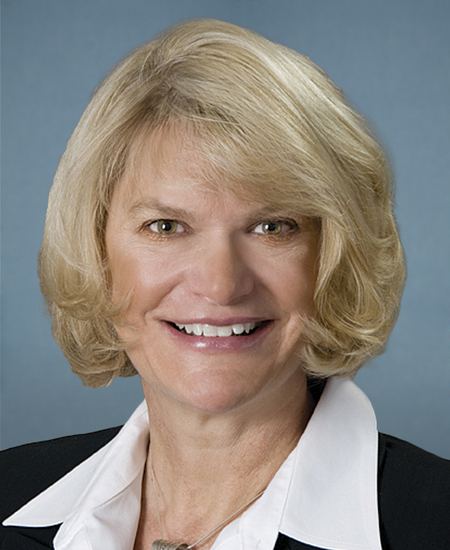
Maddy summaryThis bill amends an 1890 federal law governing Wyoming's public land trust for education. It updates specific language in sections 5, 7, and 8 by replacing "interest" and "income" with "earnings" when referring to funds generated from the trust lands. The change is purely linguistic, modifying how the trust's financial returns are described in the law. It directly affects Wyoming's system for managing educational trust funds derived from public land sales. The bill does not alter the underlying funding mechanism or distribution of these funds.
Sponsored bills
Maddy summaryThe Digital Age Assurance Act of 2026 establishes a system where operating system providers must collect a user's date of birth and share only their age range with apps and websites using secure, privacy-preserving methods. This bill directly affects technology companies, internet service providers, and users by mandating that platforms verify a user's age bracket before allowing access to age-restricted content. Key provisions prohibit the sale of children's data, ban targeted advertising toward minors, and prevent companies from using age information for profiling or marketing purposes. Additionally, the law includes anti-competitive rules to ensure that third-party apps face the same age-related restrictions as those owned by the platform itself. Enforcement is handled by the Federal Trade Commission and state attorneys general, who can impose fines for violations.
Maddy summaryThe Aviation Innovation and Global Competitiveness Act requires the Federal Aviation Administration (FAA) to improve transparency and predictability in certifying new aircraft and technologies. It directs the FAA to publish a plan within 180 days to streamline handling technical issues during certification, set standard timelines for key steps (like applicant responses), and convert stable issues into published policies. The bill also mandates updated guidance on delegating certification tasks to ensure safety and efficiency, especially for emerging sectors like advanced air mobility. The FAA must consult with industry stakeholders and report annually to Congress on implementation progress.
Maddy summaryThis resolution honors the life and legacy of the late Senator Lindsey Olin Graham from South Carolina. It formally acknowledges his extensive career in the military, state government, and Congress, noting his service as a Senator and his roles as Chairman of the Judiciary and Budget committees. The Senate expresses its sorrow over his death and requests that this tribute be shared with the House of Representatives and Graham's family.
Maddy summaryThe TRUTH in Coverage Act of 2026 requires group health plans and health insurance issuers that cover gender-affirming procedures to also cover medical services aimed at treating the physical and psychological harms caused by those procedures. This mandate applies regardless of whether the original procedure was covered under the plan and ensures that follow-up care has the same cost-sharing rules and limitations as other standard medical benefits. The bill defines "sex-rejecting procedures" broadly to include hormone therapy, surgeries, and puberty blockers, while explicitly excluding treatments for intersex conditions, precocious puberty, and emergency care. Coverage for these restorative services would become effective for plan years starting on or after January 1, 2027.
Maddy summaryThis bill establishes a comprehensive sanctions framework targeting the Russian government and its affiliated entities in response to ongoing military actions. It authorizes the President to block assets, revoke visas, and prohibit financial transactions for Russian officials, military leaders, and foreign persons supporting Russia's defense industry or undermining Ukraine. The legislation also bans U.S. investments in Russian energy sectors, prohibits the purchase of Russian sovereign debt, and imposes high tariffs on Russian imports while restricting crude oil purchases by specific foreign nations. Additionally, the bill prevents Russian companies from listing on U.S. stock exchanges and includes mechanisms for terminating sanctions only if Russia signs a peace agreement accepted by Ukraine and ceases hostilities.
Maddy summaryThe Ban Birth Tourism Act of 2026 prohibits individuals from entering the United States if their main reason for travel is to have a child born there to gain U.S. citizenship. This law makes such travelers inadmissible upon arrival and subject to deportation if they are found to have entered the country specifically for this purpose. Officials determine whether someone is engaging in birth tourism by assessing if the person's primary goal is obtaining citizenship for a child or if they are likely to give birth within ten months of entry. The bill directly affects foreign nationals planning to visit the U.S. with the intent of using their child's birthplace to secure citizenship status.
Maddy summaryThis Senate resolution expresses the official stance that former FTX co-founder Samuel Bankman-Fried should never receive a presidential pardon, commutation, or any other form of executive clemency. The measure directly addresses Bankman-Fried, who is currently serving a 25-year prison sentence for fraud and money laundering related to the collapse of the cryptocurrency exchange. By formally rejecting the idea of clemency, the bill aims to ensure that the penalties imposed by the courts remain in effect and to signal that large-scale financial crimes carry permanent accountability. Additionally, the resolution affirms the integrity of the federal justice process that convicted Bankman-Fried and reaffirms the Senate's commitment to protecting the integrity of the U.S. financial system.
Maddy summaryThe CLOSE THE GAP Act aims to streamline the permitting process for installing and modifying communications facilities, such as cell towers, on Federal land managed by agencies like the National Park Service and the Forest Service. It requires these agencies to create standardized, technology-neutral rules that allow applications to be processed simultaneously rather than sequentially and mandates that fees charged to applicants be based solely on the actual administrative costs incurred. To improve transparency and speed, the bill establishes online portals for submitting applications, requires agencies to track and report processing times, and creates a new working group to coordinate reviews across different Federal land management agencies. Additionally, the legislation simplifies environmental reviews for projects on previously analyzed land and allows for faster approval of public safety improvements at existing sites without requiring new environmental impact statements.
Maddy summaryThe Protecting American Taxpayers Act is a comprehensive bill designed to combat government fraud, recover misused funds, and strengthen oversight across various federal programs. It directly affects federal agencies, state governments administering public assistance, small businesses, veterans, and contractors by imposing new reporting requirements, extending statutes of limitations for fraud cases, and restricting financial assistance to entities linked to foreign agents or the Taliban. Key mechanisms include requiring child care payments to be based on recorded attendance rather than enrollment, mandating investigations into sudden spikes in health care spending, prohibiting small businesses with convicted fraudsters from receiving loans, and creating a new officer within the Department of Veterans Affairs dedicated to scam prevention. Additionally, the legislation rescinds unspent pandemic-era funds for deficit reduction, expands whistleblower protections for defense and non-defense contractors, and establishes stricter rules against transferring public assistance money abroad via remittance transfers.