

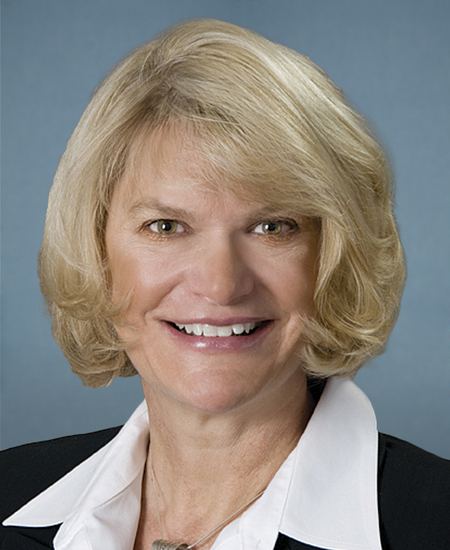
Congressional Award Program Reauthorization Act This act reauthorizes through FY2028 the Congressional Award Board, the board that administers the Congressional Award Program, and modifies program medals. (The program, established by law in 1979, awards medals to youth ages 14 to 23 who satisfy standards of achievement set by the board. The program aims to promote initiative, achievement, and excellence among youth in the areas of public service, personal development, and physical fitness.) The act removes a requirement for program medals to consist of gold-plate over bronze, rhodium over bronze, or bronze. The reauthorization is effective as if enacted on October 1, 2023 (the date on which a prior reauthorization expired).
Sponsored bills
Maddy summaryThe Roadway Safety Modernization Act of 2025 requires states to integrate proven safety tools like predictive analytics and telematics into highway safety planning and freight programs. It directs state highway agencies to use these technologies to identify high-risk road segments, evaluate crash causes, and improve safety project effectiveness. The bill also mandates the Transportation Department to issue guidance on data privacy, tool validation, and transparency for these safety technologies. This directly affects state transportation departments and freight operators who must adopt these data-driven approaches in their safety planning under federal highway programs.
Maddy summaryThis bill (S 3520) invalidates a specific Forest Service rule issued on November 25, 2024, which addressed criminal prohibitions related to law enforcement activities. The rule (89 Fed. Reg. 92808) is declared "without force or effect," and the Secretary of Agriculture is prohibited from implementing, enforcing, or administering this rule or any substantially similar rule. The bill directly affects the Forest Service's authority to enforce that particular rule. It is a procedural measure with no new policy provisions, solely reversing an existing regulation.
Maddy summaryThis bill requires that public comments on federal land management rules (administered by the Bureau of Land Management) must come only from U.S. citizens, replacing the previous standard. It mandates that agencies implement CAPTCHA systems to prevent artificial intelligence from submitting comments, explicitly stating this is to deter AI-driven public involvement. The changes apply to rulemaking under the Federal Land Policy and Management Act, affecting how the public can participate in decisions about national public lands. The bill does not alter land management policies but modifies the process for gathering public input.
Maddy summaryThis bill exempts certain non-lethal projectile devices (like pepper ball guns or rubber bullets) from federal firearms and ammunition taxes. It directly affects manufacturers, producers, and importers of these devices by removing tax obligations under IRS Code sections 4181 and 5845. Key provisions define "less-than-lethal" devices as those not expelling standard firearm ammunition, operating below 500 feet per second, and not convertible to lethal weapons. The Secretary of the Treasury must annually update a public list of qualifying devices and report to Congress on non-qualifying devices that exceed the velocity limit.
Essential Caregivers Act of 2025 This bill prohibits certain health care facilities from limiting the access of essential caregivers to residents of those facilities, including during designated emergency periods. Specifically, the bill generally prohibits Medicare skilled nursing facilities, Medicaid nursing facilities, Medicaid intermediate care facilities, and associated inpatient rehabilitation facilities from restricting the access of essential caregivers to residents of the facilities, including during emergency periods in which visitation rights are otherwise restricted. During emergency periods, facilities may restrict access for an initial period of up to seven days and for one additional maximum seven-day period (if the additional period is approved by the state health department). Facilities may restrict access for a total of 7 days (or 14 days with the approval of the state health department) during an emergency period. Essential caregivers must agree to comply with any safety protocols set by the facility, which may be no more stringent for caregivers compared to those for staff. Caregivers who fail to comply with these requirements may be denied access, subject to an appeals process.
Maddy summarySRES 545 designates December 6, 2025, as "National Miners Day" to honor miners' contributions to U.S. economic strength and safety efforts, while commemorating the 1907 Monongah mining disaster (the deadliest industrial accident in U.S. history). The resolution encourages public participation in local and national activities celebrating miners' sacrifices. It has no binding effect and serves as symbolic recognition, not a policy change. The bill directly affects miners and the public through this annual observance.
Maddy summaryThe Safeguarding U.S. Rulemaking Act restricts public participation in federal rulemaking to U.S. citizens and entities, excluding foreign governments and their nationals or entities designated as "foreign adversaries" by the Secretary of Commerce under 15 CFR §791.4(a). It amends Section 553 of Title 5, U.S. Code, to add a new provision (f) explicitly barring these foreign adversaries from commenting on or petitioning for agency rules. This change directly affects foreign governments, nationals, and entities meeting the "foreign adversary" definition, preventing them from influencing U.S. regulatory processes during public comment periods. The bill does not alter standard rulemaking procedures but limits who can submit input during agency rulemaking.
Maddy summaryThis bill requires federal agencies to report detailed payment information - including the purpose, funding source, and payment type - to the Treasury before disbursing funds. It mandates agencies to verify recipient bank account details and cross-check payment records to prevent errors or fraud. The Treasury gains access to databases like the National Directory of New Hires and tax/Social Security data (with privacy safeguards) to identify and recover improper payments. These requirements apply to all agencies using Treasury payment systems, aiming to improve transparency and reduce wasteful spending.
Maddy summaryThe AGRITOURISM Act (S 3392) creates a new Agritourism Advisor position within the USDA to support rural businesses. This role will directly assist farms and ranches offering agritourism activities - like farm stays, winery tours, u-pick operations, and farm-to-table dining - by connecting them to federal resources. The Advisor will coordinate USDA programs, provide technical assistance, share best practices, and help update farm enterprise development tools. The bill aims to strengthen rural economies by making it easier for small agricultural businesses to diversify through tourism. It applies to all states, tribal lands, and USDA programs nationwide.