

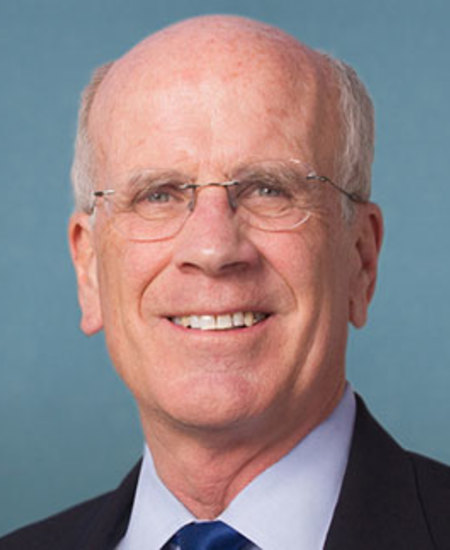
This concurrent resolution supports the goals and ideals of the International Transgender Day of Visibility. It celebrates the accomplishments and leadership of transgender, nonbinary, gender nonconforming, and gender-diverse people.
Sponsored bills
This joint resolution proposes a constitutional amendment to prohibit the Constitution from being construed to forbid Congress or the states from (1) imposing reasonable viewpoint-neutral limitations on private campaign contributions or independent election expenditures; or (2) enacting systems of public campaign financing, including those designed to restrict the influence of private wealth by offsetting campaign spending or independent expenditures with increased public funding.
Maddy summaryHJRES 53 proposes a constitutional amendment to ban slavery and involuntary servitude as a criminal punishment. Currently, the 13th Amendment to the U.S. Constitution permits such punishments for crimes, creating a legal loophole. If ratified by 3/4 of state legislatures, this amendment would eliminate that exception nationwide, making it unconstitutional to impose forced labor or slavery as part of criminal sentences. The change would directly affect all states' criminal justice systems, particularly prison labor practices, by prohibiting these punishments for any offense.
This joint resolution proposes a constitutional amendment providing that the rights protected by the Constitution are the rights of natural persons only. Artificial entities, such as corporations, shall have no rights under the Constitution and are subject to regulation. The amendment requires federal, state, and local government to (1) regulate, limit, or prohibit election contributions and expenditures, including a candidate's own contributions and expenditures; and (2) require that any permissible contributions and expenditures be publicly disclosed. The judiciary is prohibited from construing the spending of money to influence elections to be speech under the First Amendment, and the amendment shall not be construed to abridge the freedom of the press.
This resolution expresses support for implementing a Transgender Bill of Rights that guarantees certain rights for transgender and nonbinary people with respect to public services and accommodations, employment, housing, health care, and other specified areas.
This resolution expresses the sense of the House of Representatives that (1) lesbian, gay, bisexual, transgender, queer, intersex, and asexual (LGBTQIA+) rights are human rights and protected by the U.S. Constitution; (2) LGBTQIA+ Pride Month should be celebrated; and (3) all Americans should be treated equally regardless of sexual orientation or gender identity.
This resolution expresses the sense of the House of Representatives that the proposed constitutional amendment known as the Equal Rights Amendment has been duly proposed by Congress and ratified by the states and is therefore valid as the Twenty-Eighth Amendment to the Constitution. (The proposed amendment prohibits the United States or any state from denying or abridging equal rights under the law on account of sex.)
This resolution expresses support for the principles of Transgender Day of Remembrance, memorializing the lives lost to anti-transgender violence this year.
Maddy summaryHRES 507 is a non-binding House resolution condemning legislative actions and violence targeting transgender and nonbinary individuals. It references 2021 state bills restricting transgender youth access to gender-affirming medical care, sports participation, and public facilities, alongside statistics on rising violence (44 transgender killings in 2020) and mental health impacts. The resolution formally condemns discriminatory legislation and violence, remembers victims of transphobic hate, and commits to advocating for the community’s safety. As a symbolic resolution - not a law - it expresses congressional disapproval but does not create new policies or alter existing laws.
Maddy summaryHRES 490 is a symbolic House resolution (not a law) passed on June 22, 2021, that reaffirms the U.S. commitment to supporting refugees and displaced persons globally. It highlights the scale of the global displacement crisis (over 82 million forcibly displaced people in 2020) and emphasizes the importance of the U.S. refugee resettlement program as a tool for security, diplomacy, and humanitarian aid. The resolution calls on the Secretary of State to continue robust funding, uphold U.S. leadership in refugee protection, support host countries, and meet refugee admissions goals. It directly affects U.S. foreign policy implementation and international humanitarian efforts, though it does not create new legal requirements or allocate funds.