

COVID - 19 Hate Crimes Act This bill requires a designated officer or employee of the Department of Justice (DOJ) to facilitate the expedited review of hate crimes and reports of hate crimes. DOJ must issue guidance for state, local, and tribal law enforcement agencies on establishing online hate crime reporting processes, collecting data disaggregated by protected characteristic (e.g., race or national origin), and expanding education campaigns. Additionally, DOJ and the Department of Health and Human Services must issue guidance aimed at raising awareness of hate crimes during the COVID-19 (i.e., coronavirus disease 2019) pandemic. The bill establishes grants for states to create state-run hate crimes reporting hotlines. It also authorizes grants for states and local governments to implement the National Incident-Based Reporting System and to conduct law enforcement activities or crime reduction programs to prevent, address, or respond to hate crimes. Finally, in the case of an individual convicted of a hate crime offense and placed on supervised release, the bill allows a court to order that the individual participate in educational classes or community service as a condition of supervised release.
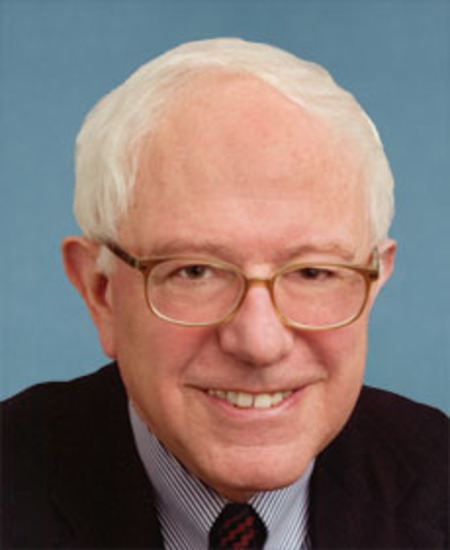
Sponsored bills
This resolution urges an immediate cease-fire to prevent further loss of life and escalation of the conflict in Israel and the Palestinian territories, and it supports diplomatic efforts to resolve the Israeli-Palestinian conflict, uphold international law, and protect human rights.
Audit the Pentagon Act of 2021 This bill requires the Department of Defense (DOD) to reduce spending for any department, agency, or other DOD element that DOD determines has not achieved an unqualified opinion on its full financial statements for the calendar year ending during that fiscal year. Specifically, the amount available to such department, agency, or element for the fiscal year when the determination is made must be 1% less than the amount otherwise authorized to be appropriated. Amounts unavailable to such department, agency, or element must be applied on a pro rata basis against each program, project, and activity. DOD must deposit such unavailable amounts in the general fund of the Department of the Treasury for purposes of deficit reduction.
Postal Service Reform Act of 2021 This bill addresses the finances and operations of the U.S. Postal Service (USPS). The bill requires the Office of Personnel Management to establish, within the Federal Employees Health Benefits Program, the Postal Service Health Benefits Program for USPS employees and retirees and provides for coordinated enrollment of retirees under this program and Medicare. The bill repeals the requirement that the USPS annually prepay future retirement health benefits. Additionally, the USPS may establish a program to enter into agreements with an agency of any state government, local government, or tribal government, and with other government agencies, to provide certain nonpostal products and services that reasonably contribute to the costs of the USPS and meet other specified criteria. The USPS must develop and maintain a publicly available dashboard to track service performance and must report regularly on its operations and financial condition. The bill requires mail delivery to occur at least six days a week. The Postal Regulatory Commission must annually submit to the USPS a budget of its expenses. It must also conduct a study to identify the causes and effects of postal inefficiencies relating to flats (e.g., large envelopes). The USPS Office of Inspector General shall perform oversight of the Postal Regulatory Commission.
Filipino Veterans Family Reunification Act of 2021 This bill exempts from worldwide or numerical limitations certain family-sponsored immigrant visas for the sons and daughters of Filipino World War II veterans who were naturalized under certain laws providing for naturalization for service during World War II.
Federal Home Loan Banks' Mission Implementation Act This bill generally expands the ability of Federal Home Loan Banks (FHLBs) to provide advances and grants for activities related to small businesses, affordable housing, and community development. The 11 regional FHLBs serve as government-sponsored enterprises to support mortgage lending and related community investment through advances to member financial institutions. These advances are secured by assets such as mortgages and other loans. Specifically, the bill allows FHLBs to provide advances that are secured by (1) loans guaranteed by the Small Business Administration, and (2) certain loans made in response to the economic impact of the COVID-19 pandemic and guaranteed or insured by the federal government. The bill also expands the availability of advances to certain community development financial institutions and credit unions. It also gives the Federal Housing Finance Agency discretion in setting the average asset maximum for certain community financial institutions to qualify for an advance. However, this maximum must not be more than $10 billion. Currently, a community financial institution must have less than $1 billion in average total assets to qualify. Furthermore, the bill exempts from taxation for two years after the conclusion of the COVID-19 emergency period certain municipal bonds guaranteed by an FHLB. The bill also increases the percentage of earnings FHLBs must annually contribute to the Affordable Housing Program and sets aside a specified percentage to benefit tribes under this program.
Encouraging More Proxy voting by Organized Workers, Employees, and Retirement Savers Act or the EMPOWERS Act This bill modifies the requirements for single-employer retirement plans with respect to the fiduciaries and proxy voting procedures for such plans. Specifically, it requires the assets of such plans to be held in trust by a joint board of trustees that represents the interests of the employer and the interests of the plan participants and their beneficiaries on an equal basis. Additionally, the trustees of each plan must undergo training and establish proxy voting guidelines for the plan. In exercising a plan's proxy voting rights, a fiduciary may consider (1) the investment objectives of the plan participants and their beneficiaries, and (2) certain effects of negative externalities generated by portfolio companies.
Affordable Housing Production Act This bill allows the Department of the Treasury to transfer Troubled Asset Relief Program funds to the Department of Housing and Urban Development's Housing Trust Fund. This fund provides grants to states to (1) increase and preserve the supply of rental housing for extremely low-income and very low-income families, including homeless families; and (2) increase homeownership for extremely low-income and very low-income families.
Health Equity and Access under the Law for Immigrant Women and Families Act of 2021 or the HEAL Immigrant Women and Families Act of 20 21 This bill extends Medicaid and Children's Health Insurance Program coverage to individuals lawfully present in the United States who otherwise meet eligibility requirements. Individuals granted federally authorized presence also are required to maintain minimum essential health insurance coverage and are eligible for health insurance exchanges, reduced cost sharing, premium subsidies, and premium tax credits.
Paying a Fair Share Act of 2021 This bill requires an individual taxpayer whose adjusted gross income exceeds $1 million (high-income taxpayer) to pay a minimum tax rate of 30% of the excess of the taxpayer's adjusted gross income over the taxpayer's modified charitable contribution deduction for the taxable year (tentative fair share tax). The amount of the tax is the excess (if any) of the tentative fair share tax over the excess of (1) the sum of the taxpayer's regular tax liability, the alternative minimum tax (AMT) amount, and the payroll tax for the taxable year; over (2) certain tax credits. The bill provides for a phase-in of such tax and requires an inflation adjustment to the $1 million income threshold for taxable years beginning after 2021. The bill also expresses the sense of the Senate that Congress should enact tax reform that repeals unfair and unnecessary tax loopholes and expenditures, simplifies the tax system, and makes sure that the wealthiest taxpayers pay a fair share of taxes.