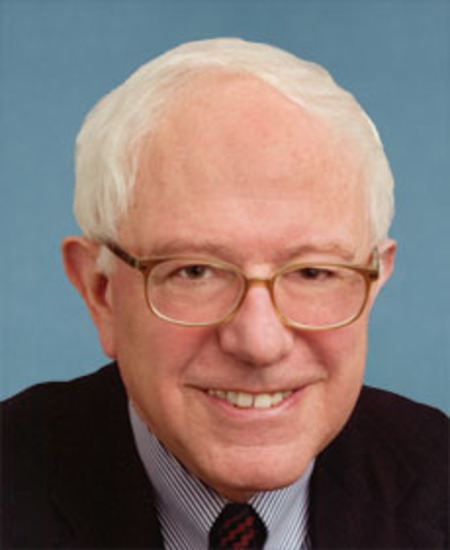
Mamas First Act This bill requires state Medicaid programs to cover doula and midwife services, including prenatal, delivery, and postpartum services, in a variety of settings.
Sponsored bills
Maddy summarySRES 593 is a Senate resolution honoring former U.S. Senator Kaneaster Hodges, Jr. of Arkansas, who served from 1977 to 1978. The resolution expresses the Senate’s "profound sorrow" at his death and directs the Secretary of the Senate to transmit an enrolled copy to his family. It also calls for the Senate to adjourn as a mark of respect. This is a ceremonial resolution with no policy provisions or direct impact on legislation or constituents.
This resolution recognizes that Black women are experiencing high, disproportionate rates of maternal mortality and morbidity in the United States and that Black Maternal Health Week is an opportunity to deepen the national conversation about Black maternal health.
Empowering States' Rights To Protect Consumers Act of 2022 This bill limits the annual percentage rate applicable to any consumer credit transaction (other than a residential mortgage transaction), including any associated fees, to the maximum rate permitted by the laws of the state in which the consumer resides.
Energy Security and Independence Act of 2022 This bill addresses domestic industrial base and manufacturing capabilities for specified energy-efficiency and renewable energy systems and technologies (e.g., electric transportation systems), including by establishing a program to provide financial assistance for the construction of new facilities that manufacture components of specified energy-efficiency and renewable energy systems and technologies (or to retool, retrofit, or expand such facilities).
This resolution recognizes the accomplishments and example of Cesar Estrada Chavez. The resolution also encourages the people of the United States to commemorate his legacy and to always remember his rallying cry, "Si, se puede!" (which means "Yes, we can!").
Maddy summarySRES 565 is a ceremonial Senate resolution honoring the late Representative Don Young (R-AK), who served 49 years in the U.S. House of Representatives - the longest tenure of any Alaska representative and the 45th Dean of the House. The resolution commemorates his life, service, and legacy, including his work on landmark legislation like the Trans-Alaska Pipeline authorization and the Alaska Native Claims Settlement Act. It contains no policy changes or new laws; instead, it directs the Senate to mourn his passing, honor his bipartisan service, and transmit a copy to his family. This is a purely symbolic resolution with no direct impact on constituents or legislation.
Support Kids Not Red Tape Act of 2022 This bill extends and modifies the authority of the Department of Agriculture (USDA) to waive certain requirements related to the National School Lunch Program, the School Breakfast Program, the Child and Adult Care Food Program, and the Summer Food Service Program. Current law authorizes USDA to waive certain requirements, such as those related to nutritional content and congregate feeding, for the purpose of dealing with the COVID-19 pandemic. Under this bill, USDA shall have authority through FY2023 to grant such a waiver, with no waiver having effect past FY2023. Currently, USDA's authority to grant a waiver expires on June 30, 2022, with no waiver having effect past the 2021-2022 school year. If a state elects to receive a waiver that modifies the operation of a school breakfast or lunch program for the 2022-2023 school year, the state must provide a transition plan to USDA. USDA must provide technical assistance to help school food authorities and states meet nutritional standards and resume regular meal program operations for the 2023-2024 school year. While a waiver is in effect during the 2022-2023 school year, the state subject to the waiver must provide technical assistance in lieu of fiscal action for meal pattern violations due to supply chain disruptions. The bill also appropriates funds as necessary to carry out this bill's activities.

CDC Tribal Public Health Security and Preparedness Act This bill allows tribes and tribal organizations to apply directly to the Centers for Disease Control and Prevention (CDC) for Public Health Emergency Preparedness (PHEP) program funds. Currently, only states and certain local entities may apply for PHEP funds to respond to public health emergencies, such as COVID-19. The CDC must award at least 10 cooperative agreements to tribal applicants. Additionally, the CDC must consult with tribes and tribal organizations to ensure the PHEP program enables these entities to respond to public health emergencies. The CDC may make certain modifications to the program after the consultation.
Cabin Air Safety Act of 2022 This bill directs the Federal Aviation Administration (FAA) to implement regulations regarding smoke or fume incidents on aircraft (excluding helicopters). Specifically, the bill requires flight attendants, pilots, aircraft maintenance technicians, airport first responders, and emergency response teams to receive annual training on how to respond to incidents on aircraft; the FAA to develop a standardized form and system for reporting incidents involving smoke or fumes; the FAA to conduct an investigation after a report is submitted about incidents of smoke or fumes if anybody on the aircraft required medical attention; and air carriers to install and operate onboard detectors and other air quality monitoring equipment situated in the air supply system to enable pilots and maintenance technicians to locate the sources of air supply contamination, including carbon monoxide.