

Maddy summaryThis bill requires the Secretaries of Agriculture and Interior to update travel plans for public lands (National Forests and Bureau of Land Management areas) to ensure at least 2.5 miles of accessible roads per square mile, defining "disability-accessible land." It prohibits closing roads that would reduce this accessibility standard unless for specific safety reasons, mandates public notice and hearings for closures, and creates a presumption that roads should remain open. The policy directly affects people with disabilities who use off-road vehicles, motorized vehicles, or electric bikes on public lands by requiring agencies to prioritize accessible routes for recreation like hiking, fishing, and wildlife viewing. Key provisions include requiring agencies to coordinate with tribes and local governments to identify accessible routes and establish new roads within one year if existing ones are closed.
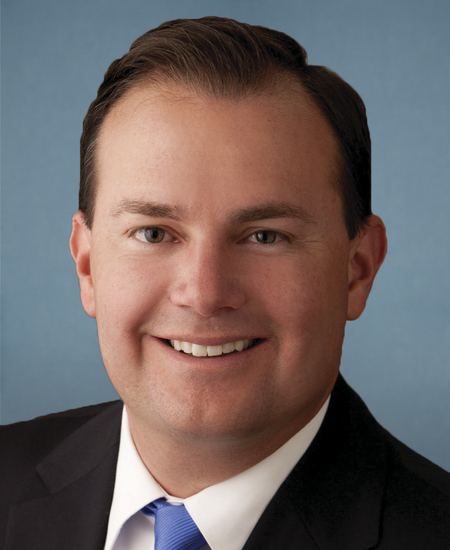
Sponsored bills
Maddy summarySenate Joint Resolution 96 seeks to block a Department of Education rule that prohibits sex-based discrimination in federally funded schools (e.g., colleges, K-12 programs receiving federal aid). If approved, it would invalidate the rule published April 29, 2024 (89 Fed. Reg. 33474), preventing it from taking effect under a congressional disapproval process. This would maintain existing nondiscrimination standards for education programs instead of implementing the new rule. The resolution directly affects all schools and programs receiving federal education funding.
Maddy summaryThe Dismantle DEI Act of 2024 would eliminate diversity, equity, and inclusion (DEI) programs across federal agencies by rescinding related executive orders, closing DEI offices, and prohibiting federal funding for DEI training and activities. The bill defines "prohibited diversity, equity, or inclusion practice" to include training that asserts certain racial or ethnic groups are inherently superior or inferior, and bans federal funds from being used for such programs. It would apply to federal offices, training, contracting, grants, advisory committees, and education programs, with enforcement through private lawsuits and penalties of $1,000 per violation per day. The bill specifically exempts Equal Employment Opportunity offices and offices enforcing the Americans with Disabilities Act from these restrictions.
Maddy summaryThis bill (S 4521) changes how the Consumer Financial Protection Bureau (CFPB) is funded by requiring it to seek annual appropriations through Congress, rather than receiving automatic funding from the Federal Reserve's budget. It also modifies civil penalty handling: if the CFPB collects fines and pays victims, any leftover funds must be transferred to the U.S. Treasury's general fund. These changes directly affect the CFPB's budget process and financial management, shifting oversight to Congress. The provisions take effect October 1, 2025.
Maddy summaryThis bill prohibits federal and state entities from penalizing health care organizations or providers who decline to participate in abortion services, referrals, coverage, or facilitation. It creates a private right of action, allowing affected individuals or entities to sue for violations in federal court and seek remedies like injunctions or damages. The law covers hospitals, insurers, pharmacies, clinics, and other health care entities, ensuring they can maintain conscience-based objections without losing federal funding or facing retaliation. Enforcement would be handled by the Office for Civil Rights, which must investigate complaints and refer cases to the Justice Department when needed.
Maddy summaryS 3322, the Ranching Without Red Tape Act of 2023, simplifies processes for ranchers holding federal grazing permits on U.S. Forest Service (USFS) and Bureau of Land Management (BLM) lands. It allows permittees to make minor improvements like repairing fences, wells, or water pipelines without lengthy approvals by requiring only 30 days' notice to local managers, with automatic approval if no response is received within that timeframe. The bill also directs the Secretaries of Agriculture (for USFS) and Interior (for BLM) to expedite such projects they approve, using existing administrative tools. This directly affects ranchers managing livestock on federal grazing lands by reducing bureaucratic delays for routine maintenance.
Maddy summaryThe Historic Roadways Protection Act (S 3148) prohibits federal funding for finalizing or implementing specific travel management plans in designated Utah areas until the resolution of ongoing R.S. 2477 court cases. The ban applies from the bill's enactment until the Secretary of the Interior certifies all R.S. 2477 cases (related to historic rights-of-way) have been decided. It specifically blocks funding for new plans in 10 Utah travel management areas (including the Henry Mountains and Fremont Gorge) and for implementing three named plans (Indian Creek, San Rafael Desert, and Labyrinth/Gemini Bridges). This directly restricts federal land management spending in Utah during the applicable period.
Maddy summaryThis bill changes how the U.S. calculates electric vehicle (EV) fuel efficiency for regulatory purposes. It requires the Secretary of Energy to annually review and update "equivalent petroleum-based fuel economy values" for EVs based on factors like battery degradation, grid efficiency, critical mineral usage, and real-world driving patterns (e.g., weather impact and charging habits). These updated values must then be used by the EPA when setting average fuel economy standards for all vehicles, directly affecting EV manufacturers and the federal fuel efficiency program. The changes aim to create more accurate comparisons between EVs and gasoline vehicles for regulatory consistency.
Maddy summaryThis joint resolution (SJRES 92) seeks to block an Environmental Protection Agency (EPA) rule that established new greenhouse gas emission standards for fossil fuel power plants and repealed an earlier rule. It targets the EPA's specific rule (published May 9, 2024), which set performance standards for new/modified plants, emission guidelines for existing plants, and removed the Affordable Clean Energy Rule. The resolution uses a procedural mechanism under the Congressional Review Act to disapprove the rule, meaning it would prevent the EPA rule from taking effect. If passed, the rule would have no legal force, directly affecting how power plants regulate emissions under federal law.
Maddy summaryThis joint resolution (SJRES 93) seeks to block a specific rule proposed by the Department of Commerce. It targets the rule titled "Revision of Firearms License Requirements" (published April 30, 2024, in the Federal Register), which would have changed requirements for firearms licenses. If passed, the resolution would prevent this rule from taking effect by invoking a congressional disapproval process under Title 5, U.S. Code. The resolution directly affects the implementation of the Commerce Department's proposed firearms licensing changes, not the licensing requirements themselves.