

Maddy summaryThe LIABLE Act (S 1487) removes jurisdictional immunity for international organizations in U.S. courts when they are involved in terrorism-related acts. It allows lawsuits seeking money damages for personal injury or death caused by torture, extrajudicial killing, aircraft sabotage, hostage taking, or material support for such acts - when committed by an organization's official, employee, or agent. This applies only if the organization conspired with, aided, or materially supported a designated foreign terrorist group (under 8 U.S.C. 1189), and the victim was a U.S. national, military member, or U.S. government contractor. Claims must be filed within 20 years of the incident. The bill directly affects international organizations operating in the U.S. or involved with designated terrorist groups.
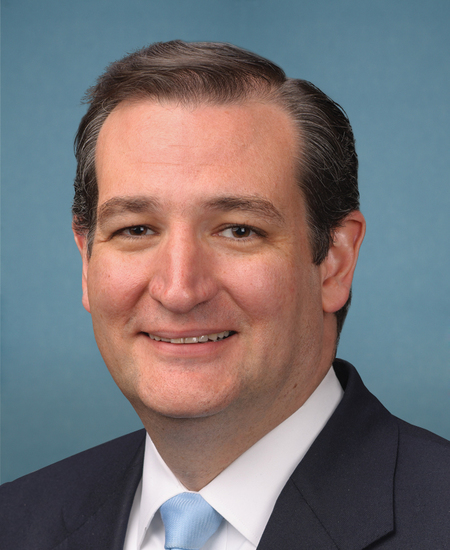
Sponsored bills
Maddy summaryThis bill directs the transfer of the Discovery space shuttle from the Smithsonian's Udvar Hazy Center near Washington, DC, to NASA's Johnson Space Center in Houston, Texas, within 18 months of enactment. It requires NASA and the Smithsonian to jointly develop and submit a transfer plan to Congress within 90 days, including cost estimates and timelines. After transfer, the shuttle must be placed on public exhibition within 5 miles of Johnson Space Center to support STEM education, with title transferring to NASA one year later and eventually to a designated nonprofit entity for ongoing public display. The bill authorizes funding for these activities, with no changes to existing appropriations.
Maddy summaryThe Stop STALLING Act empowers the Federal Trade Commission (FTC) to take action against pharmaceutical companies that submit "sham" petitions under drug approval processes. Specifically, it targets petitions that are objectively baseless and used to delay generic drug approvals, directly affecting drug manufacturers filing such petitions. The bill establishes civil penalties of up to $50,000 per day or the revenue earned from the delayed drug during the petition's review period. It creates a presumption of "sham" status if the Health Secretary determines a petition was filed primarily to delay approval, with companies able to rebut this presumption. The law does not alter FDA drug approval rules but adds FTC enforcement for unfair competition tactics.
Maddy summaryThis bill requires states that use federal Medicaid funds to pay abortion providers to submit detailed annual reports to the federal government. The reports must include specific payment amounts, purposes, comparisons to prior years, the number of abortions performed, gestational age, and abortion method for each provider. States must also publish these reports online, and the federal government must compile and publish a summary for Congress. The law directly affects states administering Medicaid who fund abortions, mandating transparency about these payments using plain language definitions of "abortion" and "abortion provider."
Maddy summaryThis resolution (SRES 159) is a ceremonial Senate measure honoring the late Senator John Bennett Johnston, Jr. (1932-2024), who represented Louisiana in the U.S. Senate from 1972 to 1997. It commemorates his career, including his work on energy policy, flood control, and Louisiana conservation efforts, and requests the Senate adjourn in his memory while sending condolences to his family. As a non-binding resolution, it has no policy impact or direct effect on any individuals or laws.
Maddy summarySRES 160 is a Senate resolution supporting National Safe Digging Month (April) to promote safety when digging. It encourages all homeowners and excavators to contact 811 - the nationwide "Call Before You Dig" number - before starting any digging project to locate underground utility lines. The resolution highlights that failing to call 811 is the top cause of utility damage, leading to service disruptions, environmental harm, and injuries. It urges damage prevention stakeholders to educate the public about this safety practice, referencing the 2005 establishment of 811 as the national hotline. This is a symbolic resolution, not a law, focused on raising awareness of an existing safety program.
Maddy summarySenate Joint Resolution 45 seeks to block an Environmental Protection Agency (EPA) rule that would have allowed California to enforce its Advanced Clean Cars II vehicle emission standards. The resolution uses the congressional disapproval process under federal law to declare the EPA rule invalid, preventing California from implementing its stricter pollution controls for cars and trucks. If passed, this resolution would stop the rule from taking effect, meaning California could not override federal vehicle emission standards with its own requirements. The bill directly affects California's ability to set state-level environmental regulations for motor vehicles and the EPA's regulatory authority.
Maddy summarySJRES 46 is a joint resolution seeking congressional disapproval of an Environmental Protection Agency (EPA) rule concerning California's vehicle emission standards. The rule, submitted in 2023, relates to California's pollution control requirements for motor vehicles, including advanced clean trucks, zero-emission airport shuttles, and heavy-duty engine emissions. This resolution would block the rule from taking effect using a specific federal disapproval process under Title 5 of the U.S. Code. If passed, the rule would have no legal force, meaning California's current standards would remain without the EPA's formal approval for these specific provisions.
Maddy summaryThis bill (S 1308, VETS Opportunity Act of 2025) changes how the U.S. Department of Veterans Affairs (VA) counts independent study programs toward education benefits for veterans. It requires these programs to include regular, substantive interaction between students and instructors to qualify for VA funding. The bill also specifies that only institutions participating in federal student aid programs (Title IV of the Higher Education Act) can offer qualifying independent study courses. These changes apply to education terms starting August 1, 2025, directly affecting veterans pursuing VA-covered independent study courses.
Maddy summaryS 1289 authorizes the U.S. Mint to produce and sell commemorative $5 gold and $1 silver coins to mark the 25th anniversary of the September 11, 2001, terrorist attacks. The bill specifies coin specifications (e.g., 90% gold/silver content, design requirements including "Never Forget"), sets a one-year issuance window (January 1, 2027-2028), and requires surcharges of $35 per gold coin and $10 per silver coin. These surcharges will be paid directly to the National September 11 Memorial and Museum to support its operations and maintenance, with coins sold at a price covering face value, surcharge, and production costs. The legislation does not impose new regulations or affect public policy but focuses on commemoration and funding for the museum.