

Maddy summaryThis resolution honors the life and legacy of Dirk Kempthorne, a former U.S. Senator, Governor of Idaho, and Secretary of the Interior. It formally acknowledges his public service across various roles, including his work on environmental conservation, veterans' support, and economic development in Idaho. The Senate expresses its sorrow over his death and directs that a copy of the resolution be sent to his family. Additionally, the Senate stands in adjournment as a final mark of respect to his memory.
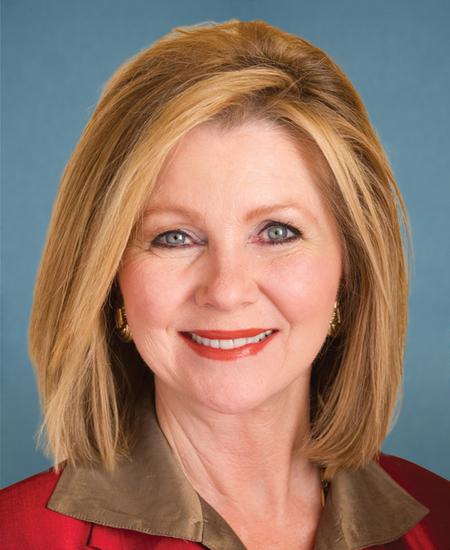
Sen. Marsha Blackburn
Sponsored bills
Veterans' Compensation Cost-of-Living Adjustment Act of 2026 This bill requires the Department of Veterans Affairs (VA) to increase the amounts payable for wartime disability compensation, additional compensation for dependents, the clothing allowance for certain disabled veterans, and dependency and indemnity compensation for surviving spouses and children. Specifically, the VA must increase the amounts by the same percentage as the cost-of-living increase in benefits for Social Security recipients that is effective on December 1, 2026. The act requires the VA to publish the amounts payable, as increased, in the Federal Register. The VA is authorized to make a similar adjustment to the rates of disability compensation payable to persons who have not received compensation for service-connected disability or death.
Maddy summaryThe GUARD Act requires companies providing AI chatbots to verify users' ages using reliable methods (like government IDs, not just self-reported birth dates) and prohibits minors under 18 from accessing "AI companions" designed for emotional interaction. It mandates clear disclosures that chatbots are not human and cannot falsely claim to be licensed professionals (e.g., therapists), while banning features that solicit minors for explicit content or promote violence. Covered entities must implement secure age verification processes for all accounts, including periodic checks, and face civil penalties up to $100,000 per violation for noncompliance. The law directly affects tech companies operating AI chatbots in the U.S. and aims to reduce minors' exposure to harmful AI interactions.
Maddy summaryThis bill amends federal carjacking law to change how the offense is defined and prosecuted. It removes the requirement that a carjacking must involve "intent to cause death or serious bodily harm" for it to be considered a federal offense (now only requiring the act to be done "knowingly"). For cases where death occurs, it now requires prosecutors to prove both the intent to cause death *and* that death actually resulted, rather than just showing death occurred. This directly affects federal prosecutors, carjacking defendants, and the legal standards used in such cases.
Maddy summaryThis Senate resolution formally supports the goals and ideals of National Nurses Week, which is observed annually from May 6 to May 12, 2026. The measure recognizes the vital contributions of nurses to the healthcare system and encourages the public to acknowledge their role through ceremonies and activities during the designated week. While the bill does not create new laws or funding, it serves to honor the profession and highlight the importance of nursing in patient care and public health.
Maddy summaryThis bill, known as the Let Experienced Pilots Fly Act, raises the mandatory retirement age for commercial airline pilots from 65 to 67 years old. It allows airlines to voluntarily choose to keep a stricter limit of 70 years, but once they make that choice, they cannot lower it later. The law also ensures that pilots aged 60 and older must hold a specific type of medical certificate and prevents them from facing stricter medical checks solely because of their age, unless the Federal Aviation Administration determines it is necessary for safety. Additionally, the bill requires that any changes to pilot contracts or benefit plans needed to comply with these new age rules must be agreed upon by both the airline and the pilots' union representatives.
Maddy summaryThis Senate resolution formally recognizes the week of May 3 through May 9, 2026, as National Small Business Week to honor the contributions of small business owners and entrepreneurs across the United States. The measure expresses appreciation for the economic role these businesses play and acknowledges the resilience of their owners and employees. By adopting this designation, the Senate aims to celebrate the entrepreneurial spirit within every community without imposing any new laws or regulations.
Maddy summaryThe Heat Workforce Standards Act of 2026 prevents the Occupational Safety and Health Administration from finalizing or enforcing a specific proposed rule regarding heat injury prevention in workplaces. This legislation directly affects the Department of Labor and businesses by blocking the implementation of detailed requirements such as mandatory rest breaks and written safety plans. The bill argues that these specific rules are too burdensome and fail to account for unique industry and geographic conditions. By stopping this rule, the act leaves the proposed heat safety standards in a suspended state without changing existing regulations.
Maddy summaryThis bill requires the Department of Veterans Affairs to allow women veterans to directly schedule appointments for women's specialty care without needing a referral from a primary care provider. The law applies to all women veterans enrolled in the VA system who are eligible for services such as gynecology, obstetrics, maternity, and postpartum care. Under the bill, these appointments must be available through VA medical centers, clinics, and online or telephone scheduling tools without additional administrative barriers. The provision does not change existing eligibility requirements for receiving VA healthcare services.
Maddy summaryThe National Veterans Strategy Act of 2026 requires the President to establish measurable metrics for veteran well-being - covering health, employment, education, and social engagement - and develop a national strategy every four years to align federal, state, local, nonprofit, and private sector efforts toward improving veteran outcomes. This strategy must be developed with input from veterans, government agencies, and stakeholders like veterans' organizations and businesses, and it will guide how benefits and services are delivered to address gaps in veteran success. The bill mandates annual reports to Congress tracking progress, spending, and barriers, with a requirement for the President to update the strategy every four years based on public input and evaluation. It directly affects all veterans by creating a coordinated framework for service delivery, though specific benefits or programs are not defined by the bill itself.