

Recovering America’s Wildlife Act of 2022 This bill provides financial and technical assistance to states, territories, and the District of Columbia for the purposes of (1) recovering species listed as a threatened or endangered species under the Endangered Species Act or under state law, or (2) avoiding the need to list species under such laws. For example, the bill establishes the Endangered Species Recovery and Habitat Conservation Legacy Fund. A portion of the fund must be used to establish an Endangered Species Recovery Grant Program. It also provides funding for (1) the conservation or restoration of wildlife and plant species of greatest conservation need; (2) the wildlife conservation strategies of states, territories, or the District of Columbia; and (3) wildlife conservation education and recreation projects. The Department of the Interior must use a portion of the funding for a grant program. The grants must be used for innovative recovery efforts for species of greatest conservation need, species listed as endangered or threatened species, or the habitats of such species. In addition, the bill requires certain revenues generated from fees and penalties for violations of environmental requirements to be used as a source for the funding.
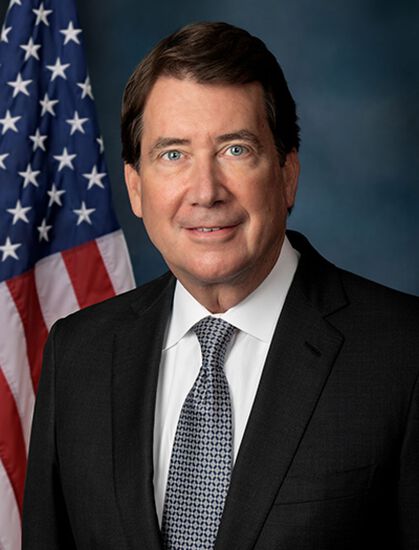
Sen. Bill Hagerty
Sponsored bills
This bill modifies the definition of water heater , otherwise revises energy conservation standards, and sets forth labeling requirements for water heaters. In addition, it directs the Department of Energy to determine whether electric storage water heaters should possess demand response capabilities.
Vehicle Innovation Act of 20 22 This bill authorizes through FY2027 the Department of Energy (DOE) to research, develop, and commercialize innovative vehicle technologies. Among other things, the bill requires DOE to conduct a program on materials, technologies, and processes with the potential to substantially reduce or eliminate petroleum use and the emissions of U.S. passenger and commercial vehicles, including in the areas of natural gas and hydrogen vehicle technologies, electrification of vehicle systems, and hydraulic hybrid technologies; implement a program of advanced vehicle manufacturing technologies and practices, including innovative processes to increase the production rate and decrease the cost of advanced battery and fuel cell manufacturing; and seek opportunities to leverage resources and support initiatives of state and local governments in developing and promoting advanced vehicle technologies, manufacturing, and infrastructure.
Biometric Collection Improvement Act This bill requires the Department of Justice to (1) study and recommend ways to improve the collection of biometric information by state law enforcement agencies, and (2) award grants to help law enforcement agencies implement the recommendations.
Voice for Victims Act This bill requires U.S. Immigration and Customs Enforcement to reestablish the Victims of Immigrant Crime Engagement Office, which shall provide services to the victims of crimes committed by removable non-U.S. nationals ( aliens under federal law). (An office with a similar name, the Victims of Immigration Crime Engagement Office, was launched in April 2017 and was shut down in June 2021.)
Comprehensive Southern Border Strategy Act This bill requires the Department of Homeland Security to report to Congress a comprehensive southern border strategy. The strategy must include (1) an overview of current security risks along the southern border; and (2) an assessment of the barriers, technologies, and tools that are necessary to achieve and maintain situational awareness and operational control of the border.
Asylum Accountability Act This bill permanently bars a non-U.S. national ( alien under federal law) from receiving certain immigration-related relief if that individual is ordered removed from the United States after failing to appear at a removal proceeding, unless that failure to appear is due to exceptional circumstances. (Currently, this bar from relief is for 10 years.) Under this bill, such an individual shall be permanently barred from receiving discretionary relief under specified immigration provisions, such as (1) cancellation of removal and adjustment to lawful permanent resident status, (2) being allowed to voluntarily depart from the United States, or (3) being allowed to change from one nonimmigrant classification to another.
Combating Violent and Dangerous Crime Act This bill revises various statutes with respect to violent crimes and establishes new criminal offenses. For example, the bill (1) increases the statutory maximum penalty for carjacking, and (2) establishes enhanced criminal penalties for certain federal drug offenses involving the manufacture or distribution of candy-flavored controlled substances or similar products for minors.
Asylum Integrity Act This bill establishes under statute a framework for determining whether an asylum seeker has filed a frivolous application. Under this bill, an asylum application shall be considered frivolous if the application was knowingly filed and (1) includes a fabricated material element, (2) is premised on false or fabricated evidence, (3) was filed without regard to the merits of the claims, or (4) is clearly foreclosed by law. (Currently, regulations provide for a similar, but not identical, framework for asylum applications filed on or after January 11, 2021.)
Food and Energy Security Act This bill provides requirements for specified federal financial agencies when regulating activity that could impact the extension of capital or investments to agricultural- or energy-related businesses. Specifically, an agency must analyze the economic impact of any such regulation. If the analysis estimates that the regulation would increase prices, and if the consumer price index exceeds a certain level, the agency is prohibited from implementing the regulation.