

Maddy summaryThis bill would require major financial regulators like the Federal Reserve, Consumer Financial Protection Bureau, FDIC, and SEC to treat congressional requests for information with higher priority than public requests and without charging fees. It would reclassify Federal Reserve Banks as agencies subject to the Freedom of Information Act, requiring them to disclose ethics-related information including financial disclosures, personnel matters, and ethics program details. The bill would prevent agencies from withholding information on common law privilege grounds like attorney-client privilege and establish security protocols for handling sensitive materials. It applies to multiple financial regulatory agencies, aiming to increase transparency in their operations and ethics practices.
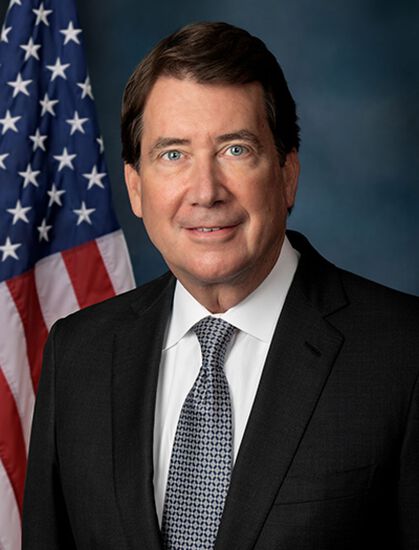
Sen. Bill Hagerty
Sponsored bills
Maddy summaryThe Vehicle Innovation Act of 2023 establishes a consolidated program at the U.S. Department of Energy to advance vehicle technologies, directly affecting automakers, battery manufacturers, and research institutions. It authorizes $313 million to $367 million annually (2024-2028) for research, development, and commercial application of technologies aimed at improving fuel efficiency, reducing emissions, and enabling electric, hydrogen, and alternative-fuel vehicles across all sectors - including passenger cars, commercial trucks, and transit systems. Key provisions include funding for battery innovation, lightweight materials, hydrogen infrastructure, and secondary battery uses (like stationary storage), while requiring annual reports to Congress on technology adoption and U.S. manufacturing impact. The bill mandates industry partnerships and coordination to avoid duplication, emphasizing cost-effective, domestically manufactured solutions.
Maddy summaryS 1047, the Cellphone Jamming Reform Act of 2023, allows state and federal correctional facilities to use jamming systems to block cell signals from contraband devices or inmates within the facility. The bill restricts jamming to housing areas only, requires states operating such systems to cover all costs, and mandates consultation with local law enforcement before implementation. It also requires facilities to notify the Bureau of Prisons about their use of jamming systems. The Federal Communications Commission (FCC) is prohibited from blocking this specific use of jamming technology, but the law does not authorize jamming outside correctional facilities or for general security purposes.
Maddy summaryThe Venezuelan Democracy Act establishes specific criteria for determining when Venezuela has a transition government or democratically elected government, including requirements for respecting human rights, restoring democratic institutions, and releasing political prisoners. It imposes financial sanctions on the Maduro regime, blocking transactions related to debt instruments and cryptocurrency, and restricts Venezuela's membership in international financial institutions until a democratically elected government is in place. The bill authorizes U.S. support for democratic groups, human rights observers, and humanitarian assistance to the Venezuelan people, while directing that aid be provided through transition or democratically elected governments. Sanctions can be suspended or terminated if Venezuela meets the established democratic transition criteria, aiming to promote democratic change through targeted sanctions and support for democratic institutions.
Maddy summaryThis bill (SJRES 22) seeks to block a specific rule issued by the Department of Education regarding federal student loan modifications. It targets the rule titled "Waivers and Modifications of Federal Student Loans," which included a one-time debt relief program announced in October 2022. The resolution requests Congress disapprove the rule under the Congressional Review Act, preventing the Department from implementing it. If approved, the rule would have no legal effect, directly affecting how student loan borrowers could access modifications or debt relief under that specific policy.
Maddy summaryS 973 requires federal contractors to certify they have not used racial hiring quotas in the past five years and prohibits them from implementing such quotas during contract performance. It directly affects all entities awarded federal contracts or subcontracts, including employers covered under specific labor certificates. The bill mandates that contracts include an equal opportunity clause banning race-based hiring systems, while explicitly excluding environmental, social, and governance (ESG), diversity, equity, and inclusion (DEI), and corporate social responsibility (CSR) initiatives from the definition of "national interest." Violations could lead to contract cancellation, termination, or debarment by the Department of Labor.
Maddy summaryThis bill proposes a constitutional amendment to require the U.S. Supreme Court to have exactly nine justices. Currently, Congress sets the Court's size through legislation, but this amendment would make the nine-justice structure a permanent requirement in the Constitution. It would need ratification by three-fourths of state legislatures within seven years to become part of the Constitution. If adopted, it would prevent Congress from changing the Court's size via ordinary legislation.
Maddy summaryThis bill directs the U.S. Treasury to instruct American representatives at multilateral development banks (like the World Bank and Asian Development Bank) to oppose new loans to China. It is based on findings that China exceeded the income threshold for graduation from development assistance in 2016 and has since received over $20 billion in loans from these institutions. The bill requires annual reports tracking China's borrowing, U.S. voting efforts to end lending to countries that have surpassed graduation thresholds, and the status of China's eligibility. It directly affects China's access to multilateral development financing and the operational policies of these banks.
Maddy summaryS 942 is a procedural Senate rule that would prevent consideration of any bill or amendment attempting to change the number of justices on the U.S. Supreme Court. It creates a "point of order" (a procedural objection) that, if sustained by the Senate chair, would automatically remove such provisions from legislation. This rule applies to all Senate consideration stages, including amendments and conference reports, and requires a two-thirds vote to override. The bill directly affects any legislation proposing to alter the Supreme Court's size, blocking it from advancing through Senate procedures.
Maddy summaryThis bill requires TSA to deny airport security access to travelers presenting certain immigration enforcement documents (like deportation warrants or "Notice to Appear" forms) at checkpoints. It mandates TSA to notify immigration agencies when such documents are presented and to collect biometric data (fingerprints, photos) from non-citizens without valid ID who cannot verify U.S. citizenship. Travelers departing for deportation are exempt from entry restrictions. The law directly affects individuals under immigration supervision attempting to access secured airport areas using prohibited documents.