

Maddy summaryThis bill expands U.S. sanctions against individuals and entities involved in human rights abuses against Uyghurs and other ethnic groups in Xinjiang, China. It requires the Treasury Secretary to identify Chinese entities complicit in serious human rights abuses and add them to sanctions lists, and mandates disclosures to the Securities and Exchange Commission about business ties to Xinjiang-related entities. The bill authorizes physical and psychological support for Uyghurs, Kazakhs, and other ethnic groups who have experienced atrocities in China and are now outside China. It also includes provisions for countering Chinese propaganda about the situation in Xinjiang and prohibits U.S. government contracts with certain entities.
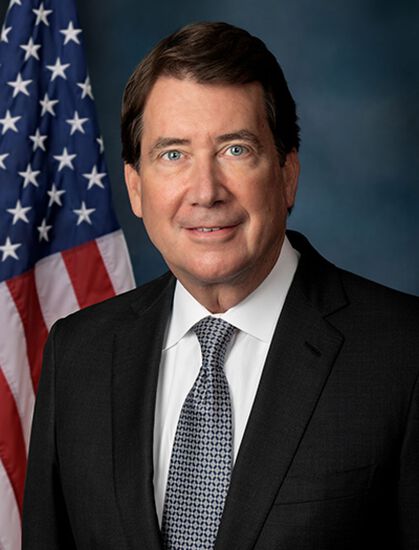
Sen. Bill Hagerty
Sponsored bills
Maddy summaryThis joint resolution (SJRES 18) disapproves a Department of Homeland Security rule that would have expanded the "public charge" standard for immigration. The rule, published in the Federal Register on September 9, 2022, aimed to deny visas or green cards to immigrants who might rely on public benefits like housing or food assistance. By passing this resolution, Congress blocks the rule from taking effect, meaning immigrants applying for visas or permanent residency would not face this specific eligibility barrier. The resolution directly affects non-citizens seeking to enter or remain in the U.S. under immigration processes.
Maddy summaryThe Main Street Tax Certainty Act permanently extends the 20% tax deduction for qualified business income (QBI), which currently applies to owners of pass-through businesses like sole proprietorships, partnerships, and S corporations. The bill achieves this by amending the tax code to remove an expiration date (via striking subsection (i) of Section 199A of the Internal Revenue Code). This change directly affects small business owners who rely on the QBI deduction to reduce their taxable income. The key provision eliminates uncertainty about the deduction’s future, ensuring continued eligibility without requiring future legislative action.
Maddy summaryThe Indo-Pacific Strategic Energy Initiative Act (S 1720) creates a framework for U.S. government support of energy infrastructure projects in the Indo-Pacific region, primarily focusing on promoting U.S. liquefied natural gas exports. The bill directs agencies like the State Department and Energy Department to provide diplomatic and financial assistance for projects that improve energy security and diversify energy sources in countries including Australia, India, Japan, and ASEAN nations. It establishes mechanisms for project selection, funding through the U.S. International Development Finance Corporation, and annual reporting requirements to track U.S. energy export support. The legislation aims to reduce reliance on energy sources from countries like Russia and China by supporting infrastructure for cleaner energy alternatives with lower emissions.
Maddy summaryThis bill bars federal funding for state or local databases that track lawfully owned firearms or their owners. It directly affects states and local governments maintaining such databases, preventing them from using federal money to create or maintain these records. The law includes an exception allowing funding for databases tracking lost or stolen firearms and their owners. The key provision is a federal funding prohibition targeting databases of legal gun ownership, not the databases themselves.
Maddy summaryThe "No START Treaty Act" declares that the New START Treaty with Russia is no longer in U.S. national security interests due to Russia's non-compliance (including refusing inspections) and China's rapid nuclear expansion, directing the U.S. to withdraw from the treaty. It mandates a 90-day report from the Secretary of Defense assessing U.S. nuclear deterrence capabilities and proposing specific improvements, such as increasing bomber alert status and restoring submarine missile capacity. The bill sets strict conditions for future arms control agreements, requiring limits on China's nuclear arsenal, robust verification for both China and Russia, and coverage of non-strategic weapons and emerging systems like hypersonic weapons. Additionally, it prohibits unilateral U.S. nuclear reductions without a treaty meeting these conditions and blocks funding for the New START Treaty or successor agreements that fail to satisfy these requirements.
Maddy summaryThis bill strengthens U.S.-Mexico cooperation to combat fentanyl trafficking by requiring the Department of State to prioritize joint efforts with Mexico to combat synthetic drugs, increase interdiction of precursor chemicals, and pursue prosecutions of drug trafficking organizations. It authorizes $100 million annually for Mexico's counternarcotics efforts and $50 million for interdicting firearms and illicit currency that support criminal organizations. The bill also imposes sanctions on Chinese individuals and entities that contribute to international drug trafficking and allows for sanctions relief if China takes specific counternarcotics measures.
Maddy summaryThe Disclose Government Censorship Act (S 1672) requires U.S. government employees to publicly disclose communications with social media platforms about restricting user content. It mandates that most such communications be posted online within 7 days, unless related to law enforcement or national security (which must be shared with Congress within 60 days). The bill applies to executive and legislative branch employees discussing content moderation actions, including algorithmic decisions. It creates dedicated public websites for these disclosures and imposes penalties for non-compliance. The law aims to increase transparency around government influence on online content without defining or regulating platform content policies.
Maddy summaryThis bill amends the Immigration and Nationality Act to make non-citizens deportable if convicted of assaulting a law enforcement officer under specific circumstances. It defines "assault" according to local law and covers officers acting in their official duties, due to their duties, or because of their role as a law enforcement officer or first responder (including firefighters). The key provision adds this assault offense to the list of deportable acts, directly affecting non-citizens who commit such assaults. The bill does not change existing immigration enforcement procedures but expands the grounds for deportation related to violence against officers.
Maddy summaryS 1732 (Know Your App Act) requires major U.S. app stores (with over 20 million U.S. users) to prominently display the "primary country of origin" of each app on its store page - defined as where the developer is headquartered or where key owners exercise control. It also mandates app stores to let users filter out apps from "countries of concern" (nations with laws enabling government control over apps) and add clear disclaimers about potential foreign government access to data. Developers must annually certify their app’s country information, with app stores removing apps for repeated inaccuracies after warnings. The bill directly affects app store platforms and developers distributing apps to U.S. users, aiming to increase transparency about data privacy and national security risks.