

Maddy summaryThis bill amends U.S. immigration law to make certain DUI convictions grounds for inadmissibility and deportability. It adds new provisions stating that any non-citizen (alien) convicted of driving while intoxicated or impaired (as defined by state law, including DUI/DWI) is automatically inadmissible upon entry and deportable if already in the U.S. The law applies regardless of whether the offense is classified as a misdemeanor or felony under state or federal law. It directly affects non-citizens with such convictions, potentially preventing entry or leading to removal from the United States.
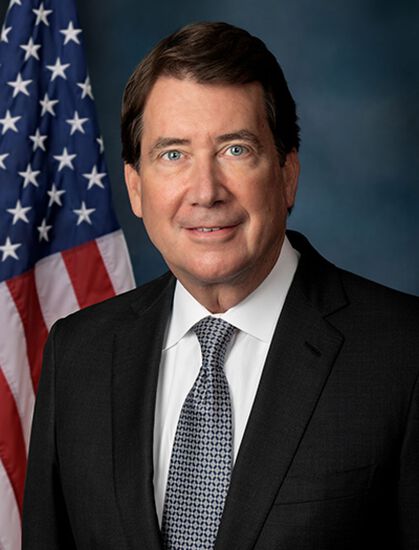
Sen. Bill Hagerty
Sponsored bills
Maddy summaryS 3814, the TUNNELS Act of 2024, prohibits the U.S. President from authorizing any U.S. government business (by employees, contractors, or grantees) in the Gaza Strip or West Bank if it would bypass existing terrorism sanctions. It specifically blocks actions that would terminate, waive, license, or remove sanctions under the Global Terrorism Sanctions Regulations or Foreign Terrorist Organizations Sanctions Regulations. The bill retroactively rescinds any prior actions taken before its enactment that allowed such sanction-avoiding activities. This directly affects U.S. government operations and funding in those regions by ensuring compliance with current terrorism-related sanctions.
Maddy summaryThis bill prohibits the Federal Reserve and Treasury from issuing or using central bank digital currency (CBDC) - a digital form of U.S. dollars backed by the Federal Reserve. It bans the Fed from offering CBDC directly to individuals or indirectly through banks (Section 2-3), prevents using CBDC for monetary policy (Section 4), and requires congressional approval for any future CBDC issuance (Section 5). The law explicitly protects existing physical currency and open digital payment systems that preserve privacy (Section 6). It directly affects the Federal Reserve System and Treasury, restricting their ability to develop or deploy digital currency without new legislation.
Maddy summarySRES 553 is a ceremonial Senate resolution honoring Jean A. Carnahan, who served as Missouri’s first female U.S. Senator from 2001 to 2002 after her husband’s passing. The resolution expresses the Senate’s sorrow over her death, recognizes her service as First Lady of Missouri and U.S. Senator, and her advocacy for families and veterans. It directs the Senate Secretary to share the resolution with the House and Carnahan’s family, with no substantive policy changes or affected parties. This is a standard commemorative measure with no legislative impact.
Maddy summarySRES 545 is a Senate resolution recognizing recent progress in cooperation between the United States, Japan, and South Korea. It highlights specific developments like resumed trilateral summitry (including a 2023 Camp David meeting), restored economic ties, joint military exercises, and coordinated responses to regional security challenges such as North Korea. The resolution does not create new laws or obligations; it solely expresses the Senate’s endorsement of this trilateral partnership and encourages continued collaboration across diplomatic, economic, and security domains. It directly affects the three nations’ governments by formally acknowledging their strengthened cooperation.
This resolution supports the designation of February 17-February 24, 2024, as National FFA Week. It also (1) recognizes the important role of the National FFA Organization (Future Farmers of America) in developing the next generation of globally conscious leaders who will change the world; and (2) celebrates the 10th anniversary of the Give the Gift of Blue program, which has donated more than 17,000 FFA blue jackets to FFA members in need.
Maddy summarySRES 550 is a symbolic Senate resolution designating February 2024 as "Career and Technical Education (CTE) Month" to recognize the value of CTE programs. It does not create new laws or funding but formally supports CTE's role in preparing students for high-demand careers through secondary and postsecondary training. The resolution encourages educators and parents to promote CTE as a respected educational pathway, aligning with the Senate's recognition of CTE's importance for workforce development and economic competitiveness. As a procedural resolution, it has no binding effect but expresses bipartisan support for CTE initiatives.
Maddy summaryS 3755 amends the CARES Act by removing subsection (c) from Section 4024 (15 U.S.C. 9058). This procedural change eliminates a specific federal housing regulation that may have conflicted with state housing laws. The bill directly affects entities subject to CARES Act housing provisions, such as housing providers or agencies receiving federal funds. The key mechanism is the deletion of the specified subsection, aligning the law with state housing regulations as indicated by the bill's title.
Maddy summaryS 3735, the Protecting Innovation in Investment Act, blocks the Securities and Exchange Commission (SEC) from finalizing, implementing, or enforcing a specific proposed rule about conflicts of interest involving predictive data analytics. The bill targets the SEC's August 2023 proposed rule (88 Fed. Reg. 53960) and any substantially similar rule, preventing it from becoming law. This directly affects broker-dealers and investment advisers who would have been subject to the rule's requirements. The bill does not create new regulations but stops the SEC from moving forward with this specific proposal. It focuses solely on halting the enforcement of the named rule, with no additional policy changes.
Maddy summarySJRES 59 is a joint resolution that would disapprove a rule by the Securities and Exchange Commission (SEC) treating its Staff Accounting Bulletin No. 121 (SAB 121) as a binding regulation. The SEC had submitted this rule for congressional review under the Congressional Review Act, and the resolution would block it from taking effect. If enacted, the disapproval would prevent SAB 121 from being enforced as a regulation, meaning public companies would not be required to follow it as a legal rule. The bill directly affects the SEC's regulatory authority and the accounting practices of public companies.