

Maddy summaryThe FENCE Act amends the tax code to deny 501(c)(3) tax-exempt status to organizations that knowingly provide financial assistance, benefits, or material support to individuals unlawfully present in the U.S. It directly affects nonprofits, community foundations, and religious organizations that may assist undocumented immigrants. The key provision adds a new requirement that organizations must not engage in a "pattern or practice" of such support, without mandating proof of citizenship or requiring religious groups to violate their beliefs. This change would take effect upon the bill's enactment, altering how tax-exempt status is maintained for qualifying organizations.
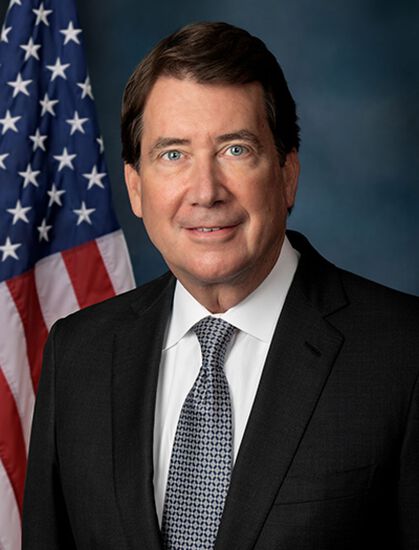
Sen. Bill Hagerty
Sponsored bills
Maddy summaryThis bill reauthorizes and updates the CAREER Act, focusing on supporting individuals with substance use disorders through employment and recovery services. It increases annual funding for treatment, recovery, and workforce support grants from $5 million to $12 million (2026-2030), prioritizing areas with the highest 2018-2022 drug overdose deaths, unemployment, and low job market participation. The bill allows up to 5% of grant funds for transportation to work, job training, or recovery services, and extends the Recovery Housing Pilot Program through 2030. It directly affects communities and individuals impacted by substance use disorders by linking federal funding to measurable local needs.
Maddy summaryThis joint resolution proposes a constitutional amendment to permanently set the number of justices on the Supreme Court at nine. It would require the Supreme Court to always consist of exactly nine justices, directly affecting the Court's composition. The amendment would become part of the Constitution only if ratified by three-fourths of state legislatures within seven years. This is a procedural change to the Constitution's structure, not a policy affecting other areas.
Maddy summarySRES 64 is a Senate resolution honoring the 67 victims of a mid-air collision between American Airlines Flight 5342 and a U.S. Army aircraft near Washington, D.C., on January 29, 2025. It directly affects the families, friends, and communities of the victims, who were from multiple U.S. states and several countries. The resolution formally commemorates the lives lost, offers condolences to grieving families, and expresses gratitude to the 42 emergency response agencies that assisted in rescue and recovery efforts. As a commemorative resolution, it has no policy or legal effect beyond expressing collective mourning and recognition.
This resolution supports the designation of Career and Technical Education Month to celebrate career and technical education across the United States.
Maddy summaryThis bill amends the CARES Act by removing subsection (c) of Section 4024. It does not create new policies or directly affect any specific group; it only modifies an existing provision in federal law. The change is purely procedural, eliminating a specific subsection without altering the law's overall structure or requirements. No new rules or impacts on housing are introduced. (1 sentence, as it is a procedural amendment).
Maddy summaryThis bill amends federal securities laws to expand regulatory exemptions for retirement plans used by charities and educational institutions. It specifically updates definitions to include 403(b) plans (common for nonprofit employees) under exemptions from certain registration and oversight rules, provided they meet three conditions: (1) they follow federal retirement law (ERISA), (2) the employer acts as a fiduciary for investment choices, or (3) they are governmental plans. This change directly affects employees of qualifying charities and educational institutions who participate in these 403(b) plans, reducing compliance burdens for their retirement plans. The policy change streamlines regulatory requirements without altering retirement benefits or funding.
Maddy summaryS 427 (TAILOR Act of 2025) requires federal banking regulators (like the Federal Reserve and FDIC) to adjust rules based on each financial institution’s specific risk level and business model, rather than applying uniform regulations. It directly affects all federally regulated banks, particularly community banks, by limiting unnecessary regulatory burdens like costly reporting. Key provisions include tailoring rules to minimize costs (e.g., reducing reporting requirements for community banks eligible under the Community Bank Leverage Ratio, as specified in Section 3), documenting this tailoring in rulemaking notices, and submitting annual reports to Congress on implementation. The bill aims to modernize supervision while preserving flexibility for institutions serving local communities.
Maddy summaryThe GENIUS Act of 2025 establishes a regulatory framework for payment stablecoins in the United States, requiring that only "permitted payment stablecoin issuers" (including bank subsidiaries, federally approved nonbank entities, and state-approved issuers) may issue stablecoins. The bill mandates that these issuers maintain 1:1 reserves backed by specific assets like U.S. currency, Treasury securities, or money market funds, and requires monthly public disclosure of reserve composition. It creates federal oversight by the Comptroller, Federal Reserve, FDIC, and NCUA, while allowing states to regulate smaller stablecoin issuers (under $10 billion market cap) if their rules are substantially similar to federal standards. The act also clarifies that payment stablecoins are not securities or commodities and gives holders priority in insolvency proceedings.
Maddy summaryThe Fair Access to Banking Act (S 401) prohibits large financial institutions ($10 billion+ in assets) and payment networks from denying services to lawful businesses based on political or reputational factors, such as the type of legal business they operate. It requires banks to justify denials using objective, risk-based standards instead of category-based decisions, and mandates written explanations for denials. The law enables lawsuits against violators with treble damages and civil penalties up to 10% of service value (capped at $10,000 per violation). It directly affects major banks, payment processors, and credit unions that serve large-scale customers, ensuring fair access for businesses operating within federal law.