

Maddy summaryThis bill requires TSA to deny airport security access to travelers presenting certain immigration enforcement documents (like deportation warrants or "Notice to Appear" forms) at checkpoints. It mandates TSA to notify immigration agencies when such documents are presented and to collect biometric data (fingerprints, photos) from non-citizens without valid ID who cannot verify U.S. citizenship. Travelers departing for deportation are exempt from entry restrictions. The law directly affects individuals under immigration supervision attempting to access secured airport areas using prohibited documents.
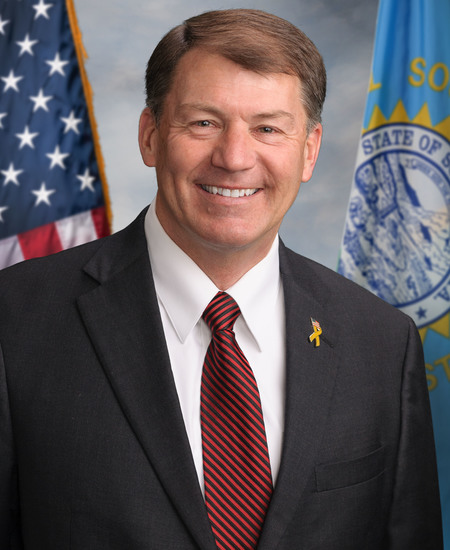
Sen. Mike Rounds
Sponsored bills
Maddy summaryThis bill allows meat and poultry products inspected under state programs to be sold across state lines, removing a long-standing restriction that limited such sales to within a single state. It requires the federal government to permit interstate shipment of these state-inspected products and mandates that states cannot ban or restrict their sale or movement. Small meat and poultry processors in states with their own inspection programs - rather than federal inspection - would directly benefit by expanding their market reach beyond state borders. The law makes no changes to inspection standards but enables broader commerce for products already meeting federal safety requirements.
Maddy summaryThis bill establishes a temporary commission to develop a comprehensive U.S. strategy for relations with China, requiring a "whole-of-government" approach across all federal departments and agencies. The China Grand Strategy Commission would be composed of government officials and appointed experts with China expertise, tasked with defining U.S. national security priorities, assessing economic and security ties, and making recommendations to protect U.S. interests. The commission must submit its final report by September 1, 2025, and will terminate 120 days after submission. This proposal creates a structured process for developing coordinated policy toward China without implementing immediate policy changes.
Maddy summaryThis joint resolution (SJRES 20) seeks to block a 2023 rule from the Department of Justice and Bureau of Alcohol, Tobacco, Firearms and Explosives (ATF) that classified certain firearms with stabilizing braces as rifles under federal law. If passed, it would nullify the rule, meaning firearms equipped with these braces would no longer be subject to the rule’s classification requirements. The resolution uses the congressional disapproval process under Title 5, U.S. Code, to stop the rule from taking effect, directly affecting firearm manufacturers and owners who use stabilizing braces on weapons.
Maddy summaryThis is a ceremonial Senate resolution (SRES 110) honoring the late James George Abourezk, the first Arab American to serve in the U.S. Senate (1973-1979) from South Dakota. It commemorates his legacy, including his work re-establishing the Senate Committee on Indian Affairs and co-authoring key Native American rights legislation like the Indian Child Welfare Act. The resolution directs the Senate to adjourn in his memory and send a copy to his family, acknowledging his service as a representative and advocate for Native American communities. As a procedural resolution, it has no legislative effect beyond commemoration.
Maddy summaryThis bill revises a federal regulation to allow small meat processors to own local market agencies. It directly affects small-scale meat packers with annual slaughter volumes below specific limits: fewer than 700,000 cattle/sheep or 3 million hogs per year. The key change requires the Agriculture Secretary to exempt qualifying packers from existing ownership restrictions in federal regulations. This would enable smaller processors to more easily operate or own local meat marketing facilities without violating current rules. The policy change is purely procedural, modifying an existing regulation rather than creating new programs or funding.
Maddy summaryThis bill establishes a federal grant program to fund school safety improvements. It transfers $100 million annually from existing infrastructure funds to the Attorney General for grants to states, which must then distribute 95% of funds to schools and school districts for specific security measures. Eligible uses include installing metal detectors, bullet-resistant windows, crisis notification systems, and digital monitoring tools (with U.S.-only data storage), while requiring states to match funds at 20% and schools at 5%. The program directly affects K-12 schools and districts nationwide, with funding allocated based on the number of children aged 5-17 in each state.
Maddy summaryThis bill modernizes Medicare coverage for chiropractic care by removing the outdated limit that restricted beneficiaries to one annual chiropractic clinic visit. It expands coverage to include all chiropractic services within a provider's state license, specifically manual spinal adjustments to correct subluxations, aligning Medicare with VA, military, and private insurance standards. Chiropractors must complete a brief online training verification once to bill Medicare for these services. The change directly affects Medicare beneficiaries seeking ongoing chiropractic treatment and chiropractors participating in Medicare.
Maddy summaryThis bill amends the Clean Air Act to modify how the EPA grants waivers for fuel formulations. It creates a new pathway allowing fuels to enter commerce if they meet Reid Vapor Pressure standards (a measure of fuel volatility) either by matching certified vehicle fuels or by complying with existing waiver conditions. The changes directly affect fuel retailers and manufacturers seeking EPA approval for fuel blends. Key provisions update waiver procedures and clarify Reid Vapor Pressure requirements, specifically adjusting percentage thresholds and notification timelines for certain fuel types. The bill does not create new regulations but adjusts existing processes for fuel approval under the Clean Air Act.
Maddy summaryThis bill authorizes the minting of commemorative coins to mark the 100th anniversary of the U.S. Foreign Service. It specifies three coin types: up to 50,000 $5 gold coins (90% gold), 400,000 $1 silver coins (90% silver), and 750,000 half-dollar clad coins, all to be issued in 2025. A surcharge ($35 for gold, $10 for silver, $5 for half-dollars) will be added to each coin's sale price, with all funds going directly to the Association for Diplomatic Studies and Training to support its diplomatic history preservation work. The bill ensures no net cost to the government by requiring all design, production, and marketing expenses to be recovered through coin sales.