

Maddy summaryThe MOMS Act establishes a federal website called "pregnancy.gov" that will provide a searchable directory of resources for pregnant and postpartum women, including medical care, housing assistance, nutrition support, and parenting services, with features to locate resources by ZIP code and language preference. It creates a grant program to fund nonprofit organizations that help women carry pregnancies to term and provide services like adoption referrals, mental health support, and childcare assistance, while prohibiting funding for abortion-related services or organizations that provide or support abortions. The bill also amends child support laws to allow enforcement of support obligations for unborn children, beginning from the month of conception with the mother's consent, and requires that all resources listed on the website comply with specific criteria excluding certain organizations. The website must be available in multiple languages and will include user feedback mechanisms to identify resource gaps in communities. This legislation aims to improve access to prenatal and postnatal care, particularly in rural and medically underserved areas, through these coordinated resource and support systems.
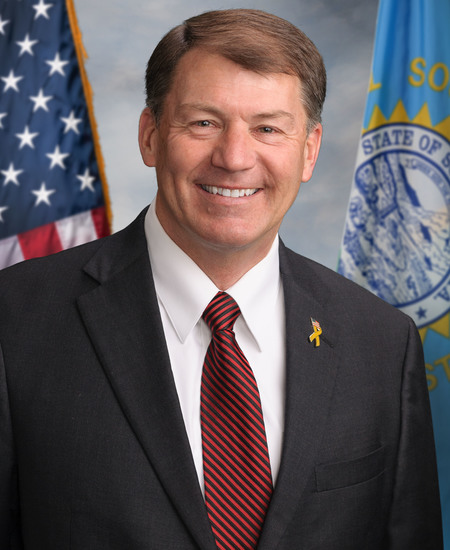
Sen. Mike Rounds
Sponsored bills
Maddy summaryS 4301 would allow states and Indian Tribes to request waivers for foreign educators working in rural or Tribal schools, exempting them from the standard 2-year foreign residence requirement after completing their J-1 visa program. The bill requires educators to accept full-time teaching positions in qualifying rural or Tribal schools and commit to working there for three years (with limited exceptions for school closures or hardship). States are capped at 30 such waivers per fiscal year, and waivers extend to spouses and children of the educator. This directly affects foreign educators seeking to remain in U.S. schools in underserved areas and gives states/tribes authority to facilitate their continued employment.
Maddy summaryThis bill (S 4282) prohibits the U.S. Department of Agriculture (USDA) from requiring ranchers and farmers to use electronic identification eartags on cattle or bison. It directly affects livestock producers who might otherwise face mandatory federal rules for tracking animals through electronic tags. The key provision blocks the Secretary of Agriculture from implementing any rule or regulation that would make electronic eartags mandatory for these animals. The bill stops a potential federal requirement without changing current voluntary practices for animal identification.
Maddy summarySRES 676 is a symbolic Senate resolution supporting National Nurses Week, observed annually from May 6 to May 12. It recognizes nurses' contributions to healthcare, highlights their role in patient advocacy and public health, and acknowledges their status as the largest healthcare profession in the U.S. The resolution does not create new policies or funding but encourages the public to observe the week with recognition and activities. It was introduced by 25 Senators and refers to nurses' historical significance, including Florence Nightingale's birthday.
Maddy summarySRES 673 is a commemorative Senate resolution honoring the late David Hampton Pryor, who served as a U.S. Senator for Arkansas from 1978 to 1997. The resolution expresses the Senate’s "profound sorrow" at his death and directs the Secretary of the Senate to share the resolution with the House and deliver a copy to his family. It does not create new laws or policies - it is purely ceremonial, recognizing Pryor’s career as a legislator, governor, and public servant. The resolution concludes with the Senate adjourning as a mark of respect for his legacy.
Maddy summaryThis resolution (SRES 668) is a ceremonial Senate measure honoring the late Senator Daniel Robert "Bob" Graham of Florida, who died on November 9, 2023. It formally expresses the Senate's "profound sorrow" over his death and directs the Secretary of the Senate to share the resolution with the House of Representatives and deliver a copy to his family. The resolution commemorates Graham's career as a Florida senator (1987-2005), governor (1979-1987), and his work on the 9/11 intelligence inquiry, but does not create any new laws or affect constituents. As a commemorative resolution, it serves solely to memorialize his service.
Maddy summarySRES 670 is a Senate resolution condemning the rise of antisemitism on U.S. college campuses, citing a 700% increase in incidents since October 7, 2023, as tracked by Hillel International. It specifically criticizes campus administrators who enabled antisemitic activities, including protests expressing support for Hamas and targeting Jewish students. The resolution urges the Department of Education to ensure colleges comply with Title VI of the Civil Rights Act, which prohibits discrimination based on national origin - including antisemitism. It directly affects Jewish students, Israeli students, and campus administrators, while calling for enforcement of existing civil rights protections. The resolution does not create new laws but serves as a formal statement of condemnation and a call for accountability.
Maddy summarySRES 671 is a ceremonial Senate resolution supporting the designation of April 28-May 4, 2024, as "National Small Business Week." It honors small businesses and entrepreneurs across the U.S. for their economic contributions, noting they support over 62 million jobs through 33 million businesses. The resolution expresses the Senate's recognition of small businesses' resilience and role in strengthening local economies. As a symbolic gesture with no new policies or funding, it does not impose requirements or directly affect specific entities.
Maddy summaryThis resolution designates May 5, 2024, as the "National Day of Awareness for Missing and Murdered Native Women and Girls" to honor victims and raise public attention. It calls on the American public and organizations to commemorate affected women (both documented and undocumented cases) and show solidarity with families. The resolution is symbolic - requiring no new funding, laws, or government action - solely aiming to increase awareness of this crisis. It directly affects Native American, Alaska Native, and Native Hawaiian communities by acknowledging their disproportionate vulnerability to violence. The resolution references specific statistics on violent crime rates against Native women and the case of Hanna Harris, a Northern Cheyenne woman whose murder highlighted this issue.
Maddy summaryThe ELITE Vehicles Act would repeal federal tax credits for purchasing electric vehicles and related infrastructure. Specifically, it eliminates the existing credit for new electric vehicles (previously under Section 30D), the credit for previously-owned clean vehicles (Section 25E), and the credit for commercial clean vehicles (Section 45W). It also removes electric vehicle recharging stations from the alternative fuel refueling credit. These changes would take effect 30 days after enactment, directly affecting individuals and businesses that currently claim these tax benefits when buying or installing qualifying electric vehicle equipment.