

Maddy summaryThis non-binding Senate resolution expresses support for designating July 2024 as "National Sarcoma Awareness Month." It aims to raise public awareness about sarcoma - a rare cancer affecting bones and connective tissues - which sees approximately 17,000 new diagnoses annually in the U.S. The resolution does not create new laws, allocate funding, or change policies; it serves solely as a symbolic gesture to encourage diagnosis and treatment for those affected.
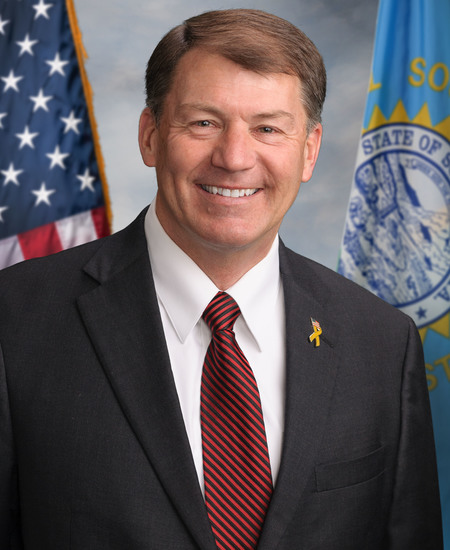
Sen. Mike Rounds
Sponsored bills
Maddy summaryThis bill authorizes Congress to award a single Congressional Gold Medal to Jens Stoltenberg, former Secretary General of NATO, recognizing his leadership during his nine-year tenure. It directs the Treasury to strike the medal and allows for the sale of bronze duplicates to cover costs. The medal honors Stoltenberg's role in strengthening NATO's defense spending, enlargement, and unity - particularly during Russia's invasion of Ukraine - though the bill itself creates no new policy or obligations. The award is purely ceremonial and affects only Stoltenberg as the recipient.
Maddy summaryThis bill expands access to Department of Defense (DoD) schools for children of military members who died while serving. It removes two barriers: children no longer need to have been enrolled in a DoD school before their parent's death, nor do they need to live near a school they seek to attend. Enrollment for these "Gold Star children" will be tuition-free and based on available space at DoD schools. The bill directly affects dependents of service members who died on active duty or active Guard/Reserve duty.
Maddy summarySRES 762 designates July 27, 2024, as "National Day of the American Cowboy" to honor the cultural significance of cowboys and cowgirls in American history, including their contributions to the economy (through ranching), traditions, and values like integrity and environmental stewardship. The resolution encourages public observance through ceremonies and activities but does not create new laws or affect specific groups financially or legally. It is a symbolic gesture recognizing the cowboy as an American icon, as outlined in the Senate's preamble.
Maddy summaryThis bill reauthorizes federal funding for fire departments and firefighter assistance programs through 2028, providing $95 million annually for the U.S. Fire Administration (with $3.42 million designated for specific activities) and $750 million for firefighter assistance grants. It also establishes new provisions to accelerate nuclear energy development, including streamlined licensing for advanced nuclear reactors, support for fusion energy regulation, and funding for nuclear workforce training through the Nuclear Energy Traineeship program. The bill requires the Nuclear Regulatory Commission to improve licensing efficiency through risk-informed processes, establish new procedures for reviewing nuclear projects, and conduct a study on global nuclear energy industry supply chains. These provisions primarily affect fire departments receiving federal grants, nuclear energy companies seeking licensing, and the Nuclear Regulatory Commission as the overseeing agency. The bill aims to strengthen fire safety infrastructure and advance the deployment of clean nuclear energy technologies.
Maddy summaryThis bill changes the federal deadline for submitting the FAFSA (Free Application for Federal Student Aid) from January 1 to October 1 before a student's planned enrollment year. It directly affects students seeking federal financial aid for college by requiring them to submit their FAFSA earlier each year. The key provision amends the Higher Education Act to update the submission date, moving it from January to October. This change aims to provide students with earlier access to aid information.
Maddy summaryThis bill reauthorizes and extends existing Alzheimer's disease and dementia programs through fiscal year 2029. It specifically provides $33 million annually for states and public health departments to support Alzheimer's initiatives, including community-based care and research translation. Key provisions require translating clinical trial findings into community practices and strengthen coordination with the CDC. The bill directly affects state health agencies and public health departments receiving federal funding for dementia care programs. It does not create new programs but extends current funding mechanisms and adds a new requirement to apply research findings to community-level interventions.
Maddy summaryThe SAFE STEPS for Veterans Act of 2024 establishes a dedicated Office of Falls Prevention within the Department of Veterans Affairs (VA) to coordinate and improve falls prevention efforts for veterans. This office will develop care standards, monitor implementation across VA facilities, oversee home modification programs, and run public education campaigns targeting veterans at risk of falls. The bill also mandates that VA nursing homes conduct annual falls risk assessments and provide prevention services by licensed therapists, while requiring safe patient handling training for VA staff. Additionally, it directs a pilot program for home modifications to prevent falls and requires a comprehensive report on VA's falls prevention initiatives within two years.
Maddy summaryThis bill requires Medicare Advantage plans (private insurance plans that cover Medicare benefits) to implement electronic systems for prior authorization requests by 2027, replacing outdated methods like fax. Starting in 2026, these plans must publicly report detailed data on prior authorization decisions - including approval/denial rates, appeal outcomes, and processing times - to the government. The government will publish this data online so seniors and providers can see how plans handle requests. These changes aim to reduce delays in care for seniors by making the process more transparent and timely.
Maddy summarySenate Joint Resolution 96 seeks to block a Department of Education rule that prohibits sex-based discrimination in federally funded schools (e.g., colleges, K-12 programs receiving federal aid). If approved, it would invalidate the rule published April 29, 2024 (89 Fed. Reg. 33474), preventing it from taking effect under a congressional disapproval process. This would maintain existing nondiscrimination standards for education programs instead of implementing the new rule. The resolution directly affects all schools and programs receiving federal education funding.