

Maddy summaryThe Paycheck Fairness Act strengthens equal pay protections by modifying the Equal Pay Act of 1963 to require employers to prove that non-sex factors used in pay decisions are job-related, consistent with business necessity, and account for the entire pay difference. It prohibits employers from relying on salary history when setting pay for new hires and enhances protections for workers who discuss wages or file pay discrimination claims. The bill requires the Equal Employment Opportunity Commission to collect and publish compensation data disaggregated by sex, race, and ethnicity to better enforce pay discrimination laws. These provisions directly affect workers in the private and public sectors, particularly women and women of color who face the largest pay gaps. The act also establishes a National Award for Pay Equity to recognize employers making significant efforts to eliminate pay disparities.
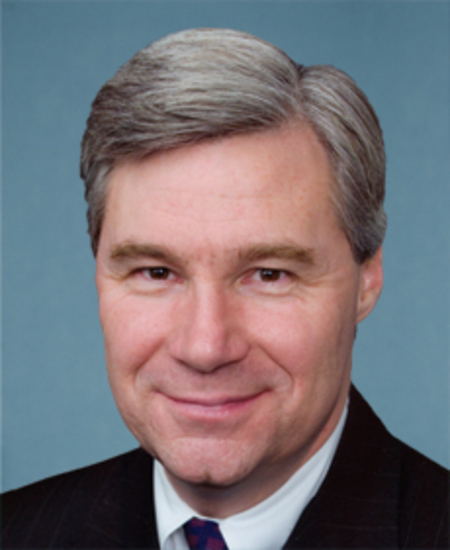
Sen. Sheldon Whitehouse
Sponsored bills
Maddy summaryThis bill requires federal agencies to develop a strategy within 120 days to prevent the trafficking of machinegun conversion devices - parts that convert regular firearms into machineguns. The strategy must improve detection, coordination between federal and local law enforcement, tracing of devices used in crimes, and address emerging threats like 3D-printed devices. It mandates annual reports to Congress on implementation progress and requires the Attorney General to include specific data on these devices in annual firearms trafficking reports. The bill directly affects federal agencies (ATF, FBI, Homeland Security), state/local law enforcement, and aims to disrupt trafficking networks.
Maddy summaryThis bill amends the tax code to close a loophole that previously allowed certain tar sands oil to be taxed differently than conventional crude oil. It expands the definition of "crude oil" under federal excise tax rules to explicitly include oil derived from tar sands, bitumen, and oil shale. This change directly affects oil producers and refiners handling these specific unconventional oil sources, requiring them to pay the standard crude oil excise tax. The key mechanism is the updated tax code definition, which also grants the Secretary regulatory authority to include other pipeline-transported petroleum products meeting specific environmental risk criteria.
Maddy summaryThis bill, the Major Richard Star Act (S 1032), allows veterans with combat-related disabilities to receive both their military retired pay and Veterans Affairs disability compensation simultaneously. It amends U.S. Code sections to remove the automatic reduction in retired pay that previously forced these veterans to choose between the two payments. The key change ensures veterans with combat-related disabilities qualify for full retired pay without offset against their VA disability benefits, effective for payments starting after the bill's enactment date. This directly affects veterans receiving military retired pay under Chapter 61 who also qualify for VA disability compensation for combat-related injuries.
Maddy summaryThe Putting Veterans First Act of 2025 protects veterans, military spouses, caregivers, survivors, and reserve component members who work in federal civil service. It requires the reinstatement of those removed, demoted, or suspended between January 20, 2025 and the bill's enactment date, with back pay and restored benefits. The bill also establishes protections against future removals without proper justification, mandates regular reporting on military community employment, and restricts changes to VA operations like office closures, hiring freezes, and telework policies without congressional notice. Additionally, it requires VA to restore canceled contracts and improve transparency through weekly workload reports and published wait times for community care.
Safe Schools Improvement Act This bill requires states to direct their local educational agencies (LEAs) to establish policies that prevent and prohibit bullying and harassment of elementary and secondary school students. In particular, these policies must prohibit bullying and harassment based on race, color, national origin, disability, religion, or sex. Sex includes sexual orientation, gender identity, and sex characteristics (including intersex traits). Further, LEAs must provide (1) students, parents, and educational professionals with annual notice of the conduct prohibited in their disciplinary policies; (2) students and parents with grievance procedures that target such conduct; and (3) the public with annual data on the incidence and frequency of that conduct at the school and LEA level. The Department of Education must conduct and report on an independent biennial evaluation of programs and policies to combat bullying and harassment in elementary and secondary schools. The National Center for Education Statistics must collect state data to determine the incidence and frequency of the conduct prohibited by LEA disciplinary policies.
Maddy summaryS 951, the "Stop Comstock Act," amends federal obscenity laws to remove outdated and restrictive language. It deletes terms like "indecent" and "immoral" from Title 18 (e.g., Sections 552, 1461, 1462) and the Tariff Act, which were historically used to block access to reproductive health materials. The bill directly affects how federal law defines "obscene" materials, eliminating references to abortion, contraception, or "immoral use" that could be misapplied to restrict lawful medical information. This is a technical legal update to clarify that federal obscenity laws do not cover protected reproductive health content.
Maddy summaryS 916 prohibits the detention of pregnant, lactating, or postpartum noncitizens in immigration custody, requiring their immediate release except in rare cases involving credible safety threats. It bans all physical restraints during pregnancy, labor, delivery, and postpartum recovery, with strict limits on exceptions. The bill mandates access to comprehensive reproductive healthcare, including prenatal care, labor services, and postpartum support, while requiring facilities to provide medical consent and maintain detailed reporting on detention practices. These provisions apply directly to noncitizens held by U.S. Immigration and Customs Enforcement (ICE) or U.S. Customs and Border Protection (CBP) facilities.
Maddy summaryThis bill establishes a federal grant program to help states and tribes implement Extreme Risk Protection Orders (ERPOs), which temporarily restrict firearm access for individuals deemed to pose a danger to themselves or others. To qualify for grants, states and tribes must enact legislation meeting specific requirements, including petition processes, notice and hearing procedures, and standards for issuing ERPOs. The bill requires states to notify federal authorities about ERPOs and update the National Instant Criminal Background Check System, ensuring ERPOs are recognized across state lines. It also mandates training for law enforcement on the safe, impartial use of ERPOs and includes provisions for reporting demographic data on petitioners and respondents. The legislation directly affects states, tribes, law enforcement officers, and individuals subject to ERPOs.
Maddy summaryThis bill amends the Religious Freedom Restoration Act (RFRA) to clarify that RFRA does not block enforcement of key federal laws protecting civil rights and safety. Specifically, it adds an exception preventing RFRA claims from overriding laws that prohibit discrimination (like the Civil Rights Act of 1964), ensure workplace protections (such as the Family and Medical Leave Act), prevent child exploitation, or guarantee healthcare access. The amendment ensures religious freedom arguments cannot be used to challenge these existing legal requirements. It also clarifies that RFRA does not apply to lawsuits against government entities seeking relief for violations of these protections.