

Fostering Overseas Rule of law and Environmentally Sound Trade Act of 2021 or the FOREST Act of 2021 This bill restricts certain commodities produced on illegally deforested land from accessing the U.S. market. Specifically, the bill prohibits the importation of any product made wholly or in part of a covered commodity produced from illegally deforested land. The bill outlines requirements for import declarations of covered commodities. The U.S. Trade Representative (USTR) must, within 30 days, publish (1) an initial list of covered commodities that consists of palm oil, soybeans, cocoa, cattle, rubber, and wood pulp; and (2) an initial list of covered products that are defined by the bill in accordance with the Harmonized Tariff Schedule. These lists must be updated at least on an annual basis. Further, the USTR must identify foreign countries without adequate and effective protection against illegal deforestation caused by the production of commodities that are likely to enter the United States. The USTR must develop an action plan that includes benchmarks for each identified country. Additionally, the bill creates an interagency working group to provide advice and recommendations to the USTR, U.S. Customs and Border Protection, and other relevant agencies. The bill provides funding to assist foreign governments in combating illegal deforestation. The bill also includes illegal deforestation as a specified unlawful activity under a federal financial crime statute. The bill establishes a federal procurement preference for commodities that are not produced from land subject to deforestation.
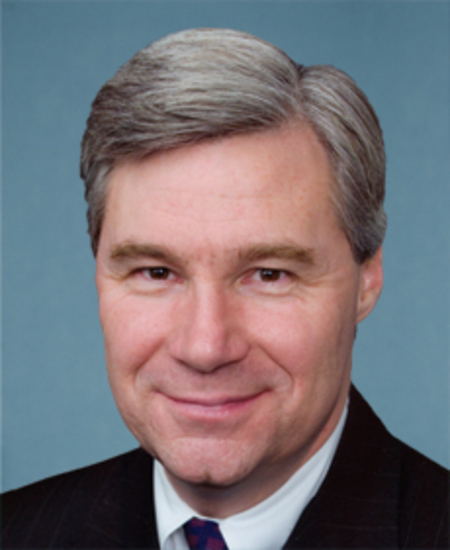
Sen. Sheldon Whitehouse
Sponsored bills
Parental Bereavement Act of 2021 or the Sarah Grace-Farley-Kluger Act This bill entitles an eligible employee to up to 12 workweeks of leave during any 12-month period because of the death of a son or daughter. Such an employee may substitute any available paid leave for any leave without pay. The bill applies the same leave entitlement to federal employees.
This resolution designates September 2021 as National Democracy Month.
Pregnant Workers Fairness Act This bill prohibits employment practices that discriminate against making reasonable accommodations for qualified employees affected by pregnancy, childbirth, or related medical conditions. A qualified employee is an employee or applicant who, with or without reasonable accommodation, can perform the essential functions of the position, with specified exceptions. Specifically, the bill declares that it is an unlawful employment practice to fail to make reasonable accommodations to known limitations of such employees unless the accommodation would impose an undue hardship on an entity's business operation; require a qualified employee affected by such condition to accept an accommodation other than any reasonable accommodation arrived at through an interactive process; deny employment opportunities based on the need of the entity to make such reasonable accommodations to a qualified employee; require such employees to take paid or unpaid leave if another reasonable accommodation can be provided; or take adverse action in terms, conditions, or privileges of employment against a qualified employee requesting or using such reasonable accommodations. The bill sets forth enforcement procedures and remedies that cover different types of employees in relation to such unlawful employment practices. The Equal Employment Opportunity Commission must provide examples of reasonable accommodations that shall be provided to affected employees unless the employer can demonstrate that doing so would impose an undue hardship. The bill prohibits state immunity under the Eleventh Amendment to the Constitution from an action for a violation of this bill.
Excellence in Recovery Housing Act This bill tasks the Substance Abuse and Mental Health Services Administration (SAMHSA) with various activities to promote the availability of high-quality recovery housing for individuals with substance use disorders. Recovery housing refers to shared living environments free from alcohol and illicit drug use and centered on peer support and connection to services that promote sustained recovery from substance use disorders. Specifically, SAMHSA must develop and publish on its website standards and guidelines for recovery housing; award grants to states, tribal nations, territories, and localities to implement such standards and guidelines; convene an interagency working group to coordinate federal activities related to recovery housing; and arrange for research on the supply, quality, and effectiveness of recovery housing.
This resolution recognizes the importance of education to prevent substance use disorders and expresses gratitude for family members and others who support individuals in recovery.
Unclaimed Savings Bond Act of 2021 This bill establishes requirements and procedures for the Department of the Treasury to transfer ownership of certain matured, unredeemed savings bonds and related records to states.
This resolution honors the life of Robert Dove, Parliamentarian Emeritus of the Senate, and offers the condolences of the Senate regarding his death.
This resolution designates September 20-September 24, 2021, as National Clean Energy Week.
Tyler Clementi Higher Education Anti-Harassment Act of 2021 This bill addresses harassment at institutions of higher education (IHEs). Specifically, the bill requires each IHE to include in its annual security report a statement of policy regarding harassment on the basis of a student's actual or perceived race, color, national origin, sex (including sexual orientation, gender identity, pregnancy, childbirth, a medical condition related to pregnancy or childbirth, and a sex stereotype), disability, or religion. In addition, the Department of Education may award grants to IHEs to initiate, expand, or improve programs to (1) prevent the harassment of students; (2) provide counseling or redress services to students who have been harassed or accused of subjecting other students to harassment; or (3) educate and train students, faculty, or staff to prevent harassment or address harassment if it occurs.