Suicide Prevention Act This bill establishes two grant programs to prevent self-harm and suicide. The Centers for Disease Control and Prevention must award grants to state, local, and tribal health departments to expand surveillance of self-harm, and the Substance Abuse and Mental Health Services Administration must award grants to hospital emergency departments for programs to prevent suicide attempts among patients after discharge.
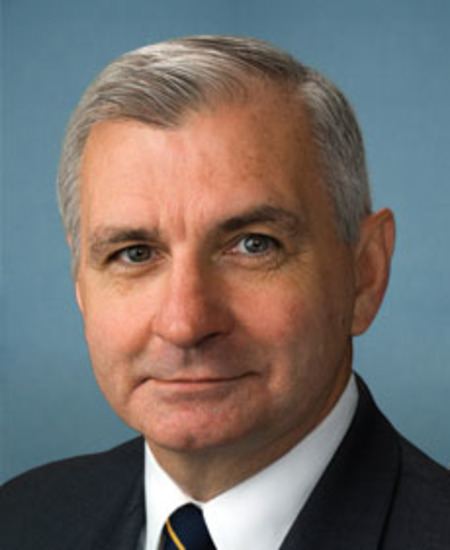
Sen. Jack Reed
Sponsored bills
Protecting the Right to Organize Act of 20 21 This bill expands various labor protections related to employees' rights to organize and collectively bargain in the workplace. Among other things, it revises the definitions of employee , supervisor , and employer to broaden the scope of individuals covered by the fair labor standards; permits labor organizations to encourage participation of union members in strikes initiated by employees represented by a different labor organization (i.e., secondary strikes); and prohibits employers from bringing claims against unions that conduct such secondary strikes. The bill also allows collective bargaining agreements to require all employees represented by the bargaining unit to contribute fees to the labor organization for the cost of such representation, notwithstanding a state law to the contrary; and expands unfair labor practices to include prohibitions against replacement of, or discrimination against, workers who participate in strikes. The bill makes it an unfair labor practice to require or coerce employees to attend employer meetings designed to discourage union membership and prohibits employers from entering into agreements with employees under which employees waive the right to pursue or a join collective or class-action litigation. Finally, the bill addresses the procedures for union representation elections, modifies the protections against unfair labor practices that result in serious economic harm, and establishes penalties and permits injunctive relief against entities that fail to comply with National Labor Relations Board orders.

Maddy summaryThis Senate resolution (SRES 679) formally commemorates June 19, 2022, as "Juneteenth National Independence Day" to honor the historical event of June 19, 1865, when Union troops announced the end of slavery in Texas. It references the significance of this date in U.S. history, specifically the moment news of emancipation reached enslaved people in the Southwestern States. The resolution does not create new legal obligations or affect any specific group; it is a symbolic recognition of this historical milestone. It aligns with Juneteenth’s established status as a federal holiday, which was officially designated in 2021.
United States Army Rangers Veterans of World War II Congressional Gold Medal Act This bill provides for the award of a single Congressional Gold Medal to the U.S. Army Rangers Veterans of World War II in recognition of their dedicated service during World War II.
This resolution expresses support for the rights, freedoms, and equal treatment of lesbian, gay, bisexual, transgender, and queer (LGBTQ) individuals. The resolution r ecognizes that LGBTQ rights are human rights and protected by the laws of the United States and international treaties. Additionally, the resolution encourages the celebration of LGBTQ Pride Month in June.
This resolution expresses support for the designation of June 2022 as National Gun Violence Awareness Month and the designation of June 3, 2022, as National Gun Violence Awareness Day.
This resolution celebrates 100 years of continuous diplomatic relations between the United States and Estonia, Latvia, and Lithuania (the Baltic States). The resolution also commits to providing continued support for the Baltic States through economic and security cooperation, including through the Baltic Security Initiative.
Affordability is Access Act This bill establishes several requirements relating to health insurance coverage of, and access to, over-the-counter contraceptives. Specifically, the bill requires the Department of Health and Human Services, the Department of Labor, and the Department of the Treasury to specify that private health insurance plans must cover over-the-counter contraceptives that are approved by the Food and Drug Administration (FDA), even without a prescription. Under current law, private health insurance plans (with some exceptions) must cover FDA-approved prescription contraceptives, without cost-sharing requirements. The bill also prohibits retailers from interfering with an individual's access to oral contraceptives that are meant for routine, daily use and are FDA-approved for use without a prescription.
Garrett Lee Smith Memorial Reauthorization Act of 2022 This bill reauthorizes through FY2027 multiple suicide prevention programs and related activities with a particular focus on youth and young adults. Specifically, the bill reauthorizes grants for statewide or tribal youth suicide prevention and early intervention strategies and for mental health and substance use disorder services for college students, and a suicide prevention resource center that provides training and other resources regarding suicide prevention among all ages.
Palliative Care and Hospice Education and Training Act This bill requires the Department of Health and Human Services (HHS) to take a series of actions relating to palliative-care training. Specifically, HHS must provide support for Palliative Care and Hospice Education Centers. The centers must improve the training of health professionals in palliative care and establish traineeships for individuals preparing for advanced-education nursing degrees, social-work degrees, or advanced degrees in physician-assistant studies in palliative care. HHS may provide support to medical schools, teaching hospitals, and graduate medical-education programs for training physicians who plan to teach palliative medicine. HHS must (1) provide Palliative Medicine and Hospice Academic Career Awards to individuals to promote their career development, (2) support entities that operate a Palliative Care and Hospice Education Center, (3) support individuals in specified fields who are pursuing an advanced degree in palliative care or related fields, and (4) award grants to nursing programs to train individuals in providing palliative care. The Agency for Healthcare Research and Quality must provide for a national education and awareness campaign to inform patients, families, and health professionals about the benefits of palliative care. The National Institutes of Health must expand national research programs in palliative care.