

Maddy summary# Summary of National Defense Authorization Act for Fiscal Year 2024 Provisions This document contains numerous provisions from the National Defense Authorization Act for Fiscal Year 2024, focusing primarily on military personnel policies, benefits, and related matters. Key areas include: 1. **Personnel Policies and Merit-Based Systems**: - Requires all military promotions, assignments, and personnel actions to be based on qualifications, performance, and merit (Section 534) - Prohibits the use of critical race theory in military policies and requires all personnel actions to be based on merit (Section 535) - Establishes a "tiger team" to improve outreach to veterans regarding discharge characterization reviews (Section 536) 2. **Military Education and Training**: - Requires military service academies to consider standardized test scores in application processes (Section 560) - Establishes a Junior Reserve Officers' Training Corps (JROTC) expansion program with a target of 3,400-4,000 units (Section 571) - Creates a Community College Enlisted Training Corps demonstration program (Section 554) - Requires a future servicemember preparatory course for recruits with low AFQT scores (Section 551) 3. **Military Justice Reforms**: - Establishes staggered terms for members of the Military Justice Review Panel (Section 541) - Makes technical amendments to the Uniform Code of Military Justice (Section 542) 4. **Military Benefits**: - Modifies basic allowance for housing calculations to better reflect junior members' housing costs (Section 602) - Expands eligibility for reimbursement of military spouse licensure costs (Section 606) - Creates provisions for dual basic allowance for housing for certain reserve component training (Section 604) - Establishes new provisions for pay of reserve members to obtain/maintain aviation ratings (Section 601) 5. **Family Support**: - Creates a pilot program to improve compensation for child development program employees (Section 561) - Requires military spouse assistance for doula certifications (Section 564) - Establishes a program to provide assistance to local educational agencies benefiting military dependents (Section 562) 6. **Restrictions and Prohibitions**: - Prohibits former military members from accepting certain foreign government employment (Section 582) - Bans military departments from requiring gender or pronouns in official correspondence (Section 583) - Restricts military service academy athletes from professional sports without proper service commitments (Section 553) The document reflects a comprehensive approach to military personnel management, with significant focus on merit-based systems, improved benefits, enhanced training programs, and better support for military families.
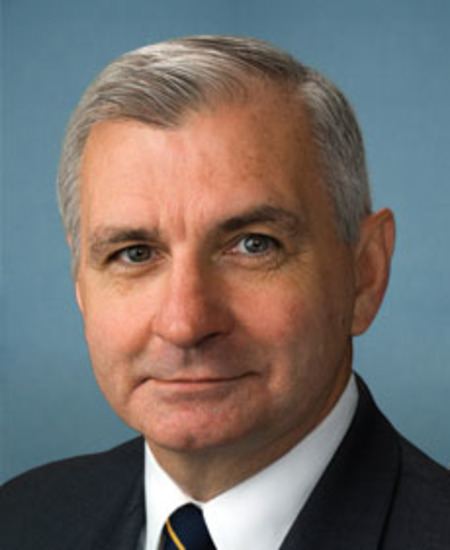
Sen. Jack Reed
Sponsored bills
Maddy summarySRES 312 is a non-binding Senate resolution recognizing the role of the Americans with Disabilities Act (ADA) in enabling independent living for people with disabilities and highlighting ongoing challenges like institutional segregation and disparities in healthcare, employment, and accessibility. It calls on federal agencies - including the Departments of Labor, Health and Human Services, Housing, and Transportation - to take specific actions to improve home- and community-based services, accessibility, and economic opportunities for people with disabilities. The resolution emphasizes addressing barriers identified 33 years after the ADA's passage, including pandemic impacts and racial disparities affecting disabled communities. As a symbolic resolution, it does not create new laws or funding but urges bipartisan collaboration and agency action to advance ADA goals.
Maddy summaryThe Promotion and Expansion of Private Employee Ownership Act of 2023 aims to increase employee ownership in S corporations by making it easier for companies to adopt Employee Stock Ownership Plans (ESOPs). Key provisions include extending tax deferral for sales of company stock to ESOPs, creating a Treasury Department office to provide technical assistance for ESOPs, and amending small business laws to ensure ESOP-owned businesses remain eligible for small business programs. The bill also establishes a dedicated Advocate for Employee Ownership within the Department of Labor to promote ESOP adoption, provide education, and help resolve disputes related to ESOPs. This legislation directly affects S corporations considering employee ownership transitions, their employees who would become partial owners, and small businesses that want to maintain eligibility for small business programs after an ESOP transition. The bill seeks to expand a model that studies show provides employees with retirement savings and greater job stability compared to traditional companies.
Maddy summaryThis bill requires employers to prevent heat-related illness and injury by implementing specific protections for workers exposed to heat stress. It mandates employer actions including providing cool water, scheduled rest breaks, access to shade, acclimatization policies, and training on heat illness symptoms and responses. The law also requires employers to cover costs for personal cooling equipment, develop written heat illness prevention plans with worker input, and ensure training is accessible in workers' preferred languages. These provisions directly affect outdoor workers, agricultural laborers, construction crews, and others in high-heat occupational settings.
Maddy summaryThe Raise the Wage Act of 2023 would gradually increase the federal minimum wage to $17.00 per hour by 2028, with specific annual steps: $9.50 in year one, $11.00 in year two, $12.50 in year three, $14.00 in year four, $15.50 in year five, and $17.00 starting in year six. It also phases out separate minimum wage rates for tipped workers (raising their base wage to match the standard minimum wage by year six) and for workers under 20 (phasing out their lower rate by year five). The bill requires annual minimum wage adjustments after year six based on increases in the median hourly wage of all employees, as tracked by the Bureau of Labor Statistics. Additionally, it eliminates special minimum wage certificates for workers with disabilities by 2028, requiring all such workers to receive the standard minimum wage.
Maddy summary# Summary of Proposed Election Reform Legislation This comprehensive legislative document outlines a wide-ranging election reform bill with multiple titles addressing various aspects of voting rights, election administration, and election integrity. Key provisions include: 1. **Democracy Restoration** (Title I): - Restores voting rights for citizens with criminal convictions (except those serving felony sentences in correctional institutions) - Requires states to notify individuals of restored voting rights upon completion of sentence or release from custody - Includes enforcement mechanisms for states to comply with the restoration provisions 2. **Voter Identification Requirements** (Title II): - Establishes a standardized system for voter identification requirements - Specifies acceptable forms of identification (including many government-issued documents) - Requires states to provide free identification documents to eligible voters - Includes funding ($5 million annually for 5 years) to cover costs 3. **Voter List Maintenance** (Title III): - Prohibits "voter caging" (using undeliverable mail to challenge voter eligibility) - Requires states to verify voter ineligibility using objective and reliable evidence - Limits removal of voters from registration lists to specific circumstances (death, permanent move) - Mandates notice requirements for voters removed from lists 4. **Election Integrity** (Title IV): - Prohibits interference with voter registration (Section 612) - Restricts removal of local election administrators to cases of inefficiency, neglect, or malfeasance - Prohibits harassment and intimidation of election workers - Bans deceptive practices in elections (false information about voting procedures, qualifications, or endorsements) The legislation aims to expand voting access while maintaining election integrity, with specific focus on eliminating barriers for people with criminal convictions, ensuring fair voter list maintenance, and protecting election workers from harassment and intimidation. It also includes provisions for enforcement through civil actions, criminal penalties, and reporting requirements.
Maddy summaryS 2372, the Accelerating Kids’ Access to Care Act, streamlines enrollment for out-of-state healthcare providers who treat Medicaid-eligible children under 21 with medically complex conditions. It requires states to adopt a process allowing these providers to join state Medicaid/CHIP programs without extra state-level screening, provided they already meet federal Medicare or home-state program requirements and pose low fraud risk. The bill establishes a 5-year enrollment period for eligible providers, directly affecting children needing specialized care across state lines and the providers serving them. Key provisions remove barriers to interstate care coordination while maintaining federal oversight standards.
Maddy summary# Summary of Comprehensive Election Reform Bill This document is a comprehensive voting rights and election reform bill containing multiple titles with various provisions designed to: 1. **Restore voting rights** for citizens with criminal convictions (Democracy Restoration Act) - Restores voting rights for citizens not serving felony sentences in correctional institutions - Requires states to notify individuals of restored voting rights upon release or probation - Establishes enforcement mechanisms through civil actions 2. **Strengthen voter identification requirements** - Establishes a broad list of acceptable identification documents - Requires states to provide government-issued identification at no cost - Allows for provisional ballots with sworn statements for those without ID - Includes provisions for electronic documents and copies 3. **Prohibit voter caging and improper voter list maintenance** - Bans the use of "voter caging" documents or lists as evidence for challenging voter eligibility - Establishes strict conditions for removing voters from registration lists - Requires objective and reliable evidence for removals - Mandates notification procedures for voters removed from lists 4. **Enhance election integrity protections** - Prohibits interference with voter registration (including hindering, interfering with, or preventing registration) - Restricts removal of local election administrators to cases of inefficiency, neglect, or malfeasance - Protects election workers from intimidation and harassment - Bans deceptive practices regarding election information within 60 days of an election - Establishes criminal penalties for deceptive election practices 5. **Provides enforcement mechanisms** - Establishes private rights of action for violations - Includes civil and criminal penalties for violations - Requires reports to the Department of Justice for removals of election administrators - Sets specific timeframes for notification and corrective actions The bill aims to expand voting access while maintaining election integrity, with provisions designed to protect voting rights, prevent discrimination, and ensure fair administration of elections for Federal office.
Maddy summaryThe Healthy Families Act requires most employers (with 15 or more employees) to provide workers with up to 56 hours of paid sick leave annually, earned at a rate of 1 hour for every 30 hours worked. Employees can use this leave for their own illness, medical care, caring for family members with health conditions, or addressing domestic violence, sexual assault, or stalking situations. The law prohibits employers from retaliating against workers who use this leave and mandates that employers post notices about the policy. Smaller employers (with fewer than 15 employees) may provide up to 56 hours of unpaid sick leave instead of paid leave. The Act includes enforcement mechanisms allowing employees to file complaints with the Department of Labor and seek damages for violations.
Maddy summaryThis bill creates a framework for qualifying news organizations to form groups to negotiate with large online platforms about fair payment for their content. It allows these groups to jointly deny platforms access to their content during negotiations and use binding arbitration to determine fair compensation based on the content's market value. The bill provides antitrust immunity for these negotiations, requires platforms to pay based on the value of news content rather than platform benefits, and includes transparency requirements for how funds support journalism. It defines specific eligibility criteria for news organizations and platforms, and sets a 6-year expiration for the law.