

Maddy summaryThis Senate resolution supports designating September 17-23, 2023, as National Adult Education and Family Literacy Week. It expresses the Senate’s backing for raising public awareness about adult education, workforce skills, and family literacy programs. The resolution encourages broader support for these initiatives but does not create new laws, funding, or direct obligations. It serves as a symbolic gesture highlighting the importance of literacy for individuals and communities.
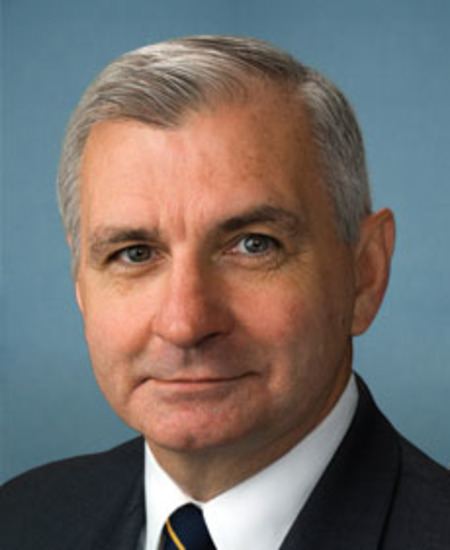
Sen. Jack Reed
Sponsored bills
Maddy summarySRES 353 is a symbolic Senate resolution designating the week of September 16-23, 2023, as "National Estuaries Week." It expresses the Senate’s support for raising public awareness about the ecological and economic importance of estuaries. The resolution highlights estuaries’ role in supporting jobs, economic output, and critical habitats, while acknowledging threats like pollution and habitat loss. This procedural resolution has no direct regulatory or funding impact - it serves solely as a formal acknowledgment of estuaries’ value.
Maddy summarySRES 351 is a ceremonial Senate resolution designating September 25, 2023, as "National Lobster Day." It formally recognizes the cultural, economic, and culinary significance of lobster in the United States, highlighting its role in coastal communities, sustainability efforts, and traditions. The resolution encourages the public to observe the day through activities but does not create new laws, funding, or obligations. It directly affects no specific group or industry, serving only as a symbolic acknowledgment. This procedural resolution was introduced by Senators King, Collins, Shaheen, and others and adopted by the Senate on September 19, 2023.
Maddy summaryThis Senate resolution symbolically designates September 2023 as "National Voting Rights Month" to raise awareness about voting rights history and current challenges. It recommends Congress pass specific voting rights legislation (like the Freedom to Vote Act and Democracy Restoration Act) and encourages public education on voting accessibility, registration, and historical voter suppression. The resolution has no binding effect on policy or funding - it serves as a symbolic recognition and call to action for voting rights advocacy.
Maddy summaryThis resolution designates September 2023 as "National Childhood Cancer Awareness Month" in the U.S. Senate. It requests federal, state, local governments, and nonprofits to observe the month with programs aimed at increasing public awareness about childhood cancer risks. The resolution also encourages ongoing health monitoring for childhood cancer survivors and honors children facing cancer, while acknowledging the disease's significant impact (over 15,500 annual diagnoses and 1,700 deaths in children under 19). As a symbolic measure with no legal force, it does not change policies or allocate funding but seeks to raise national attention on childhood cancer.
Maddy summaryThe Schedules That Work Act requires employers in retail, food service, hospitality, and cleaning industries to provide 14 days' advance notice of work schedules and pay predictability pay for last-minute changes. It gives eligible nonexempt workers the right to request schedule adjustments for family care, health needs, education, or second jobs, with employers required to grant these requests unless they have a bona fide business reason for denial. The law applies to covered employers with 15 or more workers and prohibits retaliation against employees who exercise these rights. The legislation aims to address widespread issues with unpredictable scheduling that disproportionately affect low-wage workers, particularly women and people of color, by providing greater schedule stability and control.
Maddy summaryThis resolution designates the week beginning September 11, 2023, as "National Hispanic-Serving Institutions Week" to recognize institutions that enroll at least 25% Hispanic students. It directly affects Hispanic-Serving Institutions (HSIs), which serve over 5 million students across 28 states, the District of Columbia, and Puerto Rico. The resolution calls for public observance through ceremonies and activities during that week to honor HSIs' role in advancing educational access, economic mobility, and Hispanic Heritage Month. As a ceremonial resolution, it has no binding policy impact but formally acknowledges these institutions' contributions.
Maddy summaryThis proposed constitutional amendment would give Congress and states the authority to regulate campaign contributions and spending, including setting limits and prohibiting corporations from spending money to influence elections. It explicitly protects freedom of the press by stating the amendment cannot be used to abridge it. If ratified by three-fourths of state legislatures, it would establish a new constitutional standard for campaign finance regulation.
Maddy summarySRES 343 is a Senate resolution designating September 17, 2023, as "National Physician Suicide Awareness Day." It aims to raise public awareness about physician suicide - a critical issue where doctors face significantly higher suicide rates (1.41x for men and 2.27x for women compared to the general population) due to job stress, burnout, and mental health stigma. The resolution encourages national discussion, honors physicians who have died by suicide, and urges the President to issue a proclamation promoting awareness and educational activities. It does not create new laws or funding but serves as a symbolic step to reduce stigma around mental health in the medical profession.
Maddy summaryThis bill provides $16 billion in federal funding over five years (2024-2028) to stabilize the child care sector. It directly affects child care providers by offering grants to offset operating costs, support higher wages for early childhood educators without increasing fees for families, and expand access to high-quality care. Key provisions include funding for providers in underserved areas (like rural communities, infant/toddler care, and inclusive services for children with disabilities) and a requirement that 99% of funds go directly to providers. The funds are administered through the existing framework of the American Rescue Plan Act's child care program.