

Maddy summaryThe Equal COLA Act (S 3194) changes how cost-of-living adjustments (COLAs) are calculated for federal retirees under the Federal Employees Retirement System (FERS). It requires that FERS annuities (retirement benefits) be adjusted each December 1 based on the annual change in the price index, rounded to the nearest 0.1%. This applies to all future COLAs, regardless of when the annuity began - whether before, on, or after the law's effective date. The bill directly affects federal retirees receiving FERS benefits, ensuring their payments rise with inflation as measured by the specified price index.
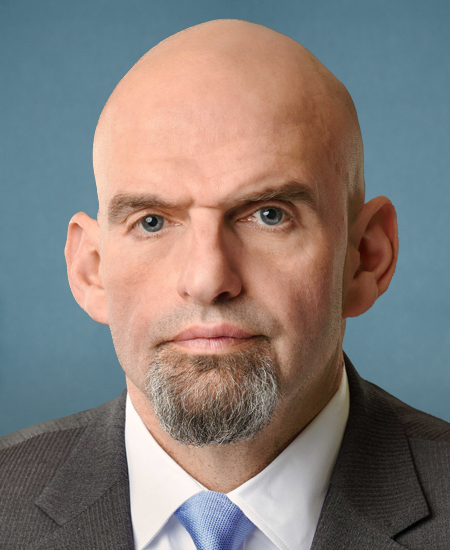
Sen. John Fetterman
Sponsored bills
This resolution designates October 2023 as National Farm to School Month and recognizes support for policy improvements to farm to school programs in legislation reauthorizing child nutrition programs. This resolution also (1) encourages schools, early care and education organizations, and local educational agencies to use local farm products in meals; and (2) encourages schools, early care and education organizations, farmers and farm groups, local businesses, nonprofit institutions, churches, cities, state governments, and other local groups to raise awareness of farm to school efforts in their communities.
Maddy summaryThe CHILD Labor Act strengthens protections against child labor by defining "oppressive child labor" to include specific dangerous occupations for children under 18, such as manufacturing, mining, trenching, and meat processing. It prohibits Federal contractors from employing children under 16 in any work and restricts 16-17 year olds from hazardous occupations, requiring contractors to implement training programs and establish labor-management committees to monitor compliance. The bill significantly increases penalties for violations, including civil fines up to $750,000 for violations causing death or serious injury, and adds criminal penalties for willful violations. It also requires the Department of Labor to issue "child labor tags" for goods produced with prohibited child labor and submit annual reports to Congress on work-related injuries and deaths.
Maddy summaryThe Support Through Loss Act (S 3137) would provide eligible employees with 56 hours of paid leave per year to address pregnancy loss, unsuccessful assisted reproductive technology procedures, failed adoption or surrogacy arrangements, or medical events impacting pregnancy or fertility. This leave can also be used to care for a spouse or domestic partner experiencing these events. Employers with 5 or more employees would be required to provide this leave, with specific notice requirements and protections against discrimination for taking this leave. The bill also includes provisions for research and education on pregnancy loss through the Department of Health and Human Services, including $45 million annually for research on causes and treatments.
Maddy summaryThis bill modernizes unemployment insurance by establishing minimum benefit levels (26 weeks of coverage, 75% wage replacement, and a $250 weekly jobseeker allowance), eliminating waiting periods, and expanding eligibility for workers affected by harassment, domestic violence, or medical emergencies. It creates new triggers for extended benefits during recessions and increases available weeks during high unemployment periods, with potential additional weeks based on unemployment rates. The bill requires states to implement these changes by January 2025 or earlier, directly affecting unemployed workers, their families, and state unemployment insurance programs nationwide. It also establishes a new jobseeker allowance program with potential increases during economic downturns.
Maddy summaryThis resolution (SRES 432) is a ceremonial Senate measure commemorating the fifth anniversary of the October 27, 2018, antisemitic attack at Pittsburgh’s Tree of Life synagogue, which killed 11 people. It does not create new laws or policies; instead, it honors the victims, thanks law enforcement and medical responders, and expresses solidarity with the Pittsburgh Jewish community. The resolution condemns antisemitism as a threat to U.S. values and reaffirms the government’s commitment to protecting religious freedom and safety. It follows a pattern of symbolic congressional recognition for significant historical events.
This resolution recognizes October 2023 as National Women's Small Business Month, honoring the role of women small business owners and entrepreneurs and encouraging the support and creation of women-owned small businesses.
Maddy summaryThis bill updates the Runaway and Homeless Youth Act to better support vulnerable youth experiencing homelessness or at risk of exploitation. It creates new grant programs that provide temporary shelter, counseling, and transitional housing for youth up to age 26, with special attention to those who are victims of trafficking or from marginalized communities. The bill requires services to be culturally appropriate, trauma-informed, and to include support for education and job skills, while expanding prevention services to help youth avoid homelessness. It authorizes $200 million annually for these programs through 2028, with specific funding allocations for different service types. The bill directly affects runaway, homeless, and street youth, particularly those from historically underserved populations who face barriers to accessing services.
Maddy summaryThis bill increases federal funding for Medicaid home and community-based services (HCBS) by raising the federal share (FMAP) by 10 percentage points for states during 2024-2025, capped at 95%. States must apply with plans to use these funds to increase wages and benefits for home care workers (like paid leave and hazard pay), reduce waiting lists for services, help people return from institutional settings, and cover related costs like equipment or training. Funds must supplement, not replace, existing state spending and be reported on by states by 2027. It directly affects states administering Medicaid HCBS programs, home care workers, and people receiving community-based care.
Maddy summaryThis bill creates a Medicare buy-in option for first responders aged 50-64 who retired or became disabled due to service. It allows eligible individuals (including police, firefighters, and emergency medical personnel) who aren’t already enrolled in Medicare to purchase comprehensive Medicare coverage (Parts A, B, and D) at a premium calculated based on average Medicare costs. The premium is paid monthly to the Medicare trust funds, and coverage coordinates with Affordable Care Act plans to ensure access to premium tax credits and cost-sharing subsidies. The program does not affect existing Medicare beneficiaries or the financial stability of Medicare trust funds.