

Maddy summarySRES 408 is a commemorative resolution designating September 20, 2025, as "National LGBTQ+ Servicemembers and Veterans Day." It honors lesbian, gay, bisexual, transgender, and queer (LGBTQ+) individuals who served in the U.S. military despite historical discrimination, including policies like Don’t Ask, Don’t Tell and bans on transgender service. The resolution acknowledges past harms, such as discharges based on sexual orientation or gender identity, and urges federal agencies to address ongoing inequities in benefits and healthcare access. It does not create new laws or alter policies but formally recognizes contributions and regrets historical injustices. This is a symbolic gesture to celebrate LGBTQ+ military service and promote awareness of ongoing challenges.
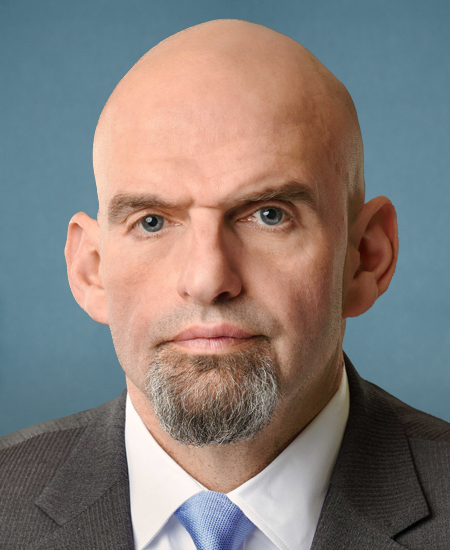
Sen. John Fetterman
Sponsored bills
Maddy summaryThe America’s CHILDREN Act of 2025 would create a pathway to permanent residency for young adults who entered the U.S. as children and were dependents of nonimmigrant workers (with specific work visas, excluding certain categories) for at least 8 years. To qualify, applicants must have graduated from a U.S. college or university, been lawfully present in the U.S. for 10 years total, and meet other eligibility criteria like not being inadmissible. The bill includes key protections: it prevents "aging out" by using the date a parent’s visa petition was filed to determine child status (instead of current age), allows reconsideration of past denials under the new rules, and retains priority dates for family-based immigration applications. This directly affects young adults who grew up under these visa statuses and completed higher education in the U.S.
Maddy summaryS 2913, the Protecting Students with Disabilities Act, prevents federal funding from being used to restructure or eliminate offices within the Department of Education that administer disability-related programs. The bill specifically prohibits using funds to: (1) dismantle or merge offices serving students with disabilities (under IDEA) or adults with disabilities (under the Rehabilitation Act), (2) change staff roles that could undermine these programs, or (3) outsource these services to outside organizations. It directly affects the Department of Education’s disability program offices and the students and adults who rely on their services. The bill maintains existing program structures by restricting how federal funds can be allocated, ensuring compliance with current laws like IDEA and the Rehabilitation Act.
Maddy summaryS 2870, the "Fight Illicit Pill Presses Act," requires manufacturers, distributors, and sellers of tableting machines (used to make pills) and their key components (like punches and dies) to permanently affix serial numbers to these items. It mandates that regulated businesses report these serial numbers to the Attorney General and prohibits removing, altering, or trafficking in machines or parts with tampered serial numbers. This law directly affects businesses involved in producing, selling, or distributing pill-making equipment, aiming to improve tracking of machines potentially used for illicit drug manufacturing. The bill amends the Controlled Substances Act to create new recordkeeping and reporting requirements for these specific machines and parts.
Maddy summaryThis bill requires U.S. colleges and universities to update their anti-harassment policies to explicitly cover online communications (like emails and social media) and all campus activities, including off-campus events and dormitories. It mandates institutions to create clear procedures for reporting harassment based on protected characteristics (such as race, gender identity, or disability), including how they will investigate and respond to incidents. The bill also creates a new $50 million annual grant program to fund schools developing prevention programs, counseling services, or training for students and staff on recognizing and addressing harassment. These requirements supplement existing federal civil rights laws like Title IX but do not replace them.
Maddy summaryThis bill designates a National Day of Remembrance for 13 U.S. service members who died in the Abbey Gate bombing at Kabul's airport on August 26, 2021. It also expresses the nation's deepest condolences to their families and commemorates their service during the Afghanistan withdrawal. As a commemorative resolution, it has no policy or funding impact but formally honors these individuals' sacrifice through a designated day of remembrance.
Maddy summaryThis Senate resolution (SRES 398) condemns Azerbaijan’s detention and treatment of Dr. Gubad Ibadoghlu, a detained academic economist, and urges his immediate release. It highlights his arrest without evidence, severe beatings in custody, denial of medical care, and prolonged legal limbo despite house arrest. The resolution directs U.S. agencies to prioritize his release in diplomatic engagements with Azerbaijan, linking it to international events like the Formula 1 Grand Prix. As a non-binding resolution, it serves as diplomatic pressure to address human rights concerns tied to Azerbaijan’s international image.
Maddy summaryThe Protect America’s Workforce Act (S 2837) directly affects federal employees and their labor unions by reversing two executive orders that limited their collective bargaining rights. It nullifies Executive Orders 14251 and 14343, which had excluded certain federal workers from labor-management programs, and prohibits federal funding for any efforts to implement those orders. The bill ensures that all existing collective bargaining agreements between federal agencies and employee unions remain fully enforceable through their original terms, as long as they were in effect as of March 26, 2025. This preserves current workplace agreements without creating new obligations or altering existing labor-management processes.
Maddy summaryS 2827, the Fair Housing Improvement Act of 2025, expands the Fair Housing Act to prohibit discrimination based on source of income, veteran status, and military status. It directly affects renters and homebuyers using housing assistance (like vouchers or Social Security benefits), veterans, and military members, while requiring landlords and housing providers to comply with these new protections. Key provisions explicitly add these categories to existing anti-discrimination clauses in the Fair Housing Act, defining "source of income" to include housing vouchers, government benefits, spousal support, and other lawful income streams. The bill also strengthens protections against intimidation in fair housing cases by adding these categories to existing civil rights language.
Maddy summaryThe Billionaires Income Tax Act (S 2845) would require high-net-worth individuals with at least $1 billion in assets or $100 million in annual income (or $500 million/$50 million for married filing separately) to pay taxes annually on investment gains rather than deferring taxes until assets are sold. It implements "mark-to-market" taxation for tradable assets like stocks and closes loopholes that allow tax-free transfers of assets to heirs, eliminating strategies like "buy, borrow, die." The bill targets "applicable taxpayers" by requiring annual tax payments on investment gains and modifies special tax provisions for investments in small business stock and qualified opportunity funds. The law would apply to individuals meeting either the asset or income test for three consecutive years, with specific rules for married couples and trusts.