

Maddy summaryThis bill enhances Civilian Conservation Centers (CCCs) operated by the Interior or Agriculture Departments to train underserved youth in conservation fields. It creates specialized wildfire and forestry training programs at CCCs, sets annual hiring goals (300 covered graduates per year for wildland firefighting roles), and allows direct hiring of graduates without standard civil service rules. The bill also establishes a housing pilot program using covered students to renovate federal housing for firefighters and other agency staff. These provisions directly affect CCC graduates (those who completed training) and current CCC students, aiming to build workforce pipelines for conservation and firefighting careers.
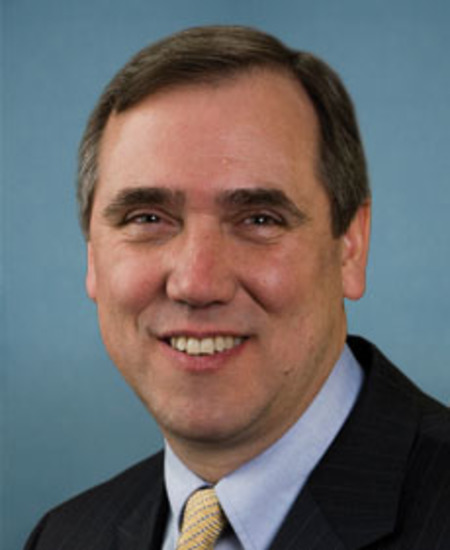
Sen. Jeff Merkley
Sponsored bills
Maddy summaryThe HART Act requires real estate investors to report all residential property purchases made in a single year as one transaction to the Federal Trade Commission (FTC) and Department of Justice (DOJ). It directly affects individuals or entities buying multiple residential properties (like apartments or single-family homes) for investment purposes, not for personal residence. The bill amends antitrust law to count all such annual acquisitions as a single "acquisition" for reporting, excluding properties held solely for personal use. New FTC rules will define the required reporting format and documentation to assess if large-scale property purchases might violate antitrust laws.
Maddy summaryThis bill sets annual reference prices for prescription drugs based on the lowest prices in specific countries (like Canada, UK, and Germany), preventing manufacturers from charging more than this price for drugs covered under major federal health programs. It directly affects Medicare, Medicaid, VA care, TRICARE, and other federal health programs by capping drug costs at the reference price. Manufacturers must sell drugs at or below this reference price to all patients, including those without insurance, with civil penalties of up to five times the revenue difference for non-compliance. Collected penalties fund drug research through the National Institutes of Health.
Maddy summaryThe TALENTS Act establishes the Presidential Management Fellows Program to develop future federal leaders by recruiting individuals with advanced degrees for two-year leadership development positions. The program requires agencies to provide Fellows with at least 80 hours of annual training, rotational assignments, and mentorship through Individual Development Plans. It increases Fellow positions to 200% of previous levels for fiscal years 2026-2031 and establishes Federal Executive Boards in 26 metropolitan areas to coordinate leadership development efforts. Successful completion of the program makes Fellows eligible for conversion to permanent competitive service positions within the federal government.
Maddy summaryThis bill requires the President to review whether specific Hong Kong judicial and government officials meet criteria for existing U.S. sanctions within 180 days of enactment. It directly affects 45 named individuals, including Hong Kong Chief Justice Andrew Cheung Kui-nung, judges, prosecutors, and officials like Chief Executive John Lee, who were previously sanctioned or hold current roles. The review will determine if sanctions under the Global Magnitsky Act, Hong Kong Human Rights Act, or other existing legal authorities apply to these individuals. The bill does not impose new sanctions but mandates a formal assessment process using current U.S. legal frameworks.
Maddy summaryThis bill prohibits U.S. federal agencies from recognizing Russia's claim of sovereignty over Crimea or any other Ukrainian territory seized by force. It requires all federal departments and agencies to avoid any actions, nonhumanitarian aid, or spending that implies such recognition, unless Ukraine's democratically elected government formally approves it. The policy explicitly bans U.S. government actions that could signal acceptance of Russia's territorial claims in Ukraine. This applies directly to all U.S. federal agencies and their spending decisions related to Ukraine.
Maddy summarySRES 218 is a non-binding Senate resolution condemning the acceptance of presidential aircraft or other substantial gifts from foreign governments. It states such acceptance poses national security risks (citing Air Force One’s sensitive technology) and violates the Constitution’s Foreign Emoluments Clause, which requires congressional consent for presidential gifts from foreign states. The resolution demands that any such gift must have explicit congressional approval and urges rejecting foreign aircraft that don’t meet U.S. defense security standards. It applies to the President and sets a procedural expectation, not a new law, emphasizing constitutional compliance and public trust.
Maddy summaryThis resolution (SRES 224) calls for urgent U.S. diplomatic action to address the severe humanitarian crisis in Gaza, where approximately 2.2 million civilians face acute hunger and malnutrition, including 10,000 children identified with acute malnutrition since January 2025. It highlights that Gaza’s borders have been blocked since March 2, 2025, preventing entry of food, medicine, and other lifesaving aid, leading to closed bakeries and exhausted food rations. The Senate resolution specifically urges the White House and State Department to use all available diplomatic tools to end the blockade, secure hostage releases, and achieve a durable conflict resolution. As a non-binding resolution, it does not enact law but formally expresses the Senate’s concern and directs executive branch action.
Maddy summaryThis bill establishes significant federal funding for water infrastructure projects to improve affordability, transparency, equity, and reliability in water services. It allocates over $33 billion annually for clean water, drinking water, rural water, and Indian Health Service water infrastructure projects. The bill requires a comprehensive study on water affordability, discrimination in water services, and data collection about service disconnections, with a report to Congress within one year. It includes specific provisions about funding priorities, public ownership requirements for water systems, and protections for vulnerable populations facing service disconnections, affecting communities across the U.S., particularly low-income neighborhoods, rural areas, tribal communities, and colonias.
Maddy summaryThis bill, S 1716 (Vision Lab Choice Act of 2025), modifies vision care coverage under health plans by limiting agreements between optometrists and vision plans to two-year terms (with possible two-year extensions) and prohibiting plans from restricting optometrists' choices of labs or suppliers for patient vision care. It directly affects optometrists and health insurance issuers offering limited-scope vision benefits, ensuring they cannot force optometrists to use specific labs or materials. The bill requires annual state enforcement notifications by the Secretary and clarifies that state laws governing vision plans take precedence if they conflict with this law. It does not change overall coverage requirements but focuses on provider choice and contract terms within vision benefit plans.