

Treat and Reduce Obesity Act of 2025 This bill expands Medicare coverage of intensive behavioral therapy for obesity. Specifically, the bill allows coverage for therapy that is provided by (1) a physician who is not a primary care physician; or (2) other health care providers (e.g., physician assistants and nurse practitioners) and approved counseling programs, if provided upon a referral from, and in coordination with, a physician or primary care practitioner. Currently, such therapy is covered only if provided by a primary care practitioner. The bill also allows coverage under Medicare's prescription drug benefit of drugs used for the treatment of obesity or for weight loss management for individuals who are overweight.
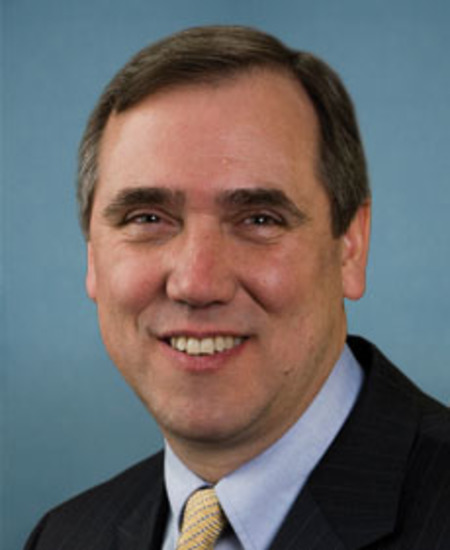
Sen. Jeff Merkley
Sponsored bills
Maddy summaryThis bill repeals key protections in the Protection of Lawful Commerce in Arms Act that shielded gun manufacturers from civil lawsuits. It allows victims of gun violence to use federal gun trace data (from the Firearms Trace System database) as evidence in civil court cases against gun sellers or manufacturers. The law makes this trace information discoverable, admissible, and usable in any civil action in state or federal courts, including the District of Columbia. This change directly affects victims seeking legal recourse and gun industry entities previously protected by the repealed law.
Maddy summaryThis bill establishes the Malheur County Grazing Management Program, allowing ranchers to adjust grazing schedules and water placement with written notice to improve ecological health on federal lands. It creates the Malheur C.E.O. Group, an 18-member advisory body representing ranching interests, environmental groups, tribal representatives, and government agencies to develop and monitor projects. The bill designates approximately 1.1 million acres of federal land as wilderness areas and transfers specific parcels to the Burns Paiute Tribe. The program requires monitoring plans, annual reports, and consultation with stakeholders to balance ecological health with grazing uses.
Maddy summaryThe OCTOPUS Act of 2025 prohibits the commercial farming and trade of octopuses in the United States. It bans permits for farming octopuses for human consumption in U.S. waters, exclusive economic zones, and territorial waters, and prohibits importing or reexporting commercially farmed octopus. Importers must certify that octopus products are not farmed, with civil penalties up to $100,000 per violation for noncompliance. Exceptions apply only for accredited aquariums, breeding programs, or scientific research, not for general commercial use.
Maddy summaryS 1957, the "No Place for LGBTQ+ Hate Act," repeals five specific executive orders that the bill identifies as harming LGBTQI+ rights. It prohibits federal funding for implementing or enforcing those orders, which include policies restricting transgender healthcare, military service, school sports participation, and requiring schools to deny transgender identities. The bill directly affects LGBTQI+ individuals by reversing discriminatory executive actions in key areas like employment, education, healthcare, and military service. It does not create new policies but formally nullifies existing executive actions through legislative repeal and funding restrictions.
Maddy summaryThis resolution (SRES 255) is a ceremonial Senate measure honoring former U.S. Senator Christopher "Kit" Bond of Missouri, who died on May 13, 2025. It recognizes his 40+ years of public service, including his roles as Missouri Governor (1973-1977, 1981-1985) and U.S. Senator (1987-2011). The resolution directs the Senate to adjourn briefly as a mark of respect and transmit a copy to his family. It has no policy impact or direct effect on constituents, as it is purely commemorative.
Maddy summaryThis resolution (SRES 248) calls on the federal government to create a national biodiversity strategy to address accelerating biodiversity loss. It specifically urges the establishment of a coordinated strategy with key goals, including protecting at least 30% of U.S. lands and waters by 2030 (the "30x30" target), protecting endangered species, integrating climate action, and incorporating Indigenous knowledge. The strategy would require federal agencies to coordinate conservation efforts, collaborate with states, tribes, and communities, and ensure equitable access to nature for historically impacted groups like Tribal communities and communities of color. As a non-binding resolution, it directs agencies to develop this strategy but does not create new laws or funding.
Maddy summaryThis bill expands workplace safety protections under the Occupational Safety and Health Act to cover public employees, including those working for federal, state, or local government agencies. It amends the law to explicitly include "the United States, a State, or a political subdivision of a State" in the definition of covered workers, removing previous exclusions. The key provision requires all public workplaces to follow OSHA safety standards, with a 36-month transition period for states or localities without their own OSHA-approved plans. This directly affects government workers like teachers, police, and sanitation staff who were previously excluded from federal OSHA coverage.
Maddy summaryThe Crime Victims Fund Stabilization Act of 2025 amends the law governing deposits into the Crime Victims Fund, adding two new sources: funds from declined criminal prosecutions (without conviction) and certain False Claims Act recoveries (from 2025 through 2030). It specifically excludes two types of False Claims Act funds from these deposits: payments to whistleblowers (qui tam plaintiffs) and reimbursements for government fraud damages. This bill directly affects the Crime Victims Fund, which provides support to victims of crime, and adjusts how federal agencies handle False Claims Act cases. The changes aim to modify the fund's funding sources without altering the False Claims Act itself.
Maddy summaryS 1878, the ATTAIN Mental Health Act, requires the U.S. Department of Health and Human Services to create a public online dashboard within two years of enactment. This dashboard will list all federal mental health and substance use disorder grant programs, including current application status (open/closed/awarded) and deadlines, and allow users to search by location or topic. It will integrate state-level grant information where available and link directly to application pages, making it easier for schools, clinics, tribal organizations, nonprofits, and other potential applicants to find funding opportunities. The dashboard must comply with accessibility standards and be updated continuously to reflect current grant opportunities.