

Maddy summaryThe Preventing HEAT Illness and Deaths Act of 2025 establishes a National Integrated Heat Health Information System and an interagency committee to coordinate federal efforts addressing extreme heat health risks. The bill authorizes $20 million annually for the system and $10-$30 million annually for community resilience programs, with at least 40% of funds directed to communities with environmental justice concerns or low-income communities. It requires a strategic plan for improving heat-health data collection and coordination across federal agencies, and mandates a study to identify gaps in heat information and response capabilities. The legislation aims to improve planning, preparedness, and response to extreme heat events, particularly for vulnerable populations who face disproportionate heat risks, including elderly individuals, outdoor workers, and communities of color.
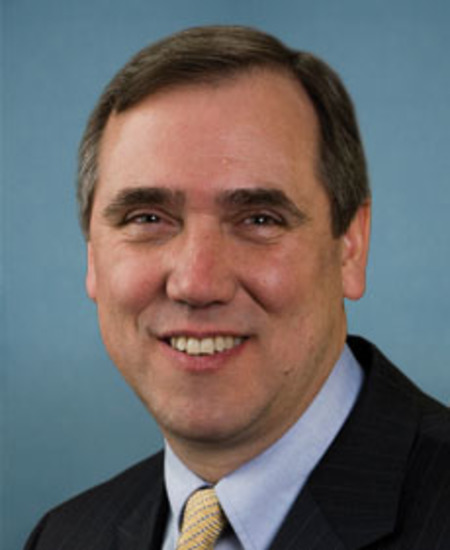
Sen. Jeff Merkley
Sponsored bills
Maddy summaryThis bill codifies and reinstates U.S. sanctions targeting individuals or entities undermining peace, security, and stability in the West Bank, as defined under Executive Order 14115. It directly affects persons engaged in activities that violate these sanctions, including those previously subject to revoked sanctions under Executive Order 14148. Key mechanisms require the President to notify specific congressional committees (Foreign Relations and Banking committees in the Senate, Foreign Affairs and Financial Services in the House) at least 15 days before lifting sanctions, unless exigent circumstances apply, and only after verifying the person has stopped the prohibited activity and provided assurances against future violations. The bill ensures these sanctions remain in effect unless formally terminated through this defined congressional oversight process.
Maddy summaryThe RECHARGE Act (S 2653) requires the federal government to permit electric vehicle (EV) charging stations at rest areas along interstate highways. This directly affects EV drivers by addressing "range anxiety" on long trips, as it allows charging infrastructure at designated rest stops. The key provision amends highway law to explicitly authorize EV charging infrastructure (excluding other commercial activities) at these locations, while making minor technical adjustments to existing transportation programs related to natural gas refueling. The bill does not create new funding but changes where charging stations may be installed on the interstate system.
Maddy summaryThe Access to Birth Control Act (S 2302) requires pharmacies to provide contraception without delay when available and to help customers obtain it if out of stock - either by referring to another pharmacy or expediting an order. It prohibits pharmacies from intimidating customers, misrepresenting availability, breaching confidentiality, or refusing to return valid prescriptions for contraception. Exceptions allow pharmacists to decline service only if a prescription is missing, the customer cannot pay, or they use professional clinical judgment. Violations may result in civil penalties of up to $1,000 per day or private lawsuits by affected individuals.
Maddy summaryS 2589, the Expanding the VOTE Act, strengthens language access in elections by updating the Voting Rights Act. It clarifies that "voting materials" include digital and printed content (like ballots and instructions) and requires states to provide these in minority languages when populations meet specific thresholds. The bill adds new notice requirements for states near language access thresholds and creates grants to help jurisdictions provide materials for languages not currently covered under Section 203, while establishing special provisions for American Indian and Alaska Native languages. It also directs a study on lowering language minority thresholds and expanding covered languages. This directly affects states, localities, and language minority communities participating in federal elections.
Maddy summaryThe Protecting and Preserving Social Security Act creates a new Consumer Price Index for Elderly Consumers (CPI-E) to determine Social Security cost-of-living increases, replacing the current index that tracks general inflation. It changes how benefits are calculated for income above the Social Security contribution base after 2025, with a declining percentage (starting at 86% in 2026 and decreasing to 0% by 2031) of that income counting toward benefits. The bill also establishes a new formula for calculating benefits based on "surplus earnings" for individuals reaching retirement age after 2025. These changes will primarily affect high-income workers and retirees, but any benefit increases from these changes won't impact eligibility for Supplemental Security Income (SSI) or Medicaid.
Maddy summaryThe Sustaining Our Democracy Act establishes a federal program to provide funding to states for election-related activities. The Democracy Advancement and Innovation Program allocates funds to states for improving election administration, recruiting and protecting election workers, and increasing voting access for underserved communities including racial minorities, individuals with disabilities, and voters in Indian lands. States must submit approved plans detailing how funds will be used before receiving payments, and the bill prohibits using funds for activities that could diminish voter participation. The legislation creates an Office of Democracy Advancement and Innovation to administer the program and establishes a $2.5 billion annual Trust Fund for fiscal years 2026-2035 to support these election-related activities.
Maddy summaryThis bill establishes immediate protections for farmworkers against wildfire smoke and excessive heat. It requires agricultural employers to provide N95/N100 respirators when smoke levels become dangerous, cooling equipment and water during heat events, and mandatory 10-minute rest breaks every 2 hours in shaded areas. Employers must also train workers in their language on proper equipment use, health risks, and heat illness signs. The law creates a temporary standard effective immediately, with the Secretary of Labor required to develop a permanent rule within 90 days. These requirements directly affect farmworkers and their employers in agricultural operations across the U.S.
Maddy summaryThis bill requires the U.S. Department of State to produce annual Country Reports on Human Rights Practices that include more comprehensive, fact-based coverage of internationally recognized rights. It mandates specific new reporting requirements, such as describing restrictions on internet freedom, protections for marginalized groups (including LGBTQI+ individuals and indigenous peoples), arbitrary detention, and government corruption's human rights impact. The bill also explicitly prohibits political influence in the reports, ensuring they remain credible tools for holding violators accountable. These changes directly affect how the State Department compiles and publishes its annual human rights reports, which inform U.S. foreign policy and global accountability efforts.
Maddy summaryThe Truth and Healing Commission on Indian Boarding School Policies Act of 2025 establishes a federal commission to investigate the history, impacts, and lasting effects of Indian Boarding Schools on Native American communities, including physical, cultural, and emotional consequences. The commission will document these impacts through research, hold meetings across the country to gather testimony from survivors and tribal representatives, and collaborate with a Survivors Truth and Healing Subcommittee and two advisory committees. The commission will produce an initial report within four years and a final report before terminating six years after enactment, with recommendations for Federal action to address the legacy of these policies. This legislation aims to formally acknowledge historical trauma caused by Indian Boarding Schools and guide future Federal efforts toward healing and reconciliation.