

Maddy summaryThis bill requires the U.S. Secretary of State to annually determine whether Hong Kong Economic and Trade Offices (HKETOs) in the U.S. merit diplomatic privileges and immunities. If denied, HKETOs must shut down within 180 days. It also prohibits U.S. government entities from partnering with HKETOs for tourism or business promotion unless the Secretary certifies they merit privileges and Congress does not disapprove within 90 days. The bill explicitly bars partnerships that promote efforts to dismantle Hong Kong's autonomy or justify actions against its freedoms, as defined by U.S. policy. This directly affects HKETOs operating in the U.S. and changes how U.S. agencies interact with them.
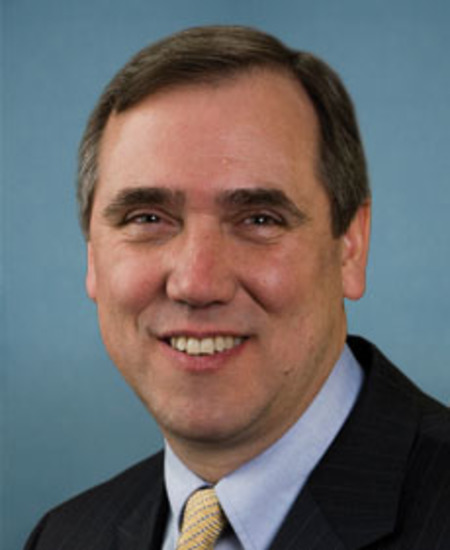
Sen. Jeff Merkley
Sponsored bills
Maddy summaryS 3680, the *Eliminating Bias in Algorithmic Systems Act of 2026*, requires federal agencies using or funding complex algorithms (like AI systems) to establish civil rights offices focused on bias. These offices must monitor and address algorithmic bias related to protected characteristics (e.g., race, gender, disability) that affect government programs or economic opportunities. Agencies must submit biennial reports to Congress detailing bias risks, mitigation steps, stakeholder engagement, and recommendations, and join an interagency working group on algorithmic fairness. The bill directly affects covered federal agencies, not private companies or the general public.
Hemp Planting Predictability Act This bill extends by two years the implementation of changes to the regulation of hemp products, which reimpose certain federal controls over some hemp products. Specifically, Congress enacted the FY2026 agriculture appropriations act (P.L. 119-37) on November 12, 2025. Effective November 12, 2026, the act modifies the statutory definition of hemp products that are considered to be lawful. This bill extends the effective date to November 12, 2028. As background, the 2018 farm bill excluded hemp from the Controlled Substances Act definition of marijuana and defined hemp . As a result, hemp and hemp-derived products at or below the 0.3% delta-9 tetrahydrocannabinol (THC, the psychoactive component of marijuana) concentration threshold were no longer regulated as Schedule I controlled substances and registration with the Drug Enforcement Administration was no longer required to cultivate or handle hemp and hemp-derived products. However, hemp remained subject to Department of Agriculture and Food and Drug Administration regulation. The 2025 changes to the definition of hemp, include changing the limit to a total THC concentration of not more than 0.3% on a dry weight basis rather than only delta-9 THC, explicitly including industrial hemp, excluding seeds from a cannabis plant that exceed a certain THC concentration, and excluding various types of hemp-derived cannabinoid products. Cannabinoids refer to unique chemical compounds that are found in hemp and marijuana (e.g., THC) and are known to exhibit a range of psychological and physiological effects.
Maddy summaryS 3673 amends the Roadside Pollinator Program to expand eligibility to include tax-exempt nonprofit organizations and increase annual funding. The bill requires state transportation agencies and federal land managers to consult with the U.S. Fish and Wildlife Service before developing pollinator plans, while raising the annual funding cap from $2 million to $5 million for fiscal years 2026-2031. These changes directly affect state highway departments, federal land agencies managing rights-of-way, and qualifying nonprofit groups implementing roadside habitat projects. The legislation focuses on concrete policy adjustments to broaden program participation and boost financial support for pollinator-friendly roadside practices.
This joint resolution directs the President to terminate the use of U.S. Armed Forces for hostilities within or against Venezuela unless a declaration of war or authorization to use military force for such purpose has been enacted. The joint resolution specifies that it shall not be construed to prevent the United States from defending itself from an armed attack or threat of an imminent armed attack.
Maddy summaryThe "No Political Enemies Act" (S 3646) prohibits federal officials from taking enforcement actions against individuals or groups that are substantially motivated by their constitutionally protected speech, such as criticism of government policies. It creates legal defenses for those targeted, requiring courts to dismiss enforcement actions if proven to be politically motivated, and establishes new remedies including the ability to seek injunctions and sue for damages. The bill also requires the Justice Department to report quarterly to Congress on sensitive investigations and prohibits using government funds for politically motivated enforcement actions. This legislation directly affects federal enforcement agencies, officials, and anyone engaging in protected speech who might face government action.
Maddy summarySJRES 84 is a joint resolution seeking to block a rule issued by the Centers for Medicare & Medicaid Services (CMS) under the Affordable Care Act. The rule, published in the Federal Register on June 25, 2025, aimed to improve affordability and integrity in health insurance marketplaces. If approved, this resolution would invalidate the rule under a federal disapproval process, preventing its implementation. This directly affects how health insurance plans are structured and priced for consumers using ACA marketplaces.
Maddy summaryS 3622, the SERVE Act, prohibits naming or renaming any federal building, land, or asset after a sitting president. It directly affects all federal property currently named for a sitting president and prevents future naming during a president's term. The bill bans using federal funds for such naming and requires reverting any existing presidential-named property to its prior official designation. This applies to all federal assets covered by existing law, without exception.
Maddy summaryThis bill prohibits U.S. federal funds from being used to support Venezuela's oil and petroleum infrastructure, including construction, property purchases, insurance, payments to companies, or government advocacy for the sector. It directly affects all U.S. government departments, agencies, and entities using federal funds, preventing them from financing or promoting Venezuela's oil industry. The prohibition includes all forms of financial support except for expenditures explicitly authorized by future Acts of Congress. Additionally, the Secretary of State must submit annual reports to congressional committees detailing any related activities and confirming compliance.
Maddy summarySRES 570 designates November 2025 as National Lung Cancer Awareness Month, with the first week of November as National Women's Lung Cancer Awareness Week and the second Saturday of November as National Lung Cancer Screening Day. The resolution expresses congressional support for increasing public awareness about lung cancer prevention, early detection, and treatment options. It encourages educational activities to promote understanding of lung cancer screening and research, particularly for high-risk groups including minorities and non-smokers. This is a symbolic resolution with no new funding or policy requirements.