Maddy summarySRES 520 is a ceremonial Senate resolution designating the week of February 21-25, 2022, as "Public Schools Week." It does not create new laws, allocate funding, or directly affect any individuals or institutions. The resolution uses symbolic language to highlight the importance of public education in the U.S. but contains no policy changes or actionable provisions. As a procedural resolution, it serves only to recognize public schools during that specific week.
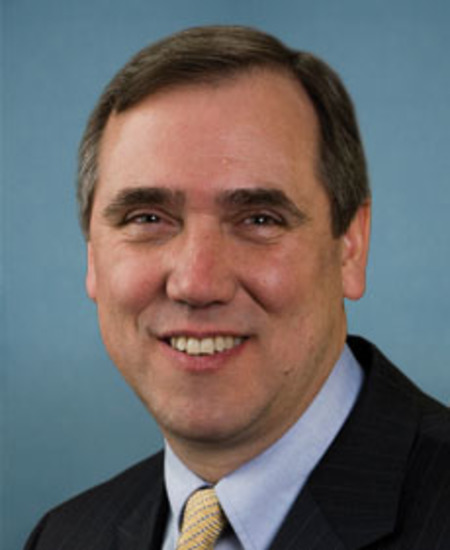
Sen. Jeff Merkley
Sponsored bills
This resolution commends the courage, resolve, and restraint shown by the Ukrainian people in their pursuit of sovereignty and democracy and reaffirms unwavering U.S. support for a secure, democratic, and independent Ukraine. It also condemns Russia's attempted annexation of Crimea in 2014 and denounces Russia's military buildup of over 150,000 troops on Ukraine's border.
Affordable Insulin Now Act This bill limits cost-sharing for insulin under private health insurance and the Medicare prescription drug benefit. Specifically, the bill caps cost-sharing under private health insurance for a month's supply of selected insulin products at $35 or 25% of a plan's negotiated price (after any price concessions), whichever is less, beginning in 2023. The bill caps cost-sharing under the Medicare prescription drug benefit for a month's supply of covered insulin products at (1) $35 between October 1, 2022, and January 1, 2024; and (2) $35 or 25% of a plan's negotiated price, whichever is less, beginning in 2024. The bill provides funds for FY2022 for the Centers for Medicare & Medicaid Services (CMS) to implement the bill. Currently, the CMS is testing a voluntary model under the Medicare prescription drug benefit (the Part D Senior Savings Model) in which the copayment for a month's supply of insulin is capped at $35 through participating plans. The model is set to expire on December 31, 2025.
No Facial Recognition at the IRS Act This bill prohibits the Internal Revenue Service (IRS) from using, or contracting to use, biometric recognition technology for tax administration purposes. The bill defines biometric recognition technology as any technology that measures a biological (anatomical and physiological) or behavioral characteristic for automated recognition. The bill requires the IRS to delete all biometric data collected for purposes of tax administration not later than 60 days after the enactment of this bill.
This resolution supports the designation of February 2022 as Career and Technical Education Month to celebrate career and technical education across the United States.
Maddy summarySRES 516 designates the week of February 7-11, 2022, as "National School Counseling Week." The resolution encourages the public to observe this week with activities that raise awareness about school counselors' role in supporting students' academic, social, and emotional development. It does not create new laws or alter funding but highlights existing challenges like the high student-to-counselor ratio (424:1 nationally) and counselors' contributions to student well-being. The resolution applies broadly to all U.S. schools and communities, aiming to increase recognition of counseling professionals' work.
Transportation Equity Act This bill directs the Department of Transportation (DOT) to reestablish the Transportation Equity Committee. The committee must study, advise DOT about, and develop a strategic plan concerning transportation equity issues. The committee must also evaluate the work of DOT in connecting people to economic and related forms of opportunity; revitalizing communities through strategic, research, technological, regulatory, community engagement, and economic policy activities related to transportation and opportunity; and ensuring equal access to transportation for all residents. In addition, DOT must appoint a full-time federal employee to serve as coordinator and act as the designated federal officer for the committee.
Bolstering Long-term Understanding and Exploration of the Great Lakes, Oceans, Bays, and Estuaries Act or the BLUE GLOBE Act This bill addresses data collection and monitoring of the Great Lakes, oceans, bays, estuaries, and coasts. Specifically, it expands requirements related to a study of the scientific workforce in areas of oceanic and atmospheric research and development. For example, the bill requires the study to include an investigation on whether there is a workforce shortage in the number of individuals with technical or trade-based skillsets or credentials suited to a career in oceanic and atmospheric data collection, processing, satellite production, or satellite operations. The study must also investigate actions the federal government can take to increase diversity in the scientific workforce and shorten the hiring backlog for such workforce. The bill also directs the National Oceanic Atmospheric Administration (NOAA) to create an Electronic Monitoring Innovation Prize, which may be awarded for the development of advanced electronic fisheries monitoring equipment and data analysis tools. NOAA must also seek to enter into an agreement with the National Academy of Sciences to evaluate whether there is a need for an Advanced Research Projects Agency-Oceans within NOAA. Additionally, NOAA must establish a program to improve the collection, aggregation, and analysis of data to measure the value and impact of industries related to the Great Lakes, oceans, bays, estuaries, and coasts on the U.S. economy.

Schedules That Work Act This bill provides employees with the right to request changes to their work schedules related to the number of hours they are required to work or be on call, the location of the work, the amount of notification about work schedule assignments, and fluctuations in work hours. Employers must negotiate in good faith with employees who make such requests and comply with certain work schedule notice and split shift pay requirements for retail, food service, cleaning, hospitality, or warehouse employees.
Maddy summarySRES 510 is a Senate resolution designating January 25, 2022, as "National Poll Worker Recruitment Day." It recognizes the vital role of poll workers in elections and encourages eligible citizens to volunteer for the 2022 elections. The resolution does not create new laws or requirements but serves as a symbolic call to action to address poll worker shortages. It directly aims to engage the public in supporting election infrastructure through voluntary service.