

Maddy summaryThis bill amends the Elementary and Secondary Education Act to establish specific annual funding amounts for impact aid programs through 2031. It authorizes $90.3 million for real property acquisition in 2026 (increasing to $150.3 million by 2031), $1.63 billion for basic payments to local schools in 2026 (rising to $2.45 billion by 2031), $60.3 million for children with disabilities in 2026 (growing to $120.3 million by 2031), and $22.9 million for school construction in 2026 (reaching $45.4 million by 2031). These funds directly support school districts affected by federal land ownership or military installations, as defined under impact aid provisions. The bill sets clear, incremental funding targets without changing eligibility rules or program structure.
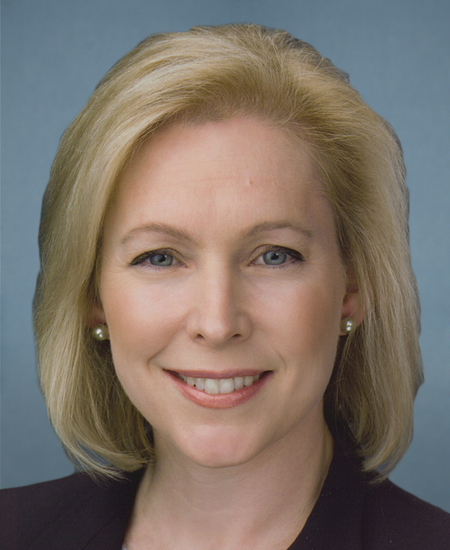
Sen. Kirsten E. Gillibrand
Sponsored bills
Maddy summaryThis bill extends the expiration date for exemptions allowing certain vehicles to use High Occupancy Vehicle (HOV) lanes. It amends a federal transportation code provision to change the deadline from September 30, 2025, to September 30, 2026. The change directly affects states operating HOV lanes that currently grant these exemptions. The bill makes a technical adjustment to the existing law without altering the exemption rules or adding new requirements.
Maddy summaryThis bill prohibits the intentional dissemination of false information about voting procedures, election timing, or voter eligibility that is designed to prevent people from voting. It specifically makes it illegal to spread misleading information through any communication method, including via generative artificial intelligence, within 60 days of an election. The bill creates criminal penalties for such deceptive acts (up to one year in prison) and allows civil lawsuits for victims. The Attorney General would have authority to issue corrective information when false statements are spreading, and would be required to report on deceptive practices to Congress after each election.
Maddy summaryS 2877, the "No Stock Act," prohibits certain U.S. government officials from holding or trading specific financial investments. It directly affects Members of Congress, the President, Vice President, Supreme Court Justices, Federal Reserve officials, and their spouses/dependent children under 19. The bill bans holdings in stocks, bonds, commodities, cryptocurrencies, NFTs, and derivatives (with limited exclusions like Treasury securities), requiring covered individuals to sell such investments within 120 days of taking office or the bill’s enactment. Violations incur fines of at least 10% of the asset’s value, and ethics offices must publicly disclose extension requests for divestiture deadlines.
Child Care Access Means Parents In Schools Reauthorization Act or the CCAMPIS Reauthorization Act This bill reauthorizes through FY2031 and revises the Child Care Access Means Parents in School Program. The program awards grants to support the participation of eligible low-income parents in postsecondary education through the provision of campus-based child care services. Among other revisions to the program, the bill increases the minimum and maximum grant amounts, allows grant funds to be used for additional purposes (e.g., child care subsidies and support services), and specifies additional grant application requirements.
Maddy summaryThis bill provides $5 million annually (2026-2030) to states for improving stillbirth data collection and research, directly affecting state health departments and public health officials. It requires states to collect deidentified stillbirth data - including risk factors - using existing systems like fetal mortality reviews, while ensuring strict privacy compliance. The bill also allocates $1 million yearly to develop standardized data collection guidelines and public educational materials about stillbirths, with input from medical professionals and bereavement organizations. It mandates a public HHS report within five years containing these guidelines and educational resources to improve data consistency and awareness. The legislation focuses on enhancing data quality for research and public health, without altering medical care or insurance coverage.
Maddy summaryS 2913, the Protecting Students with Disabilities Act, prevents federal funding from being used to restructure or eliminate offices within the Department of Education that administer disability-related programs. The bill specifically prohibits using funds to: (1) dismantle or merge offices serving students with disabilities (under IDEA) or adults with disabilities (under the Rehabilitation Act), (2) change staff roles that could undermine these programs, or (3) outsource these services to outside organizations. It directly affects the Department of Education’s disability program offices and the students and adults who rely on their services. The bill maintains existing program structures by restricting how federal funds can be allocated, ensuring compliance with current laws like IDEA and the Rehabilitation Act.
Maddy summaryThis bill requires U.S. colleges and universities to update their anti-harassment policies to explicitly cover online communications (like emails and social media) and all campus activities, including off-campus events and dormitories. It mandates institutions to create clear procedures for reporting harassment based on protected characteristics (such as race, gender identity, or disability), including how they will investigate and respond to incidents. The bill also creates a new $50 million annual grant program to fund schools developing prevention programs, counseling services, or training for students and staff on recognizing and addressing harassment. These requirements supplement existing federal civil rights laws like Title IX but do not replace them.
Maddy summaryThe Protect America’s Workforce Act (S 2837) directly affects federal employees and their labor unions by reversing two executive orders that limited their collective bargaining rights. It nullifies Executive Orders 14251 and 14343, which had excluded certain federal workers from labor-management programs, and prohibits federal funding for any efforts to implement those orders. The bill ensures that all existing collective bargaining agreements between federal agencies and employee unions remain fully enforceable through their original terms, as long as they were in effect as of March 26, 2025. This preserves current workplace agreements without creating new obligations or altering existing labor-management processes.
Maddy summaryS 2827, the Fair Housing Improvement Act of 2025, expands the Fair Housing Act to prohibit discrimination based on source of income, veteran status, and military status. It directly affects renters and homebuyers using housing assistance (like vouchers or Social Security benefits), veterans, and military members, while requiring landlords and housing providers to comply with these new protections. Key provisions explicitly add these categories to existing anti-discrimination clauses in the Fair Housing Act, defining "source of income" to include housing vouchers, government benefits, spousal support, and other lawful income streams. The bill also strengthens protections against intimidation in fair housing cases by adding these categories to existing civil rights language.