

Maddy summaryThe John R. Lewis Voting Rights Advancement Act of 2024 updates the Voting Rights Act of 1965 to strengthen protections against voting discrimination. It clarifies how to prove vote dilution, denial, or abridgement claims and expands the types of voting changes requiring federal preclearance, including changes to election methods, boundaries, voter ID requirements, and polling locations. The bill requires states to provide public notice of voting changes at least 48 hours in advance and mandates transparency about demographic data related to polling places. This legislation directly affects states and political subdivisions with a history of voting rights violations, aiming to protect minority voters from discriminatory voting practices.
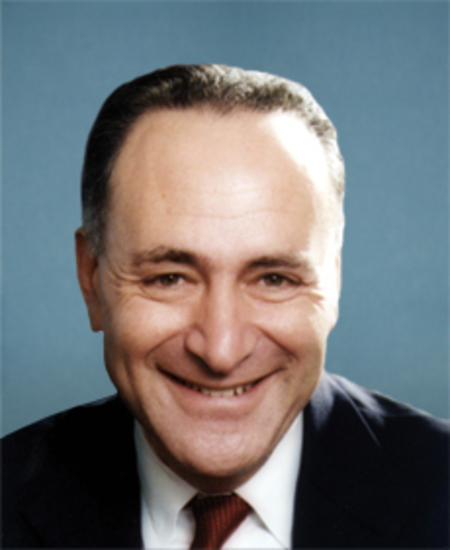
Sen. Charles E. Schumer
Sponsored bills
Maddy summarySRES 553 is a ceremonial Senate resolution honoring Jean A. Carnahan, who served as Missouri’s first female U.S. Senator from 2001 to 2002 after her husband’s passing. The resolution expresses the Senate’s sorrow over her death, recognizes her service as First Lady of Missouri and U.S. Senator, and her advocacy for families and veterans. It directs the Senate Secretary to share the resolution with the House and Carnahan’s family, with no substantive policy changes or affected parties. This is a standard commemorative measure with no legislative impact.
This resolution authorizes (1) Daniel Schwager, a former employee of the Office of the Secretary of the Senate, to provide relevant testimony in the case of People of the State of Michigan v. Berden, et al., except concerning matters for which a privilege should be asserted; and (2) the Senate Legal Counsel to represent Mr. Schwager and any current or former officer or employee of his office in connection with this case.
Maddy summaryThis bill would create "401Kids Savings Accounts" for every U.S. citizen child under 18, automatically established at birth or naturalization (including children in foster care). The accounts would receive annual government deposits of $500 (or $750 for families receiving the Earned Income Tax Credit), with an additional matching contribution of up to $250 for EITC-eligible families. Account funds could be used for qualified education expenses, home purchases, or rolled into ABLE accounts or Roth IRAs after age 18, with funds generally disregarded for means-tested federal benefits. The program would be administered through either state programs (with federal certification requirements) or a new Federal program established by the Treasury Department. Contributions would be limited to $2,500 per year (excluding government deposits), and the bill includes specific provisions for handling accounts of children in foster care and for deceased account holders.
Maddy summarySRES 523 is a Senate resolution honoring the late Senator Herb Kohl of Wisconsin. The resolution expresses the Senate's sorrow at his death, directs the Secretary of the Senate to communicate it to the House of Representatives and send a copy to his family, and instructs the Senate to adjourn as a mark of respect. This procedural resolution does not create new laws or affect policy, but formally commemorates Kohl's service and legacy. It was introduced by a bipartisan group of Senators and passed unanimously on January 11, 2024.
This resolution authorizes (1) Daniel Schwager, a former employee of the Office of the Secretary of the Senate, to provide relevant testimony in the case of United States v. Todd , except concerning matters for which a privilege should be asserted; and (2) the Senate Legal Counsel to represent Mr. Schwager and any current or former officer or employee of his office in connection with this case.
Maddy summaryThis Senate resolution (SRES 510) expresses the Senate's support for respecting the FDA's scientific determination that mifepristone - a medication used for early pregnancy termination - is safe and effective. It calls for abortion care policies to be "equitable and based on science," emphasizing the FDA's authority to regulate the drug without interference, including its 2023 update allowing mail-order access. The resolution directly addresses the impact of state restrictions on medication abortion, noting that such policies disproportionately affect Black and Indigenous people, people of color, low-income individuals, rural communities, and other marginalized groups. As a non-binding resolution, it does not change laws but urges alignment with FDA science to protect access to this time-sensitive care.
Maddy summaryThis Senate resolution (SRES 502) authorizes former Senate employee Daniel Schwager to provide testimony in the criminal case *United States v. Antonio* (Case No. 21-497) pending in the District of Columbia federal court. It specifically permits Schwager to testify about matters related to his official Senate duties, excluding any topics where Senate privilege would apply. The resolution also directs the Senate Legal Counsel to represent Schwager and other current or former Senate employees regarding evidence requests tied to their official responsibilities. This is a procedural resolution focused on Senate privilege and employee representation, not a policy change.
Maddy summarySRES 501 is a Senate resolution authorizing testimony from three employees of Senator Ted Cruz's office (Amy English, Grant Murray, and Anthony Rodregous) in the federal case *United States v. Nformangum* (Cr. No. 22-367). It permits them to provide relevant testimony in the Southern District of Texas court case, excluding matters protected by Senate privileges. The resolution also directs the Senate Legal Counsel to represent these employees and any current/former staff of Senator Cruz’s office regarding evidence requests in the case. This is a procedural measure to uphold Senate privileges while complying with judicial demands.
Maddy summaryThis bill makes it illegal to use automated tools ("bots") to bypass website purchase limits or inventory controls, and to sell products obtained through such violations. It directly affects individuals and businesses using bots to circumvent online purchase restrictions (e.g., for limited-edition products like sneakers or concert tickets). Key provisions prohibit both the circumvention of security measures and the resale of goods acquired via those violations, with enforcement by the FTC and state attorneys general. The law aims to prevent bots from hoarding scarce items, promoting fairer access for regular consumers.