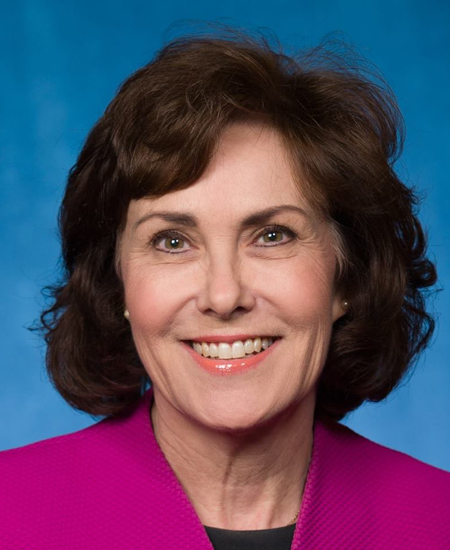
No Congressionally Obligated Recurring Revenue Used as Pensions To Incarcerated Officials Now Act or the No CORRUPTION Act This bill makes a Member of Congress who has been convicted of a crime related to public corruption ineligible to receive retirement payments pursuant to the Civil Service Retirement System or the Federal Employees' Retirement System based on service as a Member. Under current law, a Member must forgo receipt of these payments only after a final conviction (i.e., after the exhaustion of all appeals under the judicial process).
Sponsored bills
Maddy summaryThis is a ceremonial Senate resolution (SRES 470) commemorating the death of former U.S. Senator Bob Dole of Kansas. It formally expresses the Senate's sorrow, requests the Secretary of the Senate transmit a copy to Dole's family, and directs the Senate to adjourn as a mark of respect. The resolution has no policy or legal effect - it solely serves as a symbolic tribute to Dole's public service career. It does not affect any individuals or enact new laws.
Masih Alinejad Harassment and Unlawful Targeting Act of 2021 or the Masih Alinejad HUNT Act of 2021 This bill imposes sanctions on foreign persons (i.e., individuals or entities) that are acting on behalf of Iran's government and involved in the harassment of certain individuals, such as human rights activists. The Department of State must periodically report to Congress the identities of foreign persons acting on behalf of Iran's government that are knowingly responsible for or complicit in the surveillance, harassment, imprisonment, or killing of citizens of Iran or the United States who seek to (1) expose corruption or illegal activity by Iranian government officials; (2) obtain, defend, or promote internationally recognized human rights; or (3) obtain, defend, or promote the rights and well-being of women, religious and ethnic minorities, and the LGBTQ community in Iran. The report must include foreign persons involved in such actions that occur inside or outside Iran. The President must impose property-blocking sanctions on persons identified in the report, as well as visa-blocking sanctions on the identified individuals. The Department of the Treasury must submit to Congress a report identifying any foreign financial institution that knowingly conducts a significant transaction with a person sanctioned under this bill. Treasury may prohibit the opening, or prohibit or impose strict conditions on the maintaining of a U.S. correspondent account or a payable-through account by such a financial institution.

MUSIC Act This bill expands eligibility for the Shuttered Venue Operators Grant program, which provides emergency assistance for eligible venues affected by COVID-19, to include service and support companies. These companies (1) provide stages, lighting, sound, casts, or other support for live performing arts events; or (2) showcase performers or prepackaged productions to potential buyers.
Patient Advocate Tracker Act This bill requires the Office of Patient Advocacy within the Veterans Health Administration to establish an information technology system that allows veterans or their representatives to electronically file a complaint with a patient advocate and review the status of a filed complaint.
Outdoors for All Act This bill directs the Department of the Interior to establish an outdoor recreation legacy partnership grant program under which Interior may award grants to states, certain political subdivisions of a state, special purpose districts, Indian tribes, or Alaska Native or Native Hawaiian communities or organizations. Funds must be used for projects to (1) acquire land and water for parks and other outdoor recreation purposes in qualifying areas, and (2) develop new or renovate existing outdoor recreation facilities that provide outdoor recreation opportunities to the public in qualifying areas. A qualifying area is an area that has a population of 30,000 or more in the most recent census, or that is administered by an Indian tribe or an Alaska Native or Native Hawaiian community organization. Interior shall give priority to projects that create or significantly enhance access to park and recreational opportunities in an urban neighborhood or community, engage and empower underserved communities and youth, provide opportunities for employment or job training for youth or underserved communities, establish or expand public-private partnerships, and take advantage of coordination among various levels of government.
Recreation Not Red-Tape Act This bill revises and sets forth provisions related to recreation areas and special recreation permits issued by the Department of the Interior and the Department of Agriculture (USDA) for individual or group use of federal recreational lands and waters. The bill makes permanent certain authorizations, including regarding such permits and the fees charged for them and for related administration, overhead, and indirect costs. Interior and USDA shall evaluate the special recreation permitting process and identify opportunities for eliminating duplicative processes, reducing costs, and decreasing processing times; establish categorical exclusions from environmental review requirements for special recreation permits if it would reduce processing times or costs without significantly affecting the human environment; authorize the issuance of temporary permits for new or additional recreational uses of federal lands and waters managed by the Forest Service and the Bureau of Land Management; allow online payment of certain federal passes and fees; develop initiatives to promote private-sector volunteer opportunities; and establish an interagency trail management plan. Permittees issued a special recreation permit may voluntarily and temporarily return one or more of their service days. The bill sets forth requirements for review by USDA of the renewal or adjustment of the allocations for the use of a special recreation permit. Interior and USDA may enter into agreements with states to allow the purchase of federal and state recreation passes in the same transaction. The bill establishes a National Recreation Area System.
PrEP Access and Coverage Act This bill requires private health insurance plans to cover prescription drugs that prevent HIV, including related screenings, diagnostic procedures, administrative fees, and clinical follow-ups, without any cost-sharing obligation for the plan holder. Further, insurance plans must not impose any preauthorization requirement for this coverage. These coverage requirements also apply to public health insurance programs, including Medicare, Medicaid, and the Children's Health Insurance Program. Additionally, the bill prohibits denying, limiting, or qualifying coverage or increasing premiums for disability insurance, long-term care insurance, or life insurance policies based on an individual taking medication for HIV prevention. The bill further requires the Department of Health and Human Services to award grants to states, or directly to eligible local organizations, to provide uninsured individuals and underinsured individuals access to prescription drugs and related services that prevent HIV. The Centers for Disease Control and Prevention also must develop a public awareness campaign that focuses efforts in communities with a high need for HIV prevention treatment.
Maddy summaryThis Senate resolution (SRES 464) expresses symbolic support for National Adoption Month (November) and National Adoption Day (November 20), encouraging public awareness of children awaiting adoption. It does not create new laws or allocate funding but urges U.S. citizens to consider adoption and support efforts to provide safety and permanency for children in foster care. The resolution highlights challenges like the pandemic's impact on foster care systems while affirming that every child deserves a permanent family. It directly affects no specific group through policy changes - it is a non-binding statement of support endorsed by 30+ senators.
Veterans Assistance Helpline Act of 2021 This bill requires the Department of Veterans Affairs (VA) to establish a toll-free telephone help line for the purpose of providing information to specified individuals about VA services and benefits available in their area. Specifically, the help line is for veterans, persons acting on behalf of veterans, or individuals who are eligible to receive benefits or services from the VA. The VA, in coordination with the Federal Communications Commission (FCC), may contract with a third party to direct calls to the appropriate person regarding a VA service or benefit. Additionally, the VA must coordinate with the FCC to study and report on the feasibility and advisability of designating a covered dialing code for the purpose of reaching the help line.