

Maddy summarySRES 161 is a symbolic Senate resolution designating April 22-30, 2023, as "National Park Week." It does not create new laws or affect specific groups, but formally recognizes the National Park System's significance. The resolution highlights the parks' historical value, visitor impact (312 million visits in 2022), and economic contributions ($42.5 billion in 2021). It encourages public engagement with national parks but contains no funding, regulatory changes, or policy mechanisms. As a procedural resolution, it serves purely to honor the parks' legacy.
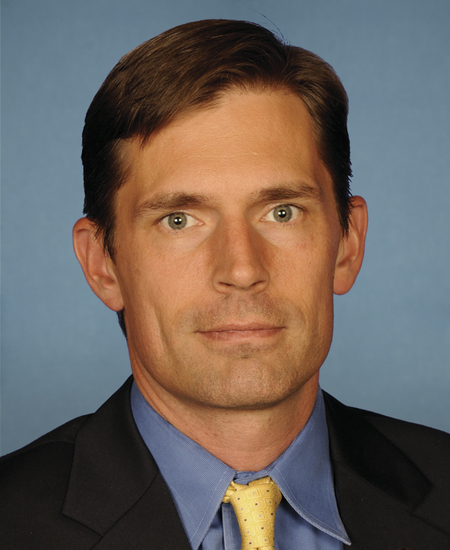
Sen. Martin Heinrich
Sponsored bills
Maddy summaryThis bill requires employers in healthcare and social service sectors to develop and implement workplace violence prevention plans for their workers. It applies to a wide range of facilities including hospitals, nursing homes, mental health clinics, and community care settings, affecting healthcare and social service workers who provide care in these environments. The plans must include risk assessments, hazard prevention measures, incident reporting procedures, and annual training for employees. Employers must maintain records of violent incidents, conduct annual evaluations of their prevention plans, and submit annual summaries of workplace violence data to the Secretary of Labor. The bill also prohibits retaliation against workers who report violence or safety concerns and ensures compliance with existing safety standards.
Maddy summarySRES 151 is a Senate resolution designating March 31, 2023, as "César Chávez Day" to honor the legacy of César Estrada Chávez, a civil rights leader who co-founded the United Farm Workers and championed nonviolent organizing for farmworkers' rights. This commemorative resolution has no policy impact or direct effect on any individuals or groups; it serves solely as a symbolic recognition. The resolution highlights Chávez's life work advocating for fair wages, safe working conditions, and dignity for agricultural laborers. It follows longstanding tradition of honoring Chávez through official designations, including existing state holidays in California, Colorado, and Texas. The resolution encourages the public to reflect on his legacy of service and nonviolent activism.
Maddy summarySRES 148 is a ceremonial Senate resolution (not a law) passed in March 2023 that formally recognizes the heritage, culture, and contributions of American Indian, Alaska Native, and Native Hawaiian women. It highlights their historical and ongoing achievements in areas like military service, business ownership, healthcare, arts, and civil rights through specific examples (e.g., veterans, entrepreneurs, activists). The resolution has no policy or funding mechanisms - it solely expresses the Senate's intent to honor these contributions and acknowledge the need to address barriers they face. It was introduced by Senators Murkowski, Schatz, and others with bipartisan support.
Maddy summarySRES 154 is a symbolic Senate resolution supporting International Transgender Day of Visibility. It encourages the American public to observe this day through ceremonies and activities, celebrates transgender community achievements, and recognizes the community's fight for equality. The resolution has no legal effect or policy changes - it serves solely as a statement of support. It directly acknowledges transgender individuals' contributions and the ongoing challenges they face, including discrimination in employment, education, and healthcare. The resolution was introduced by multiple senators and refers to transgender representation in government and media as part of its context.
Maddy summarySRES 144 is a Senate resolution (not a law) that calls on the federal government to create a "Transgender Bill of Rights." It would direct agencies to develop policies protecting transgender and nonbinary people’s rights in healthcare, employment, housing, education, and legal identity. Key proposals include amending anti-discrimination laws to explicitly cover gender identity, ensuring access to gender-affirming care, simplifying updates to government IDs, and improving safety protections. The resolution emphasizes that these steps are "only the first steps" toward equality and stresses involving transgender communities in policy design. As a symbolic measure, it does not change current law but urges future legislative action.
Maddy summarySRES 120 is a ceremonial Senate resolution designating March 23, 2023, as "National Women in Agriculture Day." It recognizes the significant contributions of women in U.S. agriculture, citing that they represent over one-third of agricultural producers and generated $148 billion in sales in 2017. The resolution encourages citizens to acknowledge women in the field and supports their roles as producers, educators, mentors, and leaders. As a symbolic gesture, it does not create new laws or funding but aims to highlight their impact on the agricultural workforce and food systems.
Maddy summaryS 1098, the Global Health, Empowerment and Rights Act, changes U.S. aid rules for foreign nongovernmental organizations (NGOs) receiving funding under the Foreign Assistance Act. It removes eligibility barriers for these NGOs if they provide health services (like counseling) using their own funds, as long as those services comply with local laws and would be legal in the U.S. It also eliminates extra restrictions on how foreign NGOs can use non-U.S. government funds for advocacy or lobbying, making these rules the same as those applied to U.S. NGOs receiving similar aid. This directly affects foreign health-focused NGOs working in international development and rights advocacy.
Maddy summaryThis bill authorizes the U.S. Forest Service to fund native seed collection, seed maintenance, and seedling production for habitat restoration through contracts, grants, or agreements with state forestry agencies, local nonprofits, private entities, and universities. It specifically adds these seed-related activities to the existing Collaborative Forest Landscape Restoration Program. The key mechanism allows federal funding to support the creation of native plant materials needed for ecological restoration projects. This directly affects organizations that collect seeds or grow seedlings for land rehabilitation efforts. The policy change streamlines federal support for sustainable habitat restoration by expanding eligible activities under current law.
Maddy summaryThis bill removes the requirement that background checks for gun sales must be completed within 10 business days. It directly affects federally licensed gun sellers who conduct these checks, eliminating the specific deadline they previously had to finalize the process. The key provision amends existing law (18 U.S.C. § 922(t)(1)) to eliminate the 10-day timeframe, allowing sellers to complete checks without that strict deadline. The bill also includes minor technical corrections to related laws like the Brady Act and Bipartisan Safer Communities Act.