

Maddy summaryThe Drought Resilient Infrastructure Act of 2024 authorizes the U.S. Army Corps of Engineers to implement water conservation measures and prioritize water supply during droughts for projects under its management. It establishes a new program for drought resilience projects in the seven Colorado River Basin states (Arizona, California, Colorado, Nevada, New Mexico, Utah, and Wyoming), authorizing $35 million annually with a 10% non-Federal cost share requirement. The bill allows for modifications to existing projects to include features like improved water storage, removal of invasive species that worsen drought conditions (such as salt cedar), and use of natural or nature-based solutions. It also establishes a pilot program for forecast-informed reservoir operations and requires coordination with states while maintaining existing water rights and state water laws.
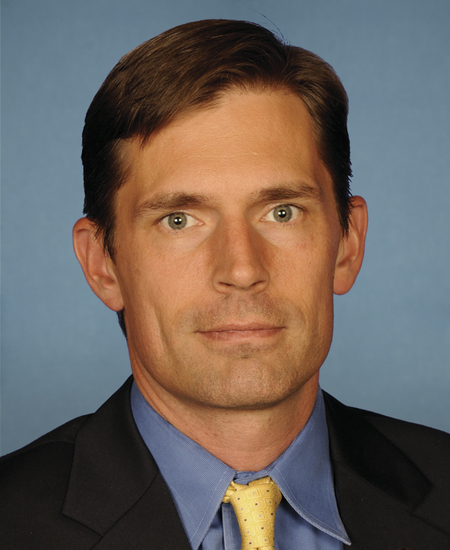
Sen. Martin Heinrich
Sponsored bills
Maddy summaryThis bill amends key USDA conservation programs to prioritize habitat connectivity for native big game species like deer, elk, and moose. It adds specific requirements for programs like the Environmental Quality Incentives Program (EQIP) and Conservation Stewardship Program (CSP), allowing payments for activities that restore wildlife migration corridors on land enrolled in the Conservation Reserve Program (CRP). The bill increases CRP rental payment limits from $50,000 to $125,000 and mandates incorporation of nonstructural methods like virtual fencing into conservation standards. It directly affects farmers and ranchers participating in these programs by modifying eligibility for payments and emphasizing habitat connectivity alongside traditional conservation goals.
Maddy summaryThe GRIData Act of 2024 requires the Department of Energy to identify, analyze, and share data to improve electric grid reliability and resilience, with special focus on rural areas, low-income communities, disadvantaged communities, and energy communities. The bill establishes standardized metrics like SAIDI (System Average Interruption Duration Index) and MAIFI (Momentary Average Interruption Frequency Index) to measure grid performance and mandates the Department to create a report within one year detailing recommended data types, collection methods, and sharing platforms. The legislation also creates a steering committee with utility representatives, regulators, and experts to guide these efforts and authorizes $10 million for implementation. This law aims to enhance long-term grid planning by making reliability data more accessible and usable for utilities, regulators, and researchers.
Maddy summaryThe Grid MODEL Act of 2024 requires the Federal Energy Regulatory Commission (FERC) to direct Electric Reliability Organizations to develop new reliability standards for grid planning. These standards mandate the use of probabilistic modeling - which accounts for real-world uncertainties like weather impacts, equipment aging, outages, and growing electrification - to assess resource adequacy and integrated resource planning across U.S. power grids. The bill specifically directs modeling to consider generation, transmission, energy storage, and load uncertainties (e.g., extreme weather effects, battery degradation, and increased electric vehicle demand) when determining optimal grid resources. It applies to grid operators, utilities, and state authorities but does not override existing state-level modeling requirements. The goal is to improve grid reliability planning by incorporating dynamic, data-driven assessments of future grid needs.
Maddy summaryThis bill authorizes the U.S. Treasury to mint and sell commemorative coins honoring the 2026 FIFA World Cup, which will be hosted by the U.S., Mexico, and Canada. It specifies three coin types: $5 gold coins (max 100,000), $1 silver coins (max 500,000), and half-dollar coins (max 750,000), all with designs reflecting soccer and the World Cup. A surcharge is added to each coin sale ($35 for $5 coins, $10 for $1 coins, $5 for half-dollars), with all surcharge revenue going directly to FWC2026 US, Inc. to fund U.S. soccer programs, particularly youth initiatives and underserved communities. The coins may only be sold during 2026 and must cover all costs to avoid government expense.
Maddy summaryThe Forest Biomass Emissions Act of 2024 requires the Environmental Protection Agency (EPA) to account for total greenhouse gas emissions - from growing, harvesting, and burning forest biomass - when regulating electricity generated from this source. It mandates a one-year study by the EPA, in collaboration with the Energy and Agriculture Departments, to assess impacts on communities near biomass facilities, including air pollution, noise, dust, and socioeconomic factors. The study must collect data on air quality, community demographics, and facility compliance, then report findings to Congress and the Science Advisory Board within 60 days of completion. This bill directly affects EPA regulatory processes and communities living near forest biomass operations like wood pellet mills and power plants.
Maddy summarySRES 645 is a ceremonial Senate resolution designating April 20-28, 2024, as "National Park Week." It does not create new laws or affect any group directly; instead, it formally recognizes this week to highlight the National Park System. The resolution encourages the public to responsibly visit, experience, and support national parks, referencing the system’s history, visitor statistics (325 million visits in 2023), and economic impact ($50.3 billion in 2022). As a non-binding resolution, it has no legal effect but serves to promote awareness of national parks.
Maddy summaryThe Affordable Housing Credit Improvement Act of 2023 updates the federal Low-Income Housing Tax Credit program to create more affordable housing options. Key provisions include increasing state funding allocations through revised per capita and minimum amount calculations, modifying tenant eligibility rules to better protect vulnerable populations (including domestic violence victims), and expanding the program's reach to Native American communities and rural areas. The bill also changes the program's name from "Low-income Housing Credit" to "Affordable Housing Credit" and makes administrative improvements to enhance transparency and accountability. These changes aim to make it easier for developers to create and maintain affordable housing units for low- and moderate-income households.
Maddy summary# Summary of the Long-Term Care Workforce Support Act This comprehensive legislation establishes a framework to support and improve conditions for the direct care professional workforce (including home health aides, nursing assistants, and similar workers) through multiple key provisions: 1. **Workplace Violence Prevention** - Requires healthcare facilities to develop and implement written workplace violence prevention plans, including risk assessments, training, incident reporting procedures, and anti-retaliation policies. The plan must include specific measures to address different types of workplace violence (Type 1-4). 2. **Paid Sick Time** - Mandates that employers provide direct care professionals with paid sick time (1 hour for every 30 hours worked), with specific uses including: - Medical care for the employee - Caring for family members (children, parents, spouse, domestic partner) - Addressing domestic violence, sexual assault, or stalking - Public health emergencies (with additional paid sick time provided during declared emergencies) 3. **National Compensation Strategy** - Establishes a National Direct Care Professional Compensation Strategy to: - Identify ways to provide direct care professionals with livable wages - Guide State Medicaid agencies in compensating direct care professionals at full labor cost - Create a National Direct Care Professional Compensation Advisory Council with diverse representation - Address challenges including part-time work nature, workforce mobility, and inequities related to race, ethnicity, and immigration status 4. **Evaluation Framework** - Requires an evaluation of the Act's implementation and outcomes by an external evaluator with experience in home and community-based services, disability programs, and healthcare workforce programs. The evaluation will assess impacts on: - Workforce recruitment, retention, and advancement - Compensation and working conditions - Burnout and attrition rates - Access to long-term care services - Costs to Medicare and Medicaid programs The legislation aims to improve the quality of care for older individuals and people with disabilities by strengthening the direct care workforce through better compensation, safer working conditions, and improved benefits.
Maddy summaryThis bill establishes new requirements for the Department of Defense to monitor and address brain injuries from blast overpressure exposure among service members. It mandates baseline and annual neurocognitive assessments for all service members, creates detailed blast exposure logs tracking every instance of exposure, and establishes the Warfighter Brain Health Initiative to coordinate brain health efforts across the military. The legislation requires specific roles for Defense officials to implement these measures within one year, including establishing blast overpressure safety thresholds and reporting requirements. It also mandates annual reports to Congress on brain injury incidents, treatments, and progress toward reducing blast exposure risks. The bill directly affects all members of the Armed Forces and requires significant changes to how the Department of Defense monitors and addresses blast-related brain injuries.