

Maddy summaryThis Senate resolution expresses strong support for public K-12 schools and condemns any efforts to defund public education or dismantle the Department of Education. It highlights the federal government’s critical role in providing equitable funding - particularly for students in underserved communities, including those with disabilities, from low-income families, and in rural areas - and opposes diverting funds to private schools. As a non-binding resolution, it does not create new laws but formally states the Senate’s position on protecting public education funding and oversight.
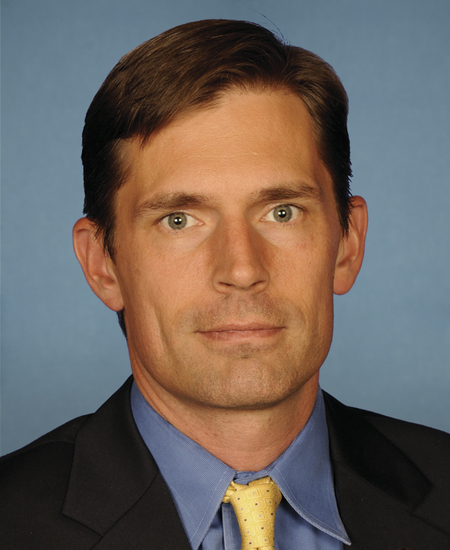
Sen. Martin Heinrich
Sponsored bills
Maddy summarySRES 129 is a symbolic Senate resolution honoring teachers who have earned or maintained National Board Certification (NBC), a voluntary credential demonstrating advanced teaching expertise. It recognizes these educators for improving student learning, as research shows students of NBC teachers achieve better outcomes. The resolution encourages schools and states to promote NBC certification and provide incentives for teachers pursuing it, though it does not create new funding or requirements. This resolution directly affects approximately 141,464 National Board Certified teachers nationwide (as of March 2025) and serves as a non-binding acknowledgment of their contributions. It has no legislative effect beyond formal recognition.
Maddy summaryThis bill requires federal agencies to develop a strategy within 120 days to prevent the trafficking of machinegun conversion devices - parts that convert regular firearms into machineguns. The strategy must improve detection, coordination between federal and local law enforcement, tracing of devices used in crimes, and address emerging threats like 3D-printed devices. It mandates annual reports to Congress on implementation progress and requires the Attorney General to include specific data on these devices in annual firearms trafficking reports. The bill directly affects federal agencies (ATF, FBI, Homeland Security), state/local law enforcement, and aims to disrupt trafficking networks.
Maddy summaryThe MedShield Act of 2025 establishes a new pandemic preparedness program under the Department of Health and Human Services (HHS), requiring the use of artificial intelligence to improve national biodefense. It directs HHS to create a system for real-time pathogen tracking, accelerate vaccine development, and optimize treatment distribution using AI tools, as outlined in Section 3(c). The program mandates annual funding of $300 million in 2025, increasing to $500 million by 2029 (Section 6), and requires a report to Congress within 180 days of enactment (Section 4). This bill directly affects federal agencies coordinating pandemic response and aims to create a continuous, integrated system for addressing biological threats, replacing ad-hoc efforts like Operation Warp Speed.
Maddy summaryThis bill expands the Work Opportunity Tax Credit to include military spouses. It adds "qualified military spouse" as a new category eligible for the credit, meaning employers who hire spouses of active-duty service members can claim the tax benefit. To qualify, a spouse must be certified by a local agency as married to an Armed Forces member at the time of hire. The change applies to hires occurring after the law's effective date, directly affecting military spouses seeking employment and employers who hire them.
Maddy summaryThis bill, the Major Richard Star Act (S 1032), allows veterans with combat-related disabilities to receive both their military retired pay and Veterans Affairs disability compensation simultaneously. It amends U.S. Code sections to remove the automatic reduction in retired pay that previously forced these veterans to choose between the two payments. The key change ensures veterans with combat-related disabilities qualify for full retired pay without offset against their VA disability benefits, effective for payments starting after the bill's enactment date. This directly affects veterans receiving military retired pay under Chapter 61 who also qualify for VA disability compensation for combat-related injuries.
Maddy summaryThe Putting Veterans First Act of 2025 protects veterans, military spouses, caregivers, survivors, and reserve component members who work in federal civil service. It requires the reinstatement of those removed, demoted, or suspended between January 20, 2025 and the bill's enactment date, with back pay and restored benefits. The bill also establishes protections against future removals without proper justification, mandates regular reporting on military community employment, and restricts changes to VA operations like office closures, hiring freezes, and telework policies without congressional notice. Additionally, it requires VA to restore canceled contracts and improve transparency through weekly workload reports and published wait times for community care.
Safe Schools Improvement Act This bill requires states to direct their local educational agencies (LEAs) to establish policies that prevent and prohibit bullying and harassment of elementary and secondary school students. In particular, these policies must prohibit bullying and harassment based on race, color, national origin, disability, religion, or sex. Sex includes sexual orientation, gender identity, and sex characteristics (including intersex traits). Further, LEAs must provide (1) students, parents, and educational professionals with annual notice of the conduct prohibited in their disciplinary policies; (2) students and parents with grievance procedures that target such conduct; and (3) the public with annual data on the incidence and frequency of that conduct at the school and LEA level. The Department of Education must conduct and report on an independent biennial evaluation of programs and policies to combat bullying and harassment in elementary and secondary schools. The National Center for Education Statistics must collect state data to determine the incidence and frequency of the conduct prohibited by LEA disciplinary policies.
Maddy summaryThis bill transitions Transportation Security Administration (TSA) employees from TSA-specific personnel systems to the standard federal system under Title 5 of the U.S. Code, requiring completion by December 31, 2025. It prohibits changes to current TSA personnel policies during transition, ensures no reduction in pay or benefits for employees, and preserves collective bargaining rights for screening agents. The bill mandates annual reports on workforce satisfaction, retention rates, and actions to improve morale, as well as reports on recruitment, diversity, and workplace safety to Congress. It includes specific protections for Federal Air Marshals regarding mental health, suicide rates, and workplace conditions. The TSA must submit detailed implementation plans to Congress within 7 days of the bill's enactment.
Maddy summaryThe Mining Waste, Fraud, and Abuse Prevention Act of 2025 establishes new fees and royalties for hardrock mining operations on federal land. Mining claim holders must pay $200 annually per claim, and operators pay a 5-8% royalty on mineral production. The bill creates a Hardrock Minerals Reclamation Fund to which these fees and royalties will be deposited for reclaiming abandoned mine sites. It also establishes new permit requirements for mineral exploration and mining, along with financial assurance requirements to ensure reclamation. These provisions directly affect mining operators on federal lands, requiring them to comply with new fee structures, permit processes, and reclamation obligations.