Maddy summaryThe Habitat Enhancement Now Act establishes two competitive grant programs to improve nesting success for migratory waterfowl. It provides $3.5 million annually (2026-2030) for eligible entities - such as state governments, nonprofits, or private landowners - to implement specific habitat improvements. The first program funds strategic placement of hen houses (nesting structures) in the prairie pothole region, while the second targets California to create nesting cover, brood ponds, and incentivize landowners. These grants directly support conservation efforts for species like mallards and gadwalls by addressing documented habitat loss impacting breeding success.
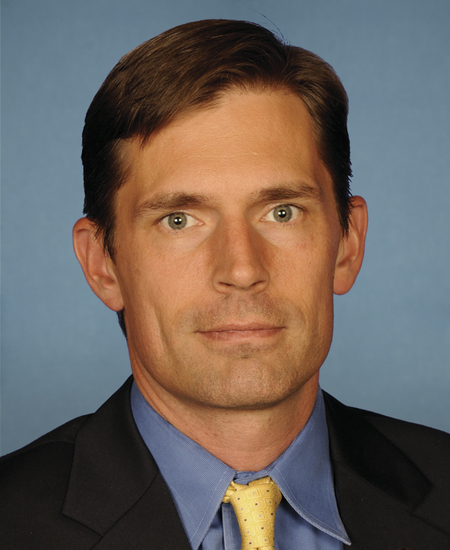
Sen. Martin Heinrich
Sponsored bills
Halt All Lethal Trafficking of Fentanyl Act or the HALT Fentanyl Act This act permanently places fentanyl-related substances as a class into schedule I of the Controlled Substances Act. A schedule I controlled substance is a drug, substance, or chemical that has a high potential for abuse; has no currently accepted medical value; and is subject to regulatory controls and administrative, civil, and criminal penalties under the Controlled Substances Act. Under the act, offenses involving fentanyl-related substances are triggered by the same quantity thresholds and subject to the same penalties as offenses involving fentanyl analogues (e.g., offenses involving 100 grams or more trigger a 10-year mandatory minimum prison term). Additionally, the act establishes a new, alternative registration process for certain schedule I research. The act also makes several other changes to registration requirements for conducting research with controlled substances, including permitting a single registration for related research sites in certain circumstances, waiving the requirement for a new inspection in certain situations, and allowing a registered researcher to perform certain manufacturing activities with small quantities of a substance without obtaining a manufacturing registration. Finally, the act expresses the sense that Congress agrees with the interpretation of the Controlled Substances Act in United States v. McCray , a 2018 case decided by the U.S. District Court for the Western District of New York. In that case, the court held that butyryl fentanyl, a controlled substance, can be considered an analogue of fentanyl even though, under the Controlled Substances Act, the term controlled substance analogue specifically excludes a controlled substance.

Maddy summaryThis bill creates a federal program providing child care assistance to working families with children under age 6 through direct child care certificates that parents can use to pay for high-quality child care services. States must develop plans with payment rates covering provider costs and wages, sliding fee scales based on family income (with no copayment for families earning under 85% of state median income), and policies prioritizing vulnerable children including those with disabilities, experiencing homelessness, or from low-income families. The program requires providers to meet quality standards, prohibit suspensions/expulsions, and implement quality improvement activities while ensuring accessibility for underserved populations. It is funded through significant federal appropriations for fiscal years 2026-2031.
Maddy summaryThe Tribal Access to Clean Water Act of 2025 provides federal funding to improve water infrastructure on Tribal lands and for the Native Hawaiian community. The bill authorizes $100 million annually for water and waste facility loans and grants, $500 million for sanitation facilities construction through the Indian Health Service, and $100 million for operation and maintenance of water systems, all from fiscal years 2026 through 2030. It also provides $30 million annually for technical assistance to help Tribes access funding and develop sustainable water systems. The bill aims to address the lack of clean water access, which affects nearly half of all households on Tribal lands. The funding requires no matching contribution from Tribes and prioritizes facilities most in need of assistance.
Maddy summaryThis bill authorizes the minting of commemorative coins for the 2028 Los Angeles Olympic and Paralympic Games and the 2034 Salt Lake City Olympic and Paralympic Winter Games. It specifies four coin types ($5 gold, $1 silver, half-dollar, and proof silver $1) with defined quantities and designs reflecting U.S. athletic participation. A surcharge on each coin sale (e.g., $35 for $5 coins) funds the respective Olympic committees' legacy programs, including youth sports initiatives. The coins are legal tender but intended solely for commemoration, with surcharges directed to the organizing committees after covering minting costs.
Maddy summaryThis symbolic resolution (SCONRES 16) recognizes the persistent wage gap affecting Black women in the U.S., specifically noting they earn just 66 cents for every dollar paid to White, non-Hispanic men for full-time work. It highlights that Black women face compounded racial and gender-based pay discrimination, with data showing the gap would take over 200 years to close at current rates. The resolution does not create new laws but formally acknowledges the economic impact on Black women - such as lost lifetime earnings and reduced family financial security - and reaffirms congressional support for equal pay principles. It was introduced to coincide with Black Women’s Equal Pay Day (July 10, 2025), using Census and EEOC data to underscore the disparity.
Maddy summaryThis resolution expresses the U.S. Senate's support for designating July 10, 2025, as Journeyman Lineworkers Recognition Day. It honors journeyman lineworkers who maintain the nation’s power grid 24/7, restore electricity during disasters, and work in hazardous conditions. The resolution specifically recognizes the 129th anniversary of Henry Miller, the first president of the International Brotherhood of Electrical Workers, who died while restoring power in 1901. The Senate encourages the public to observe this day to reflect on lineworkers’ contributions and sacrifices. (Note: This is a symbolic resolution with no legal force or funding impact.)
Maddy summaryThis bill imposes fees on carbon dioxide-equivalent emissions and criteria air pollutants from international maritime shipping. It requires operators of large cargo vessels (5,000+ gross tons) to report emissions data and pay fees based on fuel consumption and emissions. The fees collected will fund programs to modernize U.S. shipping fleets with zero-emission technology, develop low-carbon fuels, train workers for clean shipping technologies, and improve air quality monitoring in port communities. The bill affects international shipping operators and U.S. port communities, with reporting requirements starting in 2027 and funding programs beginning in 2029.
Maddy summarySRES 312 is a non-binding Senate resolution designating June 2025 as "LGBTQ Pride Month" to honor the LGBTQ community's historical struggles and contributions to U.S. society. The resolution expresses symbolic support for LGBTQ rights and highlights ongoing challenges like discrimination in housing, employment, and healthcare, without creating new laws or policies. It serves as a formal acknowledgment by the Senate to promote awareness of LGBTQ history and advocacy, but has no legal effect on government actions or individual rights. The resolution was introduced by multiple senators and includes a preamble detailing key milestones in LGBTQ equality efforts.
Maddy summaryS 2225, the Prevent Interruptions in Physical Therapy Act of 2025, allows physical therapists to use temporary replacement therapists (locum tenens) under Medicare for outpatient physical therapy services. The bill amends Medicare rules to apply the same provisions currently used for physicians' services to physical therapy services, meaning therapists can now fill in gaps during staff shortages without disrupting patient care. This directly affects physical therapists providing Medicare-covered outpatient therapy and Medicare beneficiaries receiving those services. The change takes effect after the bill is enacted, ensuring continuity of care when therapists are unavailable.