

Maddy summarySRES 875 is a non-binding Senate resolution declaring racism a public health crisis in the United States. It directly affects racial and ethnic minority communities, which face documented health disparities including lower life expectancy, higher maternal mortality, and worse pandemic outcomes due to systemic inequities. The resolution commits the Senate to establishing a nationwide strategy to address health disparities, dismantle systemic racism, and advance reforms for communities disproportionately impacted by racism. It cites evidence from public health experts and historical data showing racism meets all criteria of a public health crisis: widespread impact, unfair distribution, preventable nature, and lack of current preventive measures. The resolution is symbolic, urging cross-government action but not creating new laws or funding.
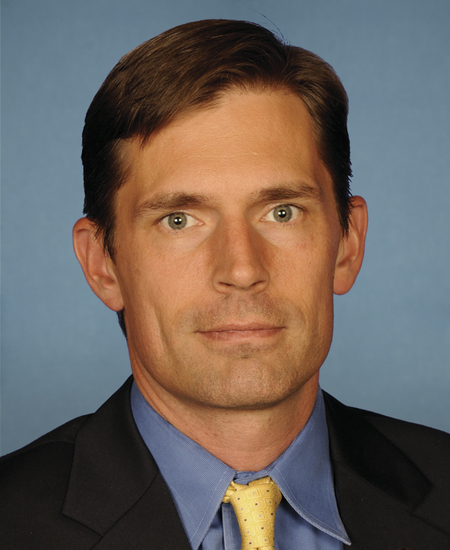
Sen. Martin Heinrich
Sponsored bills
M.H. Dutch Salmon Greater Gila Wild and Scenic River Act This bill designates specified segments of rivers and creeks of the Gila River system in New Mexico as components of the National Wild and Scenic Rivers System and transfers 440 acres of land from the Gila National Forest to the Gila Cliff Dwellings Monument. The Department of the Interior or the Department of Agriculture (USDA) must consult with tribal governments, applicable political subdivisions of states, and interested members of the public when preparing the comprehensive management plan for such segments pursuant to the Wild and Scenic Rivers Act. Any nonfederal land within or adjacent to such a segment that is acquired by the United States shall be incorporated in, and be administered as part of, the applicable segment. No land or interest in land shall be acquired without the owner's consent. Interior or USDA may authorize the construction of a native fish habitat restoration project within such a segment if the project would enhance the recovery of a threatened or endangered species, a sensitive species, or a species of greatest conservation need, including the Gila Trout; and would not unreasonably diminish the free-flowing nature or outstandingly remarkable values of the segment.
FEMA Improvement, Reform, and Efficiency Act of 2022 or the FIRE Act This act addresses the federal government's approach to wildfires. Specifically, the act requires the Federal Emergency Management Agency (FEMA) to report to Congress regarding the use of relocation assistance under the Robert T. Stafford Disaster Relief and Emergency Assistance Act for wildfire risk. FEMA, in coordination with the National Weather Service, must study, develop recommendations for, and initiate a process for the use of forecasts and data, including information that supports Red Flag Warnings and similar weather alert and notification methods, to establish plans and actions that can be implemented prior to a wildfire event that can limit the impact, duration, or severity of the fire; and mechanisms to increase interagency collaboration to expedite the delivery of disaster assistance. The Government Accountability Office must report to Congress regarding wildfires, including the effectiveness of FEMA programs. Each state, local agency, or private mental health organization providing professional crisis counseling assistance must ensure that those providing case management services to victims of a major disaster have training to address impacts in communities and to individuals with socioeconomically disadvantaged backgrounds. FEMA must conduct a study and develop a plan to address providing housing assistance to survivors of major disasters or emergencies when presented with challenges such as the presence of multiple families within a single household. The act allows Indian tribal governments to apply for grants for equipping, upgrading, and constructing state and local emergency operations centers.
Fire Suppression Improvement Act This bill sets the federal cost share of fire management assistance at 75% of the eligible cost of such assistance and permits a state or local government to use such assistance for the predeployment of assets and resources. The Federal Emergency Management Agency (FEMA) must complete a rulemaking to provide criteria for the circumstances under which it may recommend that the President increase the federal cost share.
Quantum Computing Cybersecurity Preparedness Act This bill addresses the migration of executive agencies information technology systems to post-quantum cryptography. Post-quantum cryptography is encryption strong enough to resist attacks from quantum computers developed in the future. Not later than one year after the National Institutes of Standards and Technology has issued post-quantum cryptography standards, the Office of Management and Budget (OMB) shall begin to prioritize the migration of agency information technology systems to post-quantum cryptography. Not later than one year after the date of the enactment of this bill, the OMB shall submit to Congress a report on a strategy to address the risk posed by the vulnerabilities of agency information technology systems to the potential capability of a quantum computer; the funding necessary to secure such information technology systems from the threat posed by adversarial access to quantum computers; and a description of federal coordination efforts to develop standards for post-quantum cryptography, including any federal Information Processing Standards.
Senator Johnny Isakson VA Regional Office Act of 2022 This act designates the Department of Veterans Affairs Atlanta Regional Office in Georgia as the Senator Johnny Isakson Department of Veterans Affairs Atlanta Regional Office or the Isakson VA Atlanta Regional Office.
This concurrent resolution recognizes the disparity between wages paid to Latina women, and its impact on women, families, and the nation and reaffirms Congress' commitment to supporting equal pay for equal work and to narrowing the gender wage gap.
Continental Divide Trail Completion Act This bill directs the Forest Service and the Department of the Interior to complete the Continental Divide National Scenic Trail as a contiguous route by November 10, 2028. The Forest Service and Interior must also establish a joint Forest Service and Bureau of Land Management trail completion team to work in coordination with the administrator of the trail to facilitate its completion and optimization. In addition, the Forest Service must submit to specified congressional committees a comprehensive development plan for the trail.
Hydrogen for Industry Act of 2021 This bill requires the Department of Energy (DOE) to establish grant programs to support the use of hydrogen in energy. Specifically, DOE must establish a grant program for projects that demonstrate the uses of hydrogen in heavy industry (e.g., steel, cement, glass, and chemical manufacturing). It also directs DOE to establish a grant program for (1) carrying out projects that demonstrate the end uses of hydrogen; (2) constructing a new commercial-scale facility that will use hydrogen as a fuel or feedstock; or (3) retooling, retrofitting, or expanding an existing facility to enable the use of hydrogen as a fuel or feedstock in industrial end-use applications of hydrogen.
United States Foundation for International Conservation Act of 2022 This bill requires the Department of State to establish a foundation to provide grants for projects to manage protected and conserved areas in low- and middle-income countries with high levels of biological diversity or species and ecosystems of significant importance. Recipients of grants from this foundation must secure outside funding to match, at minimum, the amount of the grant.