

Maddy summaryThe Federal Judiciary Stabilization Act of 2024 makes permanent 10 temporary federal district court judgeships in specific judicial districts, including Hawaii, Kansas, and multiple districts across Alabama, Arizona, California, Florida, Missouri, New Mexico, North Carolina, and Texas. It achieves this by amending federal law to treat these positions as permanent, so current judges in those roles will now hold their positions under permanent authority rather than temporary appointments. The bill also updates the official U.S. Code table listing authorized judgeships to reflect these new permanent numbers for each district. This directly affects the federal courts in the specified districts by ending the temporary status of these judgeships and providing long-term stability to their staffing.
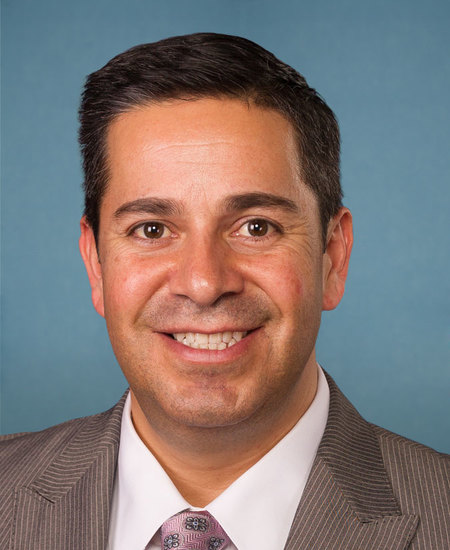
Sen. Ben Ray Luján
Sponsored bills
Maddy summaryThe Stop Institutional Child Abuse Act (S. 1351) directs the Department of Health and Human Services to contract with the National Academies of Sciences, Engineering, and Medicine to study child abuse in youth residential programs. The study, to be completed within three years and updated every two years for a decade, will examine the prevalence of abuse, funding sources, regulations, and barriers to community-based alternatives for youth. It will identify risk assessment tools, recommend improved oversight and training for staff, and provide best practices for care including reducing the use of seclusion and restraints. The bill directly affects youth in residential programs, child welfare systems, and the agencies that oversee them, with recommendations aimed at improving safety and care. The study will involve consultation with child advocates, health professionals, individuals with lived experience, and government agencies to ensure comprehensive recommendations.
Maddy summaryThe Jenna Quinn Law (S.1147) creates federal grants to fund community-driven programs in schools and communities focused on preventing, recognizing, responding to, and reporting child sexual abuse among K-12 students. It directly affects teachers, school staff, students, parents, and community organizations by requiring grant recipients to provide age-appropriate prevention education for students and training for adults who work with children. Key provisions include 5-year grants for evidence-based initiatives, annual reporting on program outcomes, and mandatory federal evaluations to assess effectiveness and avoid duplication of existing programs. The law aims to strengthen prevention efforts through targeted training and community engagement without mandating specific curricula.
Maddy summaryThe Improving Diagnosis in Medicine Act of 2022 establishes a federal research program to study and reduce diagnostic errors in healthcare, which can cause patient harm. It authorizes $20 million to $35 million annually for five years to fund research centers, develop evidence-based strategies, and improve diagnostic safety and quality across diverse healthcare settings. The bill also creates an interagency council within the Department of Health and Human Services to coordinate federal efforts, develop strategic plans, and report to Congress on progress. Additionally, it includes provisions for training fellowships and a National Academies study on disparities in diagnostic care related to race, ethnicity, and other factors.
Maddy summaryThe Connect Our Parks Act requires the Secretary of the Interior to assess where National Parks need improved broadband internet and cellular service, focusing on areas like campgrounds, administrative facilities, and locations critical for emergency access or staff communications. Within 180 days of enactment, the Secretary must submit a report identifying priority locations for both services. By two years after enactment, the Secretary must develop a plan to install infrastructure, meeting minimum speed standards (100 Mbps downstream, 20 Mbps upstream for broadband), minimizing environmental impact, and using public-private partnerships. The plan must exclude parks where adequate service already exists, as determined by park superintendents.
Maddy summaryThis bill would require Members of Congress, their spouses, and dependent children to stop trading or holding certain investments (called "covered investments") and instead place them in "qualified blind trusts" or divest them by specific deadlines. It defines covered investments broadly to include stocks, commodities, and derivatives, but excludes diversified mutual funds, government bonds, and some business interests. The bill sets different deadlines for different groups (e.g., 90 days after enactment for existing holdings, 120 days for new holdings) and establishes civil penalties for non-compliance, including penalties equal to 10% of the value of non-compliant holdings. It also requires public reporting of financial disclosures and establishes procedures for oversight by ethics offices.
Maddy summaryThe North Dakota Trust Lands Completion Act of 2023 would allow North Dakota to relinquish state-owned land within Indian reservations and select equivalent federal land in exchange. The state would give up land within tribal reservations (which would then be taken into trust for the tribes) and receive federal land of equal value elsewhere in the state. The bill includes specific procedures for valuing the land, transferring ownership, and protecting tribal rights, while ensuring the transfer doesn't affect existing treaty rights or mineral leases. This legislation aims to fulfill a promise made to North Dakota in the 1889 Enabling Act while increasing tribal sovereignty over reservation lands.
Maddy summaryThis bill authorizes the Secretary of the Interior to expand Big Bend National Park by acquiring approximately 6,100 acres of land through voluntary means - such as donation, purchase from willing sellers, or land exchange - without using eminent domain. The land, depicted on a specific map, would become part of the park boundary once acquired. The bill directly affects the park's physical boundaries and landowners whose property is included in the designated area. The key provision is the formal process for adding this land to the park, with the map serving as the official reference for the adjustment.
Maddy summaryThis bill requires state agencies administering the Supplemental Nutrition Assistance Program (SNAP) to pay staff at least the same rate as comparable federal employees, with annual raises tied to federal pay increases. It also mandates that the federal government cover 100% of state administrative costs related to staffing and retention, including hiring, training, and maintaining wages. To qualify for these funds, states must use the money to supplement - not replace - existing state funding and maintain or increase staffing levels compared to fiscal year 2023. The bill directly affects SNAP state program staff and the agencies managing them, aiming to improve retention through wage parity and full federal cost coverage.
Maddy summaryThis bill authorizes $25.48 billion in funding for NASA for fiscal year 2025, directing the agency to maintain continuous human presence in low-Earth orbit through a transition from the International Space Station to commercial space stations. It requires NASA to develop human-rated lunar landing capabilities for the Artemis program, continue development of the Space Launch System and Orion spacecraft, and establish a Commercial Low-Earth Orbit Development Program to procure services from U.S. commercial providers. The bill mandates a managed transition from the ISS to commercial destinations by 2030, with specific requirements for maintaining ISS operations until commercial alternatives are ready and for conducting in-space testing of advanced spacesuit capabilities. It also includes provisions to support lunar exploration, maintain a balanced science portfolio, and strengthen NASA's role in commercial space activities.