

Maddy summaryThis bill, S 1716 (Vision Lab Choice Act of 2025), modifies vision care coverage under health plans by limiting agreements between optometrists and vision plans to two-year terms (with possible two-year extensions) and prohibiting plans from restricting optometrists' choices of labs or suppliers for patient vision care. It directly affects optometrists and health insurance issuers offering limited-scope vision benefits, ensuring they cannot force optometrists to use specific labs or materials. The bill requires annual state enforcement notifications by the Secretary and clarifies that state laws governing vision plans take precedence if they conflict with this law. It does not change overall coverage requirements but focuses on provider choice and contract terms within vision benefit plans.
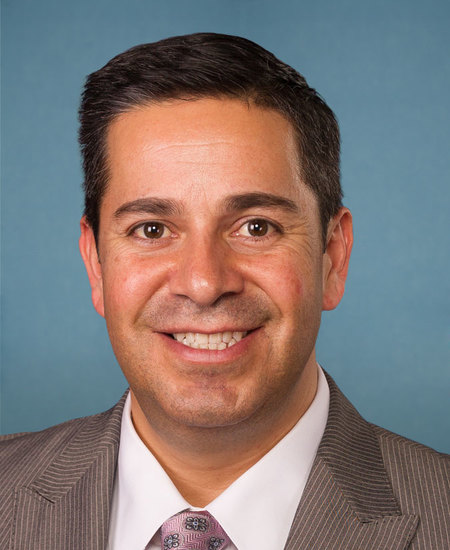
Sen. Ben Ray Luján
Sponsored bills
Maddy summaryThis bill allows businesses to immediately deduct research and development (R&D) costs instead of spreading them over 60 months, directly benefiting companies investing in innovation. It increases the refundable R&D credit cap for small businesses from $250,000 to $750,000 over time, with specific phase-in amounts starting in 2025. Additionally, it expands access for startups by raising the gross receipts threshold for eligibility from $5 million to $15 million and increasing credit rates for qualified small businesses. These changes aim to make R&D tax incentives more accessible and valuable for smaller companies and new ventures.
Maddy summaryThis bill bans the commercial provision of conversion therapy - defined as paid attempts to change a person's sexual orientation or gender identity - as it is deemed ineffective and harmful. It directly affects therapists, clinics, and any commercial entity offering such services, while exempting gender transition support and non-discriminatory counseling. Key mechanisms include prohibiting paid conversion therapy, banning deceptive advertising (e.g., claiming it’s harmless), and empowering the Federal Trade Commission and state attorneys general to enforce penalties. The law focuses on preventing fraud by stopping profit-driven practices with no scientific basis, aligning with professional consensus on the risks.
Maddy summaryThe TEST AI Act of 2025 establishes a pilot program to develop measurement standards for artificial intelligence (AI) systems used by federal agencies. It requires the National Institute of Standards and Technology (NIST) to create testbeds (controlled testing environments) and form a working group - including government, private sector, and academic representatives but excluding citizens of China, Russia, North Korea, and Iran - to define standards covering reliability, security, privacy, and bias in AI systems. Within two years, NIST must develop testbeds to demonstrate these standards, and after the first demonstration, submit a report to Congress detailing findings and recommendations. The bill aims to create consistent evaluation methods for federal AI use, ensuring systems are safe, effective, and secure.
Maddy summarySRES 205 is a Senate resolution condemning President Donald J. Trump’s specific actions targeting press freedom, including accusing media outlets without evidence, excluding major news organizations from White House access, suing CBS News, and seeking to defund public broadcasters. It reaffirms that a free press is essential to democracy and government accountability, as protected by the First Amendment. The resolution calls on the executive branch to respect journalists’ rights, urges continued efforts to secure the release of 11 U.S. Agency for Global Media (USAGM) journalists imprisoned abroad, and expresses solidarity with journalists facing threats. This is a symbolic statement, not a binding law, reflecting the Senate’s position on press freedom.
Maddy summaryThe LAST ACRE Act of 2025 establishes the "Last Acre Program" to expand high-speed broadband access to agricultural land that lacks sufficient connectivity. The program provides grants and loans to broadband providers to build networks meeting minimum speed requirements (100 Mbps downstream, 20 Mbps upstream) on unserved or underserved cropland, pastureland, and farm sites used for active agricultural production. It prioritizes assistance for limited resource farmers (those with lower income and farm sales) and requires providers to meet cybersecurity standards and submit detailed bid applications. The bill also mandates data collection about agricultural broadband usage and requires annual reporting to Congress on program implementation.
Maddy summarySRES 201 is a non-binding Senate resolution designating the week of May 4-10, 2025, as "National Small Business Week." It honors small businesses and entrepreneurs across all U.S. communities for their economic contributions, citing that small businesses support over 59 million jobs. The resolution recognizes their resilience and celebrates their role in strengthening local economies. This symbolic gesture, consistent with annual presidential proclamations since 1963, does not create new laws or affect any specific group through policy changes.
Maddy summaryThis resolution designates May 5, 2025, as the "National Day of Awareness for Missing and Murdered Indigenous Women and Girls" to honor victims and support families. It calls on the public to commemorate affected individuals and demonstrates solidarity with their families. The resolution also recommends the Department of Justice commission a new study on the crisis, noting that a previous study (2016) is outdated. As a symbolic gesture, it does not create new laws or funding but aligns with existing efforts like Savanna’s Act.
Maddy summaryThe BABIES Act (S 1598) creates two main programs to expand access to independent birth centers. First, it provides grants of $300,000-$500,000 per year to up to 15 accredited birth centers in underserved areas (e.g., maternity care shortage zones) for facility upgrades, equipment, or accreditation costs ($5 million total over 2026-2030). Second, it launches a Medicaid demonstration program testing new payment models for birth centers serving low-risk pregnant women enrolled in Medicaid, requiring centers to meet strict accreditation, licensure, and care coordination standards. This directly affects birth centers seeking expansion, Medicaid recipients in underserved communities, and states developing payment systems for birth center services.
Maddy summaryThis bill creates federal grant programs to expand midwifery education and workforce capacity. It allocates $15 million annually (2025-2029) for accredited midwifery schools to support students, expand programs, and increase clinical mentors, with 50% of funds for student support. It also allocates $20 million annually for nurse-midwifery programs in schools of nursing, with similar funding splits and requirements to prioritize underserved areas and racial/ethnic minority representation. The bill specifically excludes midwifery programs within nursing schools from funding and sets clear allocation rules for the grants.