

Maddy summaryThe SAFE Orbit Act creates a new Bureau of Space Commerce within the Department of Commerce to manage space situational awareness and traffic coordination. It requires the Bureau to provide a free, public database of space object locations and behavior (like satellite positions and collision risks) and offer basic collision-avoidance services to satellite operators at no cost. The law ensures government services do not compete with private companies by mandating annual reviews and prioritizing commercial data sources while protecting proprietary information. It also grants legal immunity for entities sharing space data and establishes a 5-year transition plan to elevate the current Office of Space Commerce into a standalone Bureau.
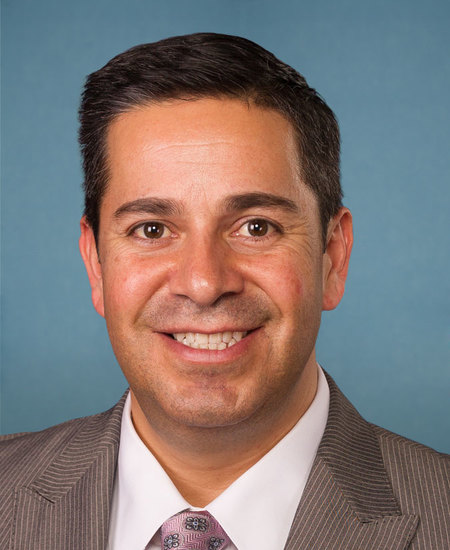
Sen. Ben Ray Luján
Sponsored bills
Maddy summaryThis bill amends the Elementary and Secondary Education Act to establish specific annual funding amounts for impact aid programs through 2031. It authorizes $90.3 million for real property acquisition in 2026 (increasing to $150.3 million by 2031), $1.63 billion for basic payments to local schools in 2026 (rising to $2.45 billion by 2031), $60.3 million for children with disabilities in 2026 (growing to $120.3 million by 2031), and $22.9 million for school construction in 2026 (reaching $45.4 million by 2031). These funds directly support school districts affected by federal land ownership or military installations, as defined under impact aid provisions. The bill sets clear, incremental funding targets without changing eligibility rules or program structure.
Maddy summarySRES 408 is a commemorative resolution designating September 20, 2025, as "National LGBTQ+ Servicemembers and Veterans Day." It honors lesbian, gay, bisexual, transgender, and queer (LGBTQ+) individuals who served in the U.S. military despite historical discrimination, including policies like Don’t Ask, Don’t Tell and bans on transgender service. The resolution acknowledges past harms, such as discharges based on sexual orientation or gender identity, and urges federal agencies to address ongoing inequities in benefits and healthcare access. It does not create new laws or alter policies but formally recognizes contributions and regrets historical injustices. This is a symbolic gesture to celebrate LGBTQ+ military service and promote awareness of ongoing challenges.
Maddy summaryThis non-binding Senate resolution calls on the U.S. President to recognize a demilitarized State of Palestine alongside a secure Israel, aligning with international law and the two-state solution. It specifically requires Palestine to be demilitarized (with no armed forces) while ensuring Israel's security, as outlined in UN resolutions. The resolution directly affects U.S. foreign policy by urging a shift in diplomatic recognition, without altering U.S. law or imposing new obligations. It references existing international consensus, including UN recognition of Palestine as a non-member state, and emphasizes that settlement expansion and violence by any party undermine peace efforts. The resolution has no legal force but seeks to influence executive action.
Child Care Access Means Parents In Schools Reauthorization Act or the CCAMPIS Reauthorization Act This bill reauthorizes through FY2031 and revises the Child Care Access Means Parents in School Program. The program awards grants to support the participation of eligible low-income parents in postsecondary education through the provision of campus-based child care services. Among other revisions to the program, the bill increases the minimum and maximum grant amounts, allows grant funds to be used for additional purposes (e.g., child care subsidies and support services), and specifies additional grant application requirements.
Maddy summaryThis bill provides $5 million annually (2026-2030) to states for improving stillbirth data collection and research, directly affecting state health departments and public health officials. It requires states to collect deidentified stillbirth data - including risk factors - using existing systems like fetal mortality reviews, while ensuring strict privacy compliance. The bill also allocates $1 million yearly to develop standardized data collection guidelines and public educational materials about stillbirths, with input from medical professionals and bereavement organizations. It mandates a public HHS report within five years containing these guidelines and educational resources to improve data consistency and awareness. The legislation focuses on enhancing data quality for research and public health, without altering medical care or insurance coverage.
Maddy summaryThis bill requires the Administrator of General Services to ensure all new U.S. federal public buildings (like courthouses and post offices) follow the 1962 "Guiding Principles for Federal Architecture" report. It mandates the Administrator to create new design regulations within 180 days, including minimum standards for building design, after public comment. These rules will directly affect federal agencies responsible for constructing or renovating public buildings. The bill does not change existing building codes but adds specific historical design principles to federal design requirements.
Maddy summaryS 2913, the Protecting Students with Disabilities Act, prevents federal funding from being used to restructure or eliminate offices within the Department of Education that administer disability-related programs. The bill specifically prohibits using funds to: (1) dismantle or merge offices serving students with disabilities (under IDEA) or adults with disabilities (under the Rehabilitation Act), (2) change staff roles that could undermine these programs, or (3) outsource these services to outside organizations. It directly affects the Department of Education’s disability program offices and the students and adults who rely on their services. The bill maintains existing program structures by restricting how federal funds can be allocated, ensuring compliance with current laws like IDEA and the Rehabilitation Act.
Maddy summaryThis bill requires U.S. colleges and universities to update their anti-harassment policies to explicitly cover online communications (like emails and social media) and all campus activities, including off-campus events and dormitories. It mandates institutions to create clear procedures for reporting harassment based on protected characteristics (such as race, gender identity, or disability), including how they will investigate and respond to incidents. The bill also creates a new $50 million annual grant program to fund schools developing prevention programs, counseling services, or training for students and staff on recognizing and addressing harassment. These requirements supplement existing federal civil rights laws like Title IX but do not replace them.
Maddy summaryThe Protect America’s Workforce Act (S 2837) directly affects federal employees and their labor unions by reversing two executive orders that limited their collective bargaining rights. It nullifies Executive Orders 14251 and 14343, which had excluded certain federal workers from labor-management programs, and prohibits federal funding for any efforts to implement those orders. The bill ensures that all existing collective bargaining agreements between federal agencies and employee unions remain fully enforceable through their original terms, as long as they were in effect as of March 26, 2025. This preserves current workplace agreements without creating new obligations or altering existing labor-management processes.