

Maddy summaryThis bill streamlines the process for broadband companies to install equipment near railroad infrastructure. It requires companies to notify railroads about planned work in shared areas (like street crossings), sets clear 15-30 day scheduling windows, and prohibits railroads from charging fees for public right-of-way work. For installations directly on railroad tracks, companies must pay railroads only for actual, documented costs. The Federal Communications Commission handles disputes over fees or delays, ensuring railroad safety remains prioritized. This directly affects broadband providers and railroad operators nationwide.
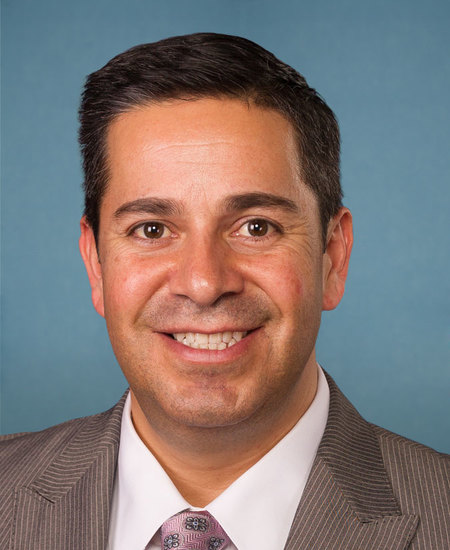
Sen. Ben Ray Luján
Sponsored bills
Maddy summaryThis bill repeals sections 10101 through 10108 of the 2025 Farm Bill (Public Law 119-21) and restores the previous law that existed before those sections were enacted. It directly affects food security programs for American families and farmers by reverting to the prior provisions of the Farm Bill. The key mechanism is a simple repeal and restoration of pre-existing law, without creating new programs or altering current funding structures.
Maddy summaryThis bill expands public service loan forgiveness for borrowers with federal student loans made after its enactment. It provides incremental forgiveness: 15% after 24 payments (2 years), an additional 15% after 48 payments (4 years), another 15% after 72 payments (6 years), and a final 15% after 96 payments (8 years), totaling 60% forgiven by year 8. After 120 payments (10 years) while working in public service, the entire remaining loan balance is canceled, with automatic deferment during processing. Borrowers must maintain public service employment and provide simplified employment certification via an automated system or basic form. It directly affects public service workers (e.g., teachers, firefighters, government employees) with qualifying federal student loans.
Maddy summaryThe Disarm Hate Act (S 3256) adds new restrictions to federal firearm law, prohibiting individuals convicted of a misdemeanor hate crime or who received an enhanced sentence for such a crime from buying, possessing, or transporting firearms. It directly affects people convicted under state, federal, or tribal law for misdemeanor offenses motivated by bias against race, religion, gender, sexual orientation, gender identity, or disability, where the crime involved physical force, a weapon threat, or credible threat to safety. The bill amends existing federal laws (18 U.S.C. §§ 922(d) and 922(g)) to explicitly include these individuals in prohibited categories, while excluding cases where convictions were expunged, pardoned, or where civil rights were restored without firearm restrictions. This is a concrete policy change to expand firearm prohibitions based on specific hate-motivated misdemeanor convictions.
Maddy summaryS 2379, the "Countering Threats and Attacks on Our Judges Act," creates a new program to improve safety for state and local judges and court staff. It authorizes the State Justice Institute to fund eligible national nonprofits (with specific expertise in judicial security, courthouse design, and court operations) to establish State Judicial Threat Intelligence and Resource Centers. These centers will provide safety training, monitor threats, coordinate with law enforcement, develop standardized reporting systems, and create a national database for sharing threat information. The bill also requires an annual report to Congress on the number and types of threats faced by judges and court staff.
Maddy summaryS 3198, the Space RACE Act, establishes a National Institute for Space Research (to begin operating by 2026) to manage the transition of U.S. microgravity research from the International Space Station (ISS) to next-generation platforms. The Institute, governed by a multi-agency Board of Directors, will award competitive grants to eligible entities - including universities, nonprofits, and private companies - for research projects aligned with national priorities. It will identify microgravity platforms, develop project guidelines, coordinate flight opportunities, and facilitate collaboration between government agencies, academia, and industry. The bill mandates termination of the ISS National Laboratory once ISS research ends, focusing on minimizing disruption to ongoing research as the U.S. shifts to new space-based research capabilities.
Maddy summaryThe EXPERTS Act of 2025 increases transparency in federal rulemaking by requiring agencies to disclose conflicts of interest in studies submitted by interested parties, including funding sources and potential biases. It establishes an Office of the Public Advocate to help individuals participate in rulemaking, conduct social equity assessments, and ensure rules consider disproportionate impacts on protected classes. The bill also streamlines regulatory review processes, mandates justification for withdrawn rules, and penalizes entities that submit false information to agencies. These provisions apply to all federal agencies conducting rulemaking under the Administrative Procedure Act. The law aims to make regulatory processes more transparent, inclusive, and accountable to the public.
Maddy summaryThe Background Check Expansion Act requires most private firearm transfers between unlicensed individuals to go through a licensed dealer, who must conduct a background check as if the dealer were selling the firearm. Exceptions include transfers between close family members (like parents and children), law enforcement, temporary safety-related transfers (e.g., preventing domestic violence), and transfers for hunting or target shooting with specific safeguards. Licensed dealers must provide a notice about the background check requirement and have the buyer sign a certification form. The bill does not create a national gun registry and preserves states' authority to enact stricter firearm laws. It takes effect 180 days after enactment.
Maddy summaryThis Senate resolution (SRES 502) designates November 2025 as "National Family Caregivers Month" to honor the over 63 million unpaid family caregivers in the U.S. who provide essential care to loved ones with chronic illnesses, disabilities, or aging needs, estimated to be worth $600 billion annually. It specifically commends these caregivers - disproportionately women - facing challenges like financial strain and isolation, and references the 2022 National Strategy to Support Family Caregivers as a policy framework. The resolution encourages public awareness and support for caregivers but does not create new laws or funding. As a symbolic gesture, it directly affects no individuals or programs, serving solely to recognize and raise awareness about caregivers' contributions.
Maddy summarySRES 501 is a ceremonial Senate resolution recognizing November 2025 as National Native American Heritage Month. It encourages the American public to observe the month through programs and activities that celebrate Native American cultural contributions, heritage, and history. The resolution does not create new legal obligations or funding, serving solely as a symbolic acknowledgment of Native American communities' enduring impact on U.S. society.