

Essential Caregivers Act of 2025 This bill prohibits certain health care facilities from limiting the access of essential caregivers to residents of those facilities, including during designated emergency periods. Specifically, the bill generally prohibits Medicare skilled nursing facilities, Medicaid nursing facilities, Medicaid intermediate care facilities, and associated inpatient rehabilitation facilities from restricting the access of essential caregivers to residents of the facilities, including during emergency periods in which visitation rights are otherwise restricted. During emergency periods, facilities may restrict access for an initial period of up to seven days and for one additional maximum seven-day period (if the additional period is approved by the state health department). Facilities may restrict access for a total of 7 days (or 14 days with the approval of the state health department) during an emergency period. Essential caregivers must agree to comply with any safety protocols set by the facility, which may be no more stringent for caregivers compared to those for staff. Caregivers who fail to comply with these requirements may be denied access, subject to an appeals process.
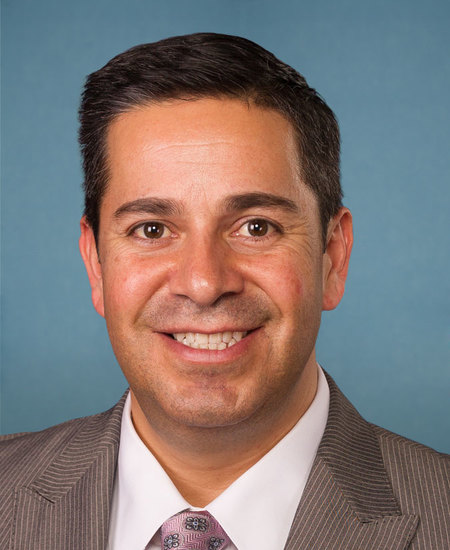
Sen. Ben Ray Luján
Sponsored bills
Maddy summaryThis bill prohibits the implementation of the WISeR model under Medicare, specifically blocking the Secretary of Health and Human Services from adopting the "Medicare Program; Implementation of Prior Authorization for Select Services for the Wasteful and Inappropriate Services Reduction (WISeR) Model" or any similar model. It directly affects Medicare beneficiaries and providers by preventing a new payment and service delivery approach that would require prior authorization for certain services. The key provision is a direct ban on the WISeR model's rollout, as outlined in the July 1, 2025, federal notice. This change would maintain current Medicare approval processes for affected services without creating new requirements. The bill does not establish new benefits or alter existing Medicare coverage rules.
Technical Corrections to the Northwestern New Mexico Rural Water Projects Act, Taos Pueblo Indian Water Rights Settlement Act, and Aamodt Litigation Settlement Act This bill authorizes deposits representing unpaid interest into the Navajo Nation Water Resources Development Trust Fund, the Taos Pueblo Water Development Fund, and the Aamodt Settlement Pueblos’ Fund. These funds were established in 2009 and 2010 under certain water rights settlement agreements that did not allow accrual of interest.
Maddy summaryThe Keeping All Students Safe Act prohibits inappropriate seclusion and restraint in schools, including mechanical, chemical, and certain physical restraints that pose safety risks. It requires schools to use less restrictive interventions first, train staff in crisis intervention, and notify parents within 24 hours of any restraint incident. The law mandates meetings between schools and parents after incidents to discuss prevention strategies and provides documentation requirements. It applies to all public schools receiving federal funding, with specific protections for students with disabilities. States must submit compliance plans and report on restraint use, including demographic data on affected students.
Maddy summaryThe International Human Rights Defense Act of 2025 establishes a permanent U.S. Special Envoy for LGBTQI+ rights at the Department of State, with the authority to coordinate all federal government efforts addressing discrimination and violence against LGBTQI+ people globally. The bill requires the development of a U.S. global strategy to prevent and respond to criminalization, discrimination, and violence against LGBTQI+ individuals, along with annual briefings to Congress on progress. It mandates that the Department of State's Country Reports on Human Rights Practices include detailed information about laws criminalizing or discriminating against LGBTQI+ people in all countries. The legislation also requires all U.S. government-funded programs to adopt inclusive nondiscrimination policies covering sexual orientation, gender identity, and sex characteristics. These provisions aim to strengthen U.S. foreign policy efforts to protect LGBTQI+ rights worldwide through coordinated diplomatic, humanitarian, and development initiatives.
Maddy summaryThis bill establishes comprehensive labor protections for domestic workers, including house cleaners, nannies, personal care aides, and other employees working in private homes. It directly affects approximately 2.2 million domestic workers, predominantly women of color and immigrants who have historically been excluded from key labor protections. Key provisions include requiring written employment agreements outlining wages and hours, providing earned sick days for health and safety needs, establishing fair scheduling practices with advance notice requirements, protecting privacy rights, and prohibiting unfair wage deductions. The bill also extends civil rights protections under Title VII of the Civil Rights Act to domestic workers and creates a Domestic Employee Standards Board to recommend workplace standards.
Maddy summarySRES 533 is a non-binding Senate resolution condemning white supremacy, hate, and antisemitism, with specific focus on the promotion of these ideologies by white supremacist Nick Fuentes and his platforming by Tucker Carlson. It highlights Fuentes' Holocaust denial, antisemitic conspiracy theories (like the "Great Replacement" myth), and use of dog whistles, while criticizing Carlson for hosting Fuentes without challenge and Heritage Foundation's Kevin Roberts for defending such views. The resolution urges all elected officials and leaders to reject these ideologies whenever they occur, and affirms condemnation of Nazism and the Holocaust. As a formal expression of Senate opinion, it does not create new laws but serves as a public stance against harmful rhetoric.
Maddy summarySRES 531 is a non-binding Senate resolution celebrating the 50th anniversary of the Individuals with Disabilities Education Act (IDEA) on November 29, 2025. It recognizes IDEA's historical role in guaranteeing children with disabilities access to free appropriate public education in inclusive settings, transforming educational opportunities for millions. The resolution honors students, families, educators, and advocates who advanced IDEA's principles since its 1975 enactment. It does not create new policy but formally acknowledges the law's enduring impact on educational equity.
Maddy summaryThe PBM Price Transparency and Accountability Act requires pharmacy benefit managers (PBMs) to be more transparent about drug pricing and ensure accurate payments to pharmacies. It establishes national average drug acquisition cost benchmarks for Medicaid, prohibits PBMs from keeping excessive profits through "spread pricing," and mandates detailed reporting of drug pricing, rebates, and fees. The bill affects Medicaid programs, Medicare Part D plans, and the PBMs that negotiate drug prices on behalf of insurers. It includes enforcement mechanisms like civil penalties for non-compliance and requires PBMs to report detailed pricing information to the Secretary of Health and Human Services.
Maddy summaryThis bill directs the Secretary of the Interior to collaborate with Indian Tribes within one year of enactment to identify culturally significant "Native American seeds" and support tribal seed banks, traditional agriculture systems, and seed protection efforts. It requires the Secretary to safeguard any culturally sensitive or confidential information shared by Tribes under this Act, prohibiting its disclosure. The bill does not authorize new funding, relying instead on existing appropriations for implementation. It directly affects Indian Tribes by empowering them to manage and protect their traditional seed resources under federal guidance.