

Right to Contraception Act This bill sets out statutory protections for an individual's right to access and a health care provider's right to provide contraception and related information. Contraception refers to an action taken to prevent pregnancy, including the use of contraceptives (i.e., a device or medication used to prevent pregnancy), fertility-awareness based methods, and sterilization procedures. Generally, the bill prohibits measures that single out and impede access to contraception and related information. However, a party may defend against a claim that a measure violates the bill's prohibitions by demonstrating, through clear and convincing evidence, that the measure significantly advances access to contraception and cannot be achieved through less restrictive means. The Department of Justice, individuals, or health care providers may bring a lawsuit to enforce this bill, and states are not immune from suits for violations.
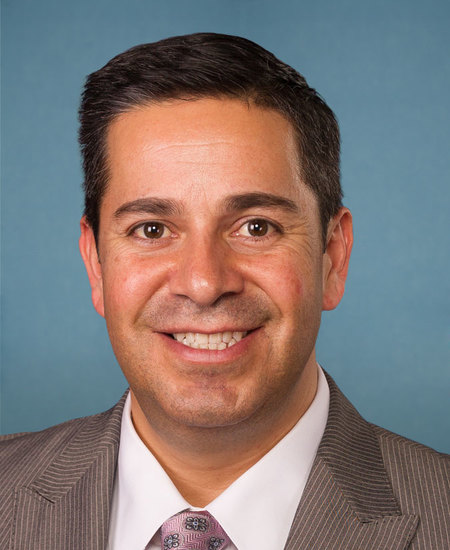
Sen. Ben Ray Luján
Sponsored bills
Respect for Marriage Act This bill provides statutory authority for same-sex and interracial marriages. Specifically, the bill repeals and replaces provisions that define, for purposes of federal law, marriage as between a man and a woman and spouse as a person of the opposite sex with provisions that recognize any marriage that is valid under state law. (The Supreme Court held that the current provisions were unconstitutional in United States v. Windsor in 2013.) The bill also repeals and replaces provisions that do not require states to recognize same-sex marriages from other states with provisions that prohibit the denial of full faith and credit or any right or claim relating to out-of-state marriages on the basis of sex, gender, race, ethnicity, or national origin. (The Supreme Court held that state laws barring same-sex marriages were unconstitutional in Obergefell v. Hodges in 2015; the Court held that state laws barring interracial marriages were unconstitutional in Loving v. Virginia in 1967.) The bill allows the Department of Justice to bring a civil action and establishes a private right of action for violations.
Expanding Access to Family Planning Act This bill provides, subject to specified conditions, funding through FY2032 for federally funded family planning services and clinics. In particular, the funds must be used for (1) grants and contracts that support the provision of family planning services, and (2) clinic infrastructure (e.g., construction and renovation of clinics). Clinics that receive funding to provide family planning services must offer each patient with a positive pregnancy test the opportunity for nondirective counseling on (1) prenatal care and delivery; (2) infant care, foster care, and adoption; and (3) pregnancy termination. This counseling must include referrals if requested by a patient. Additionally, if a funding recipient makes subawards for the provision of family planning services, the recipient may not prohibit an entity from participating in a subaward program for reasons other than the entity's inability to provide family planning services.
Democracy Is Strengthened by Casting Light On Spending in Elections Act of 2021 or the DISCLOSE Act of 2021 This bill addresses campaign finance, including by expanding the prohibition on campaign spending by foreign nationals, requiring additional disclosures of campaign expenditures, and requiring additional disclosures regarding certain political advertisements. First, the bill prohibits foreign nationals from participating in the decision-making process regarding an election expenditure. Additionally, the bill expands existing foreign money prohibitions to include disbursements for paid web-based or digital communications and federal judicial nomination communications. It also prohibits foreign nationals from contributing to campaigns related to ballot initiatives and referenda. The Federal Election Commission (FEC) must conduct an audit after each federal election cycle to determine the incidence of illicit foreign money. Next, the bill makes it unlawful to establish or use a corporation, company, or other entity with the intent to conceal an election contribution or donation by a foreign national. A violator is subject to criminal penalties—a fine, a prison term of up to five years, or both. Covered organizations (e.g., corporations, labor organizations, and political organizations) must, within 24 hours, file reports with the FEC to disclose campaign expenditures of more than $10,000 during an election cycle. Finally, the bill requires organizations to provide additional disclosures regarding political advertisements, including the donors who contributed the most money to that organization in the last year.
This resolution recognizes the critical role the Equal Employment Opportunity Commission plays in addressing long-standing issues including the wage gap, combating workplace harassment, and ensuring all workers are treated with dignity and respect in the workplace.
Freedom to Travel for Health Care Act of 2022 This bill prohibits anyone from interfering with a person's ability to access out-of-state reproductive health care. (Reproductive health care is defined as medical, surgical, counseling, or referral services related to pregnancy, the termination of a pregnancy, contraception services, and other reproductive care.) Specifically, the bill prohibits anyone from restricting, discriminating against, or otherwise disadvantaging anyone who receives, provides, or assists with out-of-state reproductive health care that is legal in the state in which it is provided. The bill allows the Department of Justice to bring a civil action and establishes a private right of action for violations. The bill specifically waives any applicable governmental immunity and preempts any contravening state laws.
Cattle Price Discovery and Transparency Act of 2022 This bill requires the Department of Agriculture (USDA) to take various actions to address transparency in contract terms and pricing in the cattle industry. Among these requirements, USDA must maintain a publicly available library or catalog of contracts entered into between meat packers and livestock producers for the purchase of cattle, including any schedules of premiums or discounts associated with the contracts and other specific details. USDA must make this information available to producers and other interested parties in a monthly report. The bill further requires USDA to establish five to seven regions encompassing the entire continental United States that reasonably reflect similar fed cattle purchase practices for processing plants and establish mandatory minimums for each region (i.e., the minimum percentage of cattle purchases that are required to be made through approved pricing mechanisms from producers that are not packers). Under the bill, approved pricing mechanisms are generally purchases of fed cattle made through a negotiated purchase, through a negotiated grid purchase, at a stockyard, or through trading systems or platforms where multiple buyers and sellers can regularly make and accept bids and offers. The bill also establishes a maximum penalty for mandatory minimum violations by covered packers. Under the bill, a covered packer is a packer that has slaughtered an average of 5% or more of the number of fed cattle slaughtered nationally during the immediately preceding five calendar years.
This resolution (1) recognizes the increase in educational opportunities, including in sports, for women and girls since the passage of title IX of the Education Amendments of 1972; and (2) encourages the Department of Education and the Department of Justice to ensure that students have a safe learning environment by working to ensure schools prevent and respond to discrimination and harassment on the basis of sex.
This resolution celebrates the 50th anniversary of the Federal Pell Grant program and expresses support for the designation of June 23 as National Pell Grant Day.
Improving Diagnosis in Medicine Act of 2022 This bill requires various activities to improve diagnostic safety and quality in health care. The Department of Health and Human Services (HHS) must convene an expert panel to make recommendations about the data needed to accelerate diagnostic safety and quality research. In convening the panel, HHS must coordinate with the Agency for Healthcare Research and Quality (AHRQ), the Centers for Medicare & Medicaid Services, and other HHS components. HHS must also establish an interagency council to develop a strategic plan and recommendations to improve diagnosis in health care. In addition, AHRQ must (1) establish a quality improvement program related to diagnostic errors that includes dissemination of evidence-based strategies to improve diagnostic quality, safety, and health-care value; and (2) seek to contract with the National Academies of Sciences, Engineering, and Medicine to study disparities in diagnostic safety and quality. The bill also allows specified grants provided by AHRQ and by the National Institutes of Health to be used for diagnostic safety and quality research.