

Pueblos of Jemez and Zia Water Rights Settlement Act of 2022 This bill authorizes, ratifies, and confirms a specified water rights settlement agreement entered into by the Pueblo of Jemez, the Pueblo of Zia, the United States, New Mexico, and others, thus satisfying claims to water rights in the Jemez River Stream System in New Mexico. Additionally, the bill establishes and provides funding for two settlement trust funds.
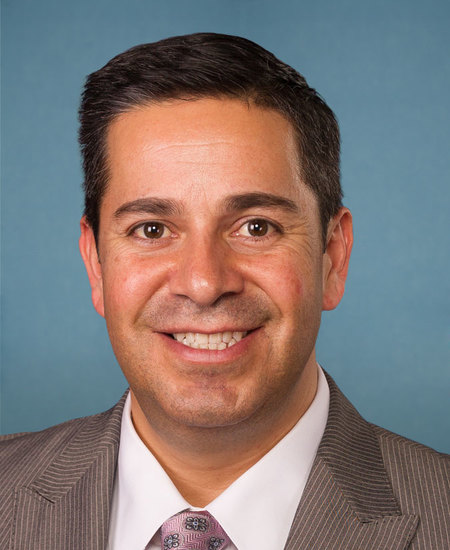
Sen. Ben Ray Luján
Sponsored bills
Pueblos of Acoma and Laguna Water Rights Settlement Act of 2022 This bill authorizes, ratifies, and confirms a specified water rights settlement agreement entered into by the Pueblo of Acoma, the Pueblo of Laguna, the United States, New Mexico, and others, thus satisfying claims to water rights in the Rio San Jose Stream System in New Mexico. Additionally, the bill establishes and provides funding for three trust funds.
This bill gives the consent of Congress for the amendment to the Constitution of New Mexico proposed by House Resolution 1 of the 55th Legislature of the State of New Mexico, First Session, 2021, titled A Joint Resolution Proposing an Amendment to Article 12, Section 7 of the Constitution of New Mexico to Provide for Additional Annual Distributions of the Permanent School Fund for Enhanced Instruction for Students at Risk of Failure, Extending the School Year, Teacher Compensation and Early Childhood Education; Requiring Congressional Approval for Distributions for Early Childhood Education .
Oral Health Literacy and Awareness Act of 2022 This bill requires the Health Resources and Services Administration (HRSA) to conduct a public education campaign to increase oral health literacy and awareness. HRSA must design the campaign to focus on children, pregnant women, parents, older adults, people with disabilities, and racial and ethnic minorities.
Relief for Farmers Hit with PFAS Act This bill directs the Department of Agriculture (USDA) to establish a grant program to help states address contamination by perfluoroalkyl and polyfluoroalkyl substances, commonly referred to as PFAS, on agricultural land and commercial farms. The bill also requires USDA to establish a task force to provide (1) advice regarding whether addressing PFAS contamination should be added as an eligible activity for each USDA program, and (2) technical assistance to states in addressing PFAS contamination.
Protection and Advocacy for Voting Access Program Inclusion Act or the PAVA Program Inclusion Act This bill authorizes the Department of Health and Human Services to distribute Protection and Advocacy for Voting Access (PAVA) program grants to the protection and advocacy systems of the Commonwealth of the Northern Mariana Islands and the American Indian consortium.
Stop Tip-overs of Unstable, Risky Dressers on Youth Act or the STURDY Act This bill requires the Consumer Product Safety Commission to revise the safety standards for freestanding clothing storage units such as dressers, bureaus, or chests of drawers. Such standards must include specified testing related to tip-overs and new warning requirements for all such products entering the U.S. market.
This resolution recognizes the long history and positive economic effects of the Social Security programs. It also expresses the belief that the Social Security and Supplemental Security Income programs should continue to be funded through mandatory spending.
This resolution supports the designation of October 2-October 8, 2022, as National 4-H Week. It also (1) recognizes the important role of 4-H in youth development and education, and (2) encourages all citizens to recognize 4-H for the significant impact the organization and members have made and continue to make by empowering young people with the skills needed to lead for a lifetime.
Maximizing Opioid Recovery Emergency Savings Act or the MORE Savings Act This bill modifies coverage of opioid treatments and recovery support services under Medicare, Medicaid, and private health insurance. Specifically, the bill requires the Center for Medicare and Medicaid Innovation to test a model in which specified opioid treatments and recovery support services are provided under Medicare without cost-sharing (e.g., coinsurance, copayments, and deductibles). The bill also allows state Medicaid programs to cover recovery support services as part of medication-assisted treatment (MAT) and increases the applicable Federal Medical Assistance Percentage for MAT. Private health insurers must also cover specified opioid treatments and MAT-associated recovery support services without cost-sharing.