

Maddy summaryThis bill improves two federal conservation programs for agricultural producers and forest landowners. It expands eligible emergency conservation work to include repairs to farmland structures beyond fencing, and allows farmers to receive upfront payments (75% for replacements, 50% for repairs) before completing work. For forest landowners, it adds an option for advance payments (up to 75% of costs) for emergency forest restoration, requiring repayment if funds aren't used within 60 days. The bill specifically clarifies that wildfire damage qualifies for payments even if the fire spread naturally or was caused by the Federal Government. These changes directly affect farmers and forest landowners facing disaster-related conservation needs.
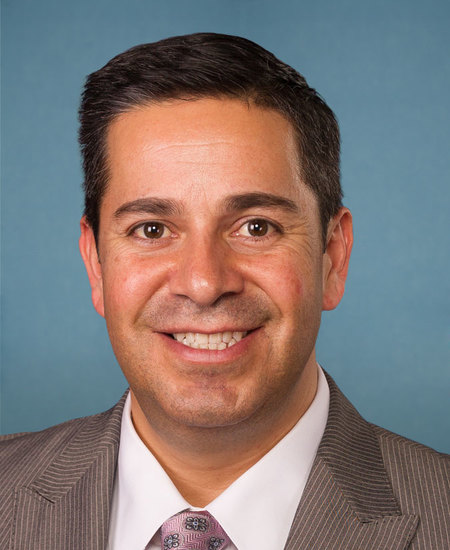
Sen. Ben Ray Luján
Sponsored bills
Maddy summaryThe JOBS Act of 2023 expands Federal Pell Grant eligibility to short-term job training programs that provide 150-600 clock hours (8-15 weeks) of instruction aligned with in-demand local industries. It directly affects students enrolled in eligible career-focused programs at institutions of higher education, requiring programs to offer industry-recognized credentials and meet validation standards from employers or sector partnerships. Key provisions include mandatory industry validation of program quality, institutional credit articulation for noncredit programs, and lowering the minimum Pell Grant percentage from 10% to 5% for qualifying students. The bill ensures these programs count toward students’ total Pell Grant eligibility period while maintaining standard Pell Grant terms and conditions.
Maddy summaryS 173, "Ethan's Law," requires firearm owners to store guns securely in homes where minors (under 18) or individuals ineligible to own firearms might access them. It amends federal law to make non-compliant storage an offense punishable by a $500 fine per violation, with enhanced penalties (up to 5 years in prison) if injury or death results. The bill creates a federal grant program to support states with laws matching its secure storage requirements, offering funding incentives for states that enact similar measures. It directly affects homeowners with firearms in households containing minors or prohibited persons, aiming to reduce accidental child access and firearm-related injuries.
Maddy summaryThe PART Act (S 154) requires all new vehicles to have catalytic converters marked with unique VINs using durable, high-visibility stamping (via die/pin stamping and theft-deterrent paint) within 180 days of enactment. It creates a $7 million federal grant program to help dealers, repair shops, law enforcement, and nonprofits mark converters at no cost to vehicle owners, prioritizing high-theft areas. The bill also mandates sellers of catalytic converters to retain buyer identification and vehicle details for two years and adds criminal penalties (up to 5 years in prison) for stealing or trafficking in converters. Directly affecting manufacturers, dealers, repair shops, and sellers, the law targets converter theft through standardized marking, record-keeping, and new criminal offenses.
Maddy summaryThe Rural Internet Improvement Act of 2023 updates the USDA's ReConnect Program to expand rural broadband access. It raises minimum broadband speed requirements from 10/1 Mbps to 25/3 Mbps for new projects (later increasing to 100/20 Mbps for future grants), directly affecting rural broadband providers applying for USDA grants, loans, or loan guarantees. Key provisions simplify applications by reducing required data, allowing bond ratings instead of full financial documentation, and preventing duplication of existing broadband infrastructure projects. The bill also requires annual public reports on project distribution, locations served, and service levels to ensure transparency.
Maddy summaryThis bill, the FAIR Act (S 124), increases federal employee pay raises for calendar year 2024. It mandates a 4.7% base pay increase for all federal employees covered by statutory pay systems (most positions) and prevailing rate systems (based on local wages), effective January 2024. It also sets a 4.0% increase for locality-based pay adjustments under existing law. The bill directly affects all federal civilian employees whose pay is determined by these specific statutory systems.
Maddy summaryThe Better Care Better Jobs Act (S 100) aims to improve access to home and community-based services (HCBS) for Medicaid beneficiaries by providing federal funding to states for developing improvement plans and implementing an HCBS Infrastructure Improvement Program. The bill offers enhanced federal funding (a 10 percentage point increase in Medicaid matching rates) to states that meet requirements including maintaining or expanding HCBS access, improving direct care worker wages and training, and implementing quality measurement systems. States must develop detailed plans assessing current HCBS availability, workforce conditions, and barriers to access, and then report annually on progress toward specific benchmarks. The bill also makes permanent certain Medicaid provisions related to spousal impoverishment protection and extends the Money Follows the Person program, directly affecting Medicaid beneficiaries and direct care workers.
Maddy summaryThe Fair and Transparent Gas Prices Act of 2023 requires the Federal Trade Commission (FTC) to study whether oil and gas companies engage in anti-competitive or collusive conduct that inflates consumer prices, delays fuel supply, or restricts alternative energy options. The FTC must investigate specific practices like reducing fuel production investments, stock buybacks, and impacts on alternative fuel availability, working with state attorneys general. The study mandates a report to Congress within one year (and annually for two more years) with findings and recommendations for legislative or administrative action. This bill directly affects the FTC, oil and gas companies, and state attorneys general through its study requirements and funding ($15 million annually for 2024-2025), but does not change existing laws or prices.
Maddy summaryThis bill would admit Washington, D.C. as the 51st state, officially named "State of Washington, Douglass Commonwealth," granting it full representation in Congress with two Senators and one Representative. It would establish a "Capital" area within the new state that remains under federal jurisdiction, including the White House, Capitol Building, and other key government properties. The bill would repeal the District of Columbia's congressional delegate position and the 23rd Amendment, which currently provides D.C. with electoral votes in presidential elections. It would also provide for the transition of federal properties, courts, and government functions while maintaining federal control over the Capital area.
Maddy summaryS 52, the American Beef Labeling Act of 2023, requires mandatory country of origin labeling for beef and ground beef products sold in the U.S. It directly affects beef producers, importers, and retailers who must label the country where cattle were raised. The bill amends existing labeling laws to explicitly include beef (and ground beef) alongside lamb, and directs the U.S. Trade Representative and Agriculture Secretary to develop a WTO-compliant method to reinstate this labeling within 180 days of enactment, with full implementation required within one year. This policy change ensures consumers receive clear origin information for beef products.