

Maddy summaryThe Mental Health Career Promotion Act (S 3783) creates a federal grant program to help schools and community colleges connect students with mental health career opportunities. It provides $50 million annually (2026-2030) for partnerships between schools, community colleges, and mental health providers to offer students career exposure through presentations, internships, mentorships, and shadowing. The program targets high school students (grades 9-12) and community college students, requiring activities to be culturally and linguistically appropriate. Grants must support concrete career pathways in mental health fields, including roles like counselors, social workers, and peer specialists, with annual reporting on program effectiveness.
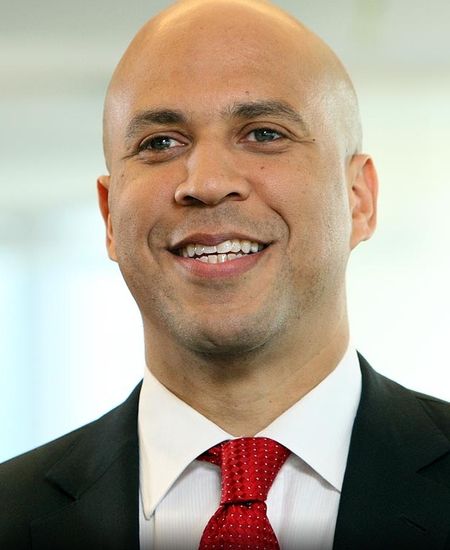
Sen. Cory A. Booker
Sponsored bills
Maddy summarySRES 596 is a non-binding Senate resolution designating February 2-6, 2026, as "National School Counseling Week." It directly recognizes school counselors and their role in supporting students' academic, social, emotional, and career development. The resolution encourages public awareness through ceremonies and activities to highlight counselors' contributions, addressing their critical but often underfunded role (with a national student-to-counselor ratio of 376:1). It does not create new programs or alter funding but formally acknowledges counselors' work in schools.
Maddy summaryThe Federal Grant Neutrality Act (S 3776) prevents the Department of Justice from requiring entities to comply with specific immigration-related laws or presidential directives as a condition for receiving DOJ grants. It specifically blocks the Attorney General from demanding agreement to Section 642 of the 1996 immigration law, presidential memoranda, or executive orders. This directly affects local governments, community organizations, and other applicants seeking federal grant funding from the DOJ. The bill removes these requirements as a prerequisite for grant eligibility, ensuring entities can access funding without meeting those particular conditions. The change applies only to DOJ-administered grants, not other federal programs.
Maddy summaryThe Rebuild America's Schools Act of 2026 would provide $20 billion annually (2027-2031) to improve public school facilities across the United States. The bill directs funds to states based on previous Title I funding allocations, requiring states to contribute 10% of the funds (with some exceptions) and develop plans for equitable distribution to school districts. Local educational agencies must prioritize schools with high numbers of students eligible for free or reduced-price lunch, and funds can be used for construction, renovation, energy efficiency upgrades, removal of toxic substances, and making facilities accessible. The bill also establishes school infrastructure bonds to leverage private investment and includes specific provisions to repair foundations damaged by pyrrhotite.
This resolution supports the designation of 2026 as the International Year of the Woman Farmer and recognizes the critical role of women in agriculture. The resolution also encourages citizens to celebrate the impact these women have on the food systems and agricultural workforce of the United States by encouraging and empowering women to pursue careers in agriculture and cultivate leadership opportunities.
Maddy summaryThis bill prohibits the use of images of living current or former elected officials or other political figures on the America the Beautiful - the National Parks and Federal Recreational Lands Pass. It directly affects the National Park Service and pass designers, who create the annual entrance pass used by visitors to federal recreational lands. The key provision amends existing law to explicitly ban such political imagery on the pass, ensuring the design remains neutral and focused on park landscapes rather than political figures.
Maddy summarySRES 590 designates January 23, 2026, as "Maternal Health Awareness Day" to highlight ongoing challenges in maternal health care. The resolution aims to raise public awareness about preventable pregnancy-related deaths, severe maternal morbidity, and racial disparities - such as Black women facing over three times higher pregnancy-related mortality rates than White women - while encouraging federal, state, and community action. It does not create new laws or funding but calls for recognizing these issues and supporting existing initiatives like expanded postpartum Medicaid coverage and maternal mortality review committees. This symbolic gesture targets broad audiences including healthcare providers, policymakers, and the public to promote equitable care.
Maddy summaryS 3717 establishes the Opportunities in Organic program to assist farmers and handlers with organic certification costs and transition to organic practices. It covers up to $1,500 annually in certification fees (with higher payments for socially disadvantaged farmers or regions with disproportionately high costs), provides technical assistance for soil health and organic management, and funds supply chain development like processing facilities. The program allocates $50 million annually for 2027-2028, increasing to $100 million by 2030, targeting socially disadvantaged farmers, farms near schools/residential areas, and under-resourced agricultural regions.
Maddy summaryThe FOCUS Act requires all federal law enforcement officers (including private contractors) engaged in immigration enforcement to wear body cameras during such activities. It mandates that footage be retained for one year (or three years if requested for evidence/exculpatory value in specific situations like use-of-force incidents or complaints). The bill establishes public access procedures for footage via standard government record requests and requires annual reports to Congress on compliance, including documented violations and disciplinary actions. It also sets strict accountability measures, including mandatory training, documentation of equipment failures, and potential termination for intentionally disabling cameras.
Maddy summaryThe Dignity for Detained Immigrants Act establishes new standards for facilities detaining immigrants under DHS custody, requiring compliance with minimum protections based on American Bar Association standards. It mandates annual unannounced inspections by the DHS Inspector General with public reporting of findings, creates a detailed public database of all detention facilities, and phases out private detention facilities within 3 years. The bill prohibits solitary confinement, requires access to legal orientation and counsel for detainees, and changes detention procedures to require more frequent hearings with a presumption of release for most detainees. These changes directly affect immigrants in DHS custody, DHS facilities, and private contractors operating detention facilities.