

Maddy summaryThis bill, titled the African American History Act of 2026, authorizes the Director of the National Museum of African American History and Culture to use up to $4 million annually for five years to support African American history education programs. The funding can be used to create digital and print educational resources, provide teacher training and professional development, expand museum collections, and develop online content for educators, students, and families. The legislation also requires the museum director to submit annual reports to Congress and provide briefings to congressional committees on how the funds are being used. Additionally, the bill includes a sense of Congress statement encouraging the federal government to lead efforts in improving the teaching of African American and other minority group histories.
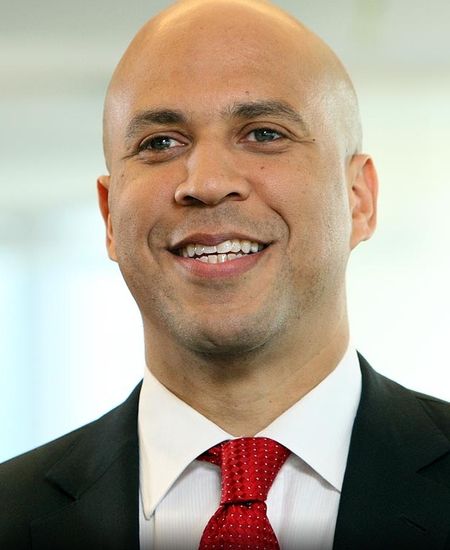
Sen. Cory A. Booker
Sponsored bills
Maddy summaryThis bill, titled the Enhanced Cybersecurity for SNAP Act of 2026, requires the U.S. Department of Agriculture to update cybersecurity and digital service regulations for Electronic Benefit Transfer (EBT) cards used in the Supplemental Nutrition Assistance Program. The law mandates that states issue chip-enabled EBT cards within four years, ban magnetic stripe cards on new cards, and eliminate replacement fees for cards lost, stolen, or damaged due to fraud. It also requires online transaction security measures, provides funding for retailers to upgrade payment terminals, and establishes reporting requirements to track fraud and system performance.
Maddy summaryThis bill amends the Community Development Banking and Financial Institutions Act of 1994 to require the Treasury Secretary to testify annually before Congress about the Fund's operations. It also strengthens the CDFI Bond Guarantee Program by adjusting guarantee limits and extending the program's authorization period. Additionally, the bill expands capital assistance options for community development financial institutions and creates a new lending program specifically for Native community development financial institutions to support homeownership in Tribal and Native communities.
Maddy summaryThis bill (S 3927) prohibits the use of specific federal funds - allocated under Public Law 119-21 - to detain noncitizens in warehouse facilities. It directly affects U.S. Immigration and Customs Enforcement (ICE) and U.S. Customs and Border Protection (CBP) by banning the use of these funds to purchase warehouses for detention or to repurpose, operate, staff, or maintain existing ICE/CBP warehouses for holding noncitizens. The key provision blocks funding for any warehouse-based detention operations, effectively ending the practice of using commercial warehouse spaces for immigration detention. It applies to all current and future uses of these funds for such purposes. The bill does not alter immigration law but restricts how certain federal funds may be spent.
Maddy summaryThis bill expands Medicare Part B coverage for medical nutrition therapy (MNT) to include more chronic conditions beyond diabetes and kidney disease. It directly affects Medicare beneficiaries with conditions like obesity, hypertension, heart disease, cancer, eating disorders, and others listed in the bill. Key provisions broaden the definition of covered conditions and allow additional healthcare providers (like nurse practitioners and clinical psychologists for eating disorders) to deliver MNT services. The change would make MNT services covered for prevention, management, or treatment of these additional conditions, as determined by the Secretary.
Maddy summaryThis bill, known as the Direct File Act of 2026, would establish a government-run online platform for taxpayers to prepare and file their individual income tax returns for free. It requires the Treasury Department to create a user-friendly system that uses IRS data to simplify the process, offers customer support, and is available in multiple languages and on mobile devices. The legislation also prohibits the Treasury from entering into agreements that would limit its ability to provide these tax preparation and filing services. Additionally, the bill allows eligible states to integrate their state tax filing with the federal system and provides funding to states that meet certain standards for doing so.
Maddy summarySRES 615 is a Senate resolution celebrating Black History Month, acknowledging the historical contributions of African Americans to U.S. society across fields like civil rights, arts, science, and leadership. The resolution encourages all citizens to reflect on this history as part of the nation's ongoing journey toward equality, without creating new laws or policies. It specifically recognizes figures such as Frederick Douglass, Maya Angelou, and Rosa Parks, and emphasizes the importance of Black History Month in February as a time for communal learning and inspiration. This ceremonial resolution was introduced by multiple senators and passed unanimously by the Senate in 2026.
Maddy summarySRES 602 is a symbolic Senate resolution expressing support for the U.S. Olympic and Paralympic Teams (Team USA) competing in the 2026 Winter Games in Milano Cortina, Italy. It formally applauds Team USA athletes, coaches, and their supporters, commends Italy for hosting the event, and commits to ensuring safety for future U.S. host events (2028 Los Angeles Summer Games and 2034 Utah Winter Games). The resolution does not create new policies, funding, or obligations - it is purely a statement of congressional support. It directly affects Team USA athletes and organizers by acknowledging their efforts and achievements. This is a procedural resolution with no binding effect on government actions.
Maddy summaryS 3914 establishes two new offices within the Supreme Court: an Office of Ethics Counsel to advise justices and their spouses on ethics matters (like financial disclosures, gifts, and conflicts of interest), and an Office of Investigative Counsel to review formal ethics complaints filed by top congressional leaders. The Ethics Counsel provides mandatory biannual training to justices and submits annual reports to Congress on ethics advice given. The Investigative Counsel handles complaints, conducts investigations within 60 days of filing, and submits findings to the Chief Justice (or senior associate justice if the Chief is the subject), with reports also shared with relevant congressional committees. This bill directly affects Supreme Court justices, their spouses, and dependents by creating formal processes for ethics guidance and oversight.
Maddy summaryThe Government Surveillance Transparency Act of 2026 requires federal, state, and tribal courts to publicly disclose criminal surveillance orders, applications, and inventories after a maximum 180-day sealing period, with strict requirements for extensions. The bill mandates courts to publish detailed public reports about surveillance requests, including the nature of investigations and the agencies involved, and requires electronic filing of all surveillance documents. It creates a unique case numbering system for surveillance orders and requires automatic unsealing of documents after the sealing period expires. The law applies to all courts conducting surveillance, with implementation phased to allow time for system upgrades, and aims to increase transparency around government surveillance activities while balancing legitimate law enforcement needs.