

Protecting Miranda Rights for Kids Act This bill establishes procedural requirements related to the custodial interrogation of a minor. Among the requirements, the custodial interrogation of a minor must comply with the following: an arresting officer must notify the minor's parent, guardian, or legal custodian of the arrest and provide the location where the minor is being detained; and a minor who is subject to a custodial interrogation must consult with legal counsel in person before waiving the privilege against self-incrimination or the right to counsel. If a custodial interrogation does not comply with the requirements, then a statement by a minor during the custodial interrogation and any evidence derived from that statement are inadmissible.
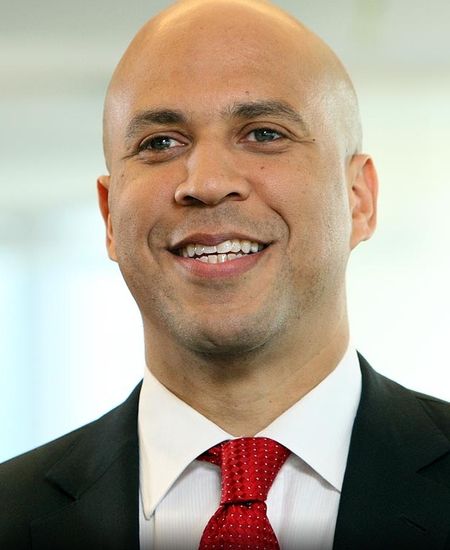
Sen. Cory A. Booker
Sponsored bills
Supreme Court Ethics Act This bill establishes a new statutory requirement for the Judicial Conference of the United States to issue a judicial code of conduct for judges and justices of U.S. courts, including Justices of the Supreme Court. Currently, the Judicial Conference issues a code of conduct for judges of U.S. courts (but not for Justices of the Supreme Court).
Enhance Access To SNAP Act of 2021 or the EATS Act of 20 21 This bill expands eligibility for the Supplemental Nutrition Assistance Program to students attending institutions of higher education.
Nondebtor Release Prohibition Act of 2021 This bill addresses the release by bankruptcy courts of creditor or other third-party claims against non-debtors. Complex bankruptcies may involve third-party claims against non-debtors associated with the debtor, such as the debtor's officers, directors, or employees. Currently, in carrying out a bankruptcy plan, bankruptcy courts may release non-debtors from liability (there is a split in the judicial circuits regarding this practice). The bill generally prohibits a bankruptcy court from (1) releasing or modifying a non-debtor's liability through the approval of a bankruptcy plan or through an order, or (2) enjoining a judicial proceeding or other act to collect or otherwise enforce such a claim or cause of action against a non-debtor. However, the bill provides for the release of such liability if express consent is given by the third party. The bill also generally limits an order or decree to temporarily enjoin a proceeding against a non-debtor to 90 days. Additionally, the bill gives appellate jurisdiction to the appropriate U.S. court of appeals regarding an order or decree to temporarily enjoin or stay a proceeding against a non-debtor in a Chapter 11 reorganization bankruptcy case. Currently, U.S. district courts have appellate jurisdiction for these matters. Upon request of an interested party, and after notice and a hearing, the court shall dismiss a Chapter 11 reorganization bankruptcy case if the debtor was involved in certain restructuring activity that (1) had the intent or foreseeable effect of separating a debtor's assets from a debtor's liabilities and the debtor assuming or retaining such liabilities, and (2) occurred in the 10-year period prior to the filing of the bankruptcy petition.
United States Cadet Nurse Corps Service Recognition Act of 2021 This bill recognizes service as a member of the U.S. Cadet Nurse Corps between July 1, 1943, and December 31, 1948, as active duty service. The active duty designation entitles qualifying individuals to certain benefits afforded to veterans, such as burial benefits (not including interment at Arlington National Cemetery) and honorary veteran status. Under the bill, the Department of Defense (DOD) must issue individuals who served in the corps during the specified period a discharge from their service under honorable conditions if such a discharge is warranted based on the duration and nature of the service. Such individuals are not entitled to Department of Veterans Affairs benefits aside from those related to burials and memorials. The bill also authorizes DOD to produce a service medal or other commendation, memorial plaque, or grave marker to honor the individuals.
This bill expands eligibility for Department of Veterans Affairs hospital care, medical services, and nursing home care to include veterans of World War II who are not already covered.
Finding Alternatives to Mass Incarceration: Lives Improved by Ending Separation Act of 2021 or the FAMILIES Act This bill establishes a federal statutory framework to divert certain defendants who are parents or caregivers away from prison and probation and into a comprehensive support services program. At the federal level, the bill establishes and provides funds for the comprehensive support services program, or FAMILIES Program. The bill authorizes federal courts to sentence a parent or caregiver to participation in the FAMILIES Program as a condition of supervised release or instead of probation or prison. At the state level, the bill funds grants for states to replicate successful state parenting sentencing alternatives programs that have the potential to keep parents out of prison. The bill also provides funds for a study on the effects of incarceration on children of incarcerated parents and for training district court judges to carry out the FAMILIES Program.
Disabled Access Credit Expansion Act of 2021 This bill modifies the tax credit allowed to eligible small businesses for expenditures to provide access to disabled individuals to increase (1) the maximum allowable amount of such credit to $20,500, and (2) the limitation on the gross receipts of such businesses to $2.5 million for purposes of determining eligibility for the credit. The bill directs the Department of Justice (DOD) to carry out an ADA (Americans with Disabilities Act) Mediation Program to facilitate voluntary mediation to resolve disputes arising under the ADA and to provide training for mediators. DOD must report to Congress on its ADA Information Line (a toll-free line to provide information and materials to the public about ADA requirements).
This resolution implores Russia to present credible evidence of wrongdoing against U.S. citizen Paul Whelan or immediately release him. It also implores Russia to provide unrestricted consular access to Whelan and to ensure that he and all other political prisoners are afforded due process and universally recognized human rights.
This resolution calls on the Russian government to immediately release Trevor Reed (a U.S. citizen) and all other political prisoners. It also condemns the Russian government's use of politically motivated imprisonment.