

Maddy summary# Summary of "Secure the Border Act of 2023" (Employment Eligibility Verification Provisions) This legislation (primarily Sections 801-816) fundamentally reforms the U.S. employment eligibility verification system by replacing the current E-Verify program with a new, mandatory verification system for employers. ## Key Provisions: 1. **Mandatory Verification System**: Requires all employers to verify the work authorization of new hires through a new verification system established under Section 274A(d). 2. **Phased Implementation Timeline**: - Large employers (10,000+ employees): 6 months after enactment - Medium employers (500-10,000 employees): 12 months after enactment - Small employers (20-500 employees): 18 months after enactment - Very small employers (<20 employees): 24 months after enactment - Agricultural workers: 36 months after enactment 3. **Verification Process**: - Requires examination of specific documents to verify identity and work authorization - Establishes a verification system with confirmation or tentative nonconfirmation within 3 business days - Requires secondary verification process for tentative nonconfirmations 4. **Penalties for Non-Compliance**: - Civil penalties ranging from $2,500 to $25,000 per violation - Criminal penalties for pattern or practice violations ($5,000 per unauthorized alien) - Potential debarment from federal contracts for repeat violators 5. **Fraud Prevention Measures**: - Blocks social security account numbers subject to unusual multiple use - Allows suspension of compromised social security numbers - Protects children's identities from being used for employment verification 6. **Agricultural Workforce Provisions**: - Extended timeline for agricultural workers (36 months) - Specific definitions of agricultural labor - Study on agricultural workforce composition and recommendations 7. **Good Faith Defense**: - Allows employers to avoid penalties if they can demonstrate good faith compliance - Requires reasonable security measures for identity verification This legislation represents a significant expansion of employer verification requirements with substantial penalties for non-compliance, designed to strengthen enforcement against unauthorized employment while establishing a more comprehensive verification system. The phased approach aims to give employers time to adjust to the new requirements based on business size.
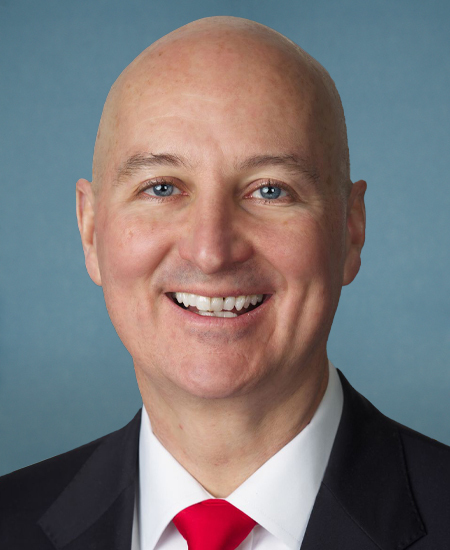
Sen. Pete Ricketts
Sponsored bills
Maddy summaryThe Alan T. Shao II Fentanyl Public Health Emergency and Overdose Prevention Act (S 1532) suspends the admission of individuals attempting to enter the U.S. unlawfully from Canada or Mexico without proper travel documents. It requires that such individuals be rapidly returned to their country of origin or the country they entered from to reduce the risk of fentanyl trafficking. The Secretary of Homeland Security may use repatriation flights for this purpose, on a space-available basis.
Maddy summaryThis bill (SJRES 32) seeks congressional disapproval of a specific rule issued by the Bureau of Consumer Financial Protection (CFPB) on May 31, 2023. The rule, published as Regulation B under the Equal Credit Opportunity Act (ECOA), addressed how lenders must evaluate small business loan applications to prevent discrimination. If passed, the resolution would block this rule from taking effect, meaning lenders would not be required to follow these specific small business lending provisions. The bill directly affects the CFPB's regulatory authority and financial institutions that process small business loans under ECOA.
Maddy summaryThis bill allows border states (adjacent to the U.S. northern or southern borders) to place temporary, movable structures on federal land for border security without needing a special use permit, provided they give the relevant federal agency 45 days' notice. The structures can be placed for up to one year, with possible 90-day extensions if the Secretary concerned approves based on input from U.S. Customs and Border Protection (CBP), which must determine that "operational control" of the border hasn't been achieved. It directly affects border states (like Texas, California, Arizona, Montana, Washington) and federal land agencies managing borderlands (such as the Bureau of Land Management and National Park Service). The key change removes a permitting barrier for temporary border security measures, tying extensions to CBP's assessment of border security status.
Maddy summaryThe Families’ Rights and Responsibilities Act (S 3571) establishes that parents' authority to direct their child's upbringing, education, and health care is a fundamental right protected under the Constitution. It prohibits government agencies from substantially burdening this right without demonstrating a compelling interest and using the least restrictive means possible - applying strict scrutiny to actions like school policies, health decisions, or program exclusions. The bill directly affects parents (including biological, adoptive, and legally authorized caregivers) and government entities (federal, state, or local agencies) that make decisions impacting children. Key provisions require courts to uphold parental rights in legal challenges and expand attorney fee protections for parents enforcing this law. The Act applies to all federal laws and government actions, emphasizing parental decision-making while excluding cases involving child abuse or neglect.
Maddy summaryThis bill retroactively restores pay, benefits, and seniority for senior military officers (O-7 rank or higher) whose promotions were delayed due to a Senate confirmation suspension starting in February 2023. It applies specifically to officers confirmed between December 5-31, 2023, who faced delays because the Senate paused its advice-and-consent process for such appointments. The bill requires the Secretary of Defense to pay retroactive compensation from a defined date (the later of 30 days after Senate calendar placement or the original appointment date) and use that date for determining the officer's seniority in their new rank. It directly affects military personnel whose career progression was impacted by the confirmation delay, without creating new policy or changing appointment procedures.
Maddy summaryThis bill blocks the Commerce Department from enforcing its October 2023 pause on new export licenses for specific firearm-related items (classified under Commerce Control Numbers 0A501, 0A502, 0A504, and 0A505). It directly affects U.S. gun exporters who rely on these licenses to ship certain firearms and parts internationally. The key provision prohibits the Secretary of Commerce from taking any action to maintain, restart, or implement similar pauses on these exports. The bill does not create new regulations but prevents the government from continuing a specific regulatory pause.
Maddy summaryThis bill requires hospitals, clinical diagnostic laboratories, imaging services providers, and ambulatory surgical centers to publicly disclose standardized pricing information for healthcare services in a machine-readable format. It mandates disclosure of gross charges, discounted cash prices, payer-specific negotiated charges, and other pricing details for a minimum of 300 "shoppable" services. The bill establishes civil penalties for non-compliance, with fines ranging from $300 per day for smaller facilities to over $10 million annually for larger hospitals. The goal is to make healthcare pricing more transparent for consumers, helping them compare costs and make informed decisions about their care. The requirements will take effect on January 1, 2025.
Maddy summarySRES 497 is a Senate resolution (introduced December 13, 2023) expressing the Senate's view that the slogan "From the river to the sea, Palestine will be free" and similar phrases are antisemitic and constitute a call for genocide against the Jewish state. It does not create new laws or affect any individuals or policies; it is solely a symbolic statement of the Senate's position. The resolution formally declares the Senate's "sense" on the meaning of the slogan, based on the signers' interpretation. As a non-binding resolution, it has no legal effect on citizens, government actions, or future legislation.
Maddy summaryThe Kids Online Safety Act requires social media platforms and other online services used by minors to implement safety features protecting children under 17. It mandates default privacy controls, limits addictive features like automatic media playback, restricts advertising of harmful products (tobacco, gambling, alcohol) to minors, and requires annual transparency reports about online risks. Platforms with over 10 million monthly U.S. users must provide parental tools, conduct independent audits, and make de-identified data available for research on online harms. The bill focuses on preventing mental health disorders, bullying, sexual exploitation, and addictive behaviors through platform design changes.