

Maddy summaryThis bill transfers specific federal lands in Iowa to the Winnebago Tribe of Nebraska, placing them in federal trust for the tribe's benefit under the terms of the 1865 treaty. It directly affects the Winnebago Tribe of Nebraska by expanding their reservation land holdings to include defined tracts in Woodbury County, Iowa. Key provisions include declaring these lands part of the historic Winnebago Reservation and explicitly prohibiting Class II and III gaming on the transferred lands under federal law. The bill implements a land transfer established through prior court cases, focusing on tribal land rights without altering gaming regulations on existing tribal lands.
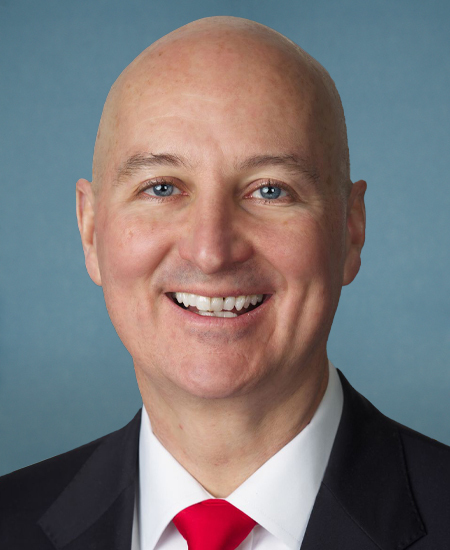
Sen. Pete Ricketts
Sponsored bills
Maddy summaryThis bill amends the VA's transportation grant program to better serve rural veterans. It expands eligibility to include County Veterans Service Organizations and Tribal Organizations, increases the maximum grant amount to $80,000 for recipients needing to purchase ADA-compliant vehicles, and updates the definition of "rural" to align with USDA's RUCA system. The changes directly affect rural veterans by improving access to transportation for medical care and benefit appointments through local service providers. Funding is no longer capped at fixed annual amounts, instead using "such sums as may be necessary" to support these services.
Maddy summaryS 3755 amends the CARES Act by removing subsection (c) from Section 4024 (15 U.S.C. 9058). This procedural change eliminates a specific federal housing regulation that may have conflicted with state housing laws. The bill directly affects entities subject to CARES Act housing provisions, such as housing providers or agencies receiving federal funds. The key mechanism is the deletion of the specified subsection, aligning the law with state housing regulations as indicated by the bill's title.
Maddy summaryRandy's Resolution (SCONRES 27) is a non-binding congressional resolution expressing support for research, education, and evidence-based policy development regarding high-potency marijuana. It urges federal agencies like the National Institutes of Health and CDC to study health impacts - particularly on youth - and supports public education programs about associated risks. The resolution also encourages collaboration between government, health organizations, and communities to address public health concerns linked to high-potency marijuana. As a concurrent resolution, it does not create new laws or directly affect individuals but aims to guide future policy discussions.
Maddy summarySJRES 59 is a joint resolution that would disapprove a rule by the Securities and Exchange Commission (SEC) treating its Staff Accounting Bulletin No. 121 (SAB 121) as a binding regulation. The SEC had submitted this rule for congressional review under the Congressional Review Act, and the resolution would block it from taking effect. If enacted, the disapproval would prevent SAB 121 from being enforced as a regulation, meaning public companies would not be required to follow it as a legal rule. The bill directly affects the SEC's regulatory authority and the accounting practices of public companies.
Maddy summaryThis bill establishes strict timelines for reviewing plant imports under the Lacey Act. It requires the Secretary of the Interior to make a final decision on detained plants within 30 days of review, or automatically exclude them from entry. Importers must receive detailed notices explaining detention reasons, testing plans, and options to transport plants under bond after 10 days (subject to fees and conditions). The law directly affects importers of plants (including wood products) and agencies like U.S. Customs and Border Protection and the Fish and Wildlife Service, streamlining enforcement while adding procedural safeguards.
Maddy summaryThis bill amends the Natural Gas Act to give the Federal Energy Regulatory Commission (FERC) exclusive authority to approve or deny applications for LNG terminal construction, expansion, or operation for exporting or importing natural gas. It requires FERC to deem LNG exports consistent with the public interest when making decisions, streamlining the approval process for energy companies seeking to build or expand export facilities. The bill clarifies that this change does not affect other federal agencies' responsibilities regarding LNG facilities or existing laws governing imports/exports. It directly affects LNG terminal developers, energy exporters, and the federal regulatory process for natural gas trade.
Maddy summaryThis bill updates the Agricultural Foreign Investment Disclosure Act (AFIDA) to strengthen reporting requirements for foreign ownership of U.S. agricultural land. It requires foreign individuals or entities holding at least 1% interest (directly or through multiple ownership layers) to report holdings, and directs the Farm Production and Conservation Business Center (FPAC-BC) to validate data and ensure compliance. The bill also mandates coordination with the Committee on Foreign Investment in the U.S. (CFIUS), updates the Farm Service Agency handbook using GAO recommendations, and analyzes streamlining electronic reporting. These changes aim to improve transparency and national security oversight of foreign agricultural land investments.
Maddy summaryThis bill requires the U.S. Census Bureau to add a citizenship status question to the 2030 and future decennial censuses, asking households to identify each member as a U.S. citizen, U.S. national (not citizen), lawfully residing alien, or unlawfully residing alien. It mandates that the Census Bureau publicly release state-level population data broken down by these four categories after each census. The bill also changes apportionment rules to exclude noncitizens from the population count used to determine the number of House seats and electoral votes each state receives, starting with the 2030 census. This directly affects how congressional representation and electoral votes are allocated among states based on population data.
Maddy summaryThe Farm and Food Cybersecurity Act of 2024 requires the U.S. Department of Agriculture to conduct a study every two years on cybersecurity threats and vulnerabilities affecting the agriculture and food sector - including farmers, processors, distributors, and retailers - and assess impacts on food safety, public health, and the economy. The study must identify gaps in current defenses and recommend improvements, with reports submitted to Congress. Additionally, the Act mandates annual simulation exercises over five years to test the sector's response to food supply chain disruptions, involving government agencies and private companies, with findings reported to Congress. The law authorizes $1 million annually from 2024 through 2028 to fund these activities.