

Maddy summaryThis joint resolution (SJRES 65) seeks to disapprove an Environmental Protection Agency (EPA) rule that would have revised national air quality standards for tiny air particles (particulate matter), which are pollutants linked to health issues like asthma and heart disease. The EPA rule, published on March 6, 2024, proposed updating these standards to tighten pollution limits. By invoking the Congressional Review Act, the resolution would block the rule from taking effect, maintaining the current standards without changes. This directly affects the EPA’s ability to implement the proposed revisions to air quality regulations, impacting public health protections and industry compliance requirements.
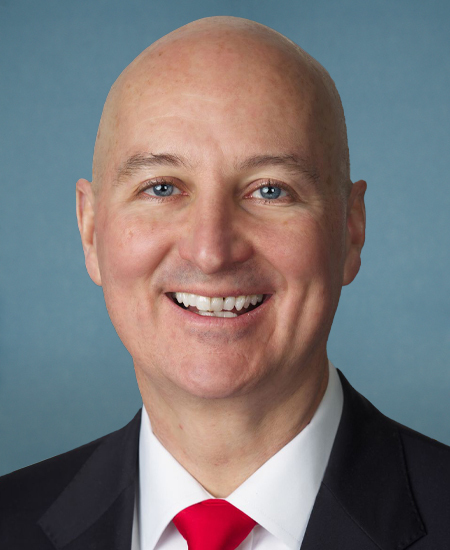
Sen. Pete Ricketts
Sponsored bills
Maddy summaryThis bill adds phosphate and potash to the Department of the Interior's official list of critical minerals, which identifies minerals vital to U.S. economic and national security. It directly affects domestic mining companies seeking to develop these minerals, as the change could influence federal permitting and leasing processes. The bill requires the Secretary of the Interior to evaluate current policies related to mining projects for these minerals within 90 days of enactment and submit recommendations to relevant congressional committees. These recommendations aim to support increased domestic production of phosphate and potash. The policy changes are limited to updating the critical minerals list and initiating a review of development policies, with no immediate regulatory changes.
Maddy summaryS 3923 requires state and local law enforcement to hold criminal aliens for up to 48 hours to transfer to U.S. Immigration and Customs Enforcement (ICE), if ICE issues a detainer. It mandates that states cannot restrict sharing immigration status information with ICE and prohibits local agencies from blocking detainer compliance. The bill also creates a federal compensation program, funding states $750 million in 2025 (rising to $950 million annually through 2031) for detaining eligible criminal aliens - defined as those convicted of felonies or multiple misdemeanors who entered without inspection or violated visa status. States must comply with detainer requests to receive funding, with non-compliant jurisdictions losing eligibility.
Maddy summaryThis bill creates a private right for victims (or their families) of serious crimes committed by aliens to sue states or local governments that failed to comply with federal immigration detainer requests. It allows lawsuits for compensatory damages if a state/local entity did not follow DHS requests regarding an alien convicted of murder, rape, or a felony (1+ year sentence), and the victim would not have been harmed had the alien been detained. States accepting certain federal grants (like community development funds) must waive sovereign immunity to be sued under this law, with a 10-year statute of limitations from the crime or victim's death. The bill directly affects states or localities with "sanctuary policies" that restrict sharing immigration status or complying with detainers.
Maddy summaryS 3933, the Laken Riley Act, amends immigration law to require mandatory detention for non-citizens charged with certain crimes like theft or burglary, rather than allowing release. It directly affects individuals facing these charges and gives state attorneys general the legal standing to sue federal agencies (like DHS or the State Department) if they claim immigration policies caused the state or residents financial harm exceeding $100. Key provisions include requiring Homeland Security to take custody of such individuals and establishing new court procedures for states to seek injunctions against federal immigration enforcement actions. The bill does not change border policies but focuses on detention requirements and state legal challenges to federal immigration enforcement.
Maddy summaryThis non-binding Senate resolution (SRES 581) affirms U.S. support for North Macedonia's accession to the European Union. It recognizes North Macedonia's democratic progress, NATO membership (joined 2020), and contributions to regional stability, including support for Ukraine. The resolution urges the U.S. government to advocate for opening EU accession negotiations without additional bilateral conditions and encourages North Macedonia to complete required reforms. As a symbolic measure, it does not alter U.S. policy but reinforces diplomatic backing for North Macedonia's EU path.
Maddy summaryThis joint resolution (SJRES 63) seeks to block a specific rule issued by the Department of Labor (DOL) concerning worker classification under the Fair Labor Standards Act (FLSA). The DOL rule (published January 10, 2024) aimed to clarify how businesses must classify workers as employees or independent contractors for purposes of minimum wage and overtime pay. If passed, this resolution would formally disapprove the rule under a statutory process (Chapter 8 of Title 5, U.S. Code), preventing it from taking effect. The rule directly affects employers across industries who use independent contractors and their workers, as it would change how worker status is determined under federal labor law.
Maddy summaryThis bill (S 3577) designates the federal building at 300 E. 3rd Street in North Platte, Nebraska, as the "Virginia Smith Federal Building." It updates all official references in federal laws, maps, regulations, and documents to reflect this new name. The bill directly affects the building's administrative identity and documentation, with no policy changes or impact on residents or services. It is a purely ceremonial naming resolution with no substantive legislative provisions.
Maddy summaryThis joint resolution (SJRES 38) blocks a Federal Highway Administration rule that would have allowed waivers to the "Buy America" requirement for electric vehicle (EV) chargers in federally funded projects. The rule, published in the Federal Register on February 21, 2023, sought to permit the use of imported chargers by waiving the standard that requires components to be manufactured in the U.S. Congress disapproves this rule under existing law, ensuring the Buy America requirement remains in effect. As a result, federal projects involving EV chargers must now comply with the U.S. manufacturing mandate, directly affecting highway construction and infrastructure funding recipients.
Maddy summarySRES 569 is a symbolic Senate resolution recognizing religious freedom as a fundamental human right and expressing concern over global threats to religious freedom. It condemns efforts to suppress religious expression - including criminalizing conversion, advocacy, or religious site construction - and urges the State Department to prioritize religious freedom in foreign policy, including through diplomatic engagement and sanctions. The resolution does not create new laws but emphasizes the importance of religious freedom for democracy and global stability, referencing ongoing violations in countries like China, Burma, and Iran. It calls for continued support for religious freedom advocates and the application of existing tools like the International Religious Freedom Act.